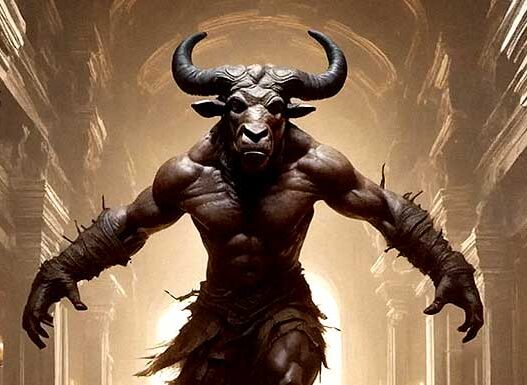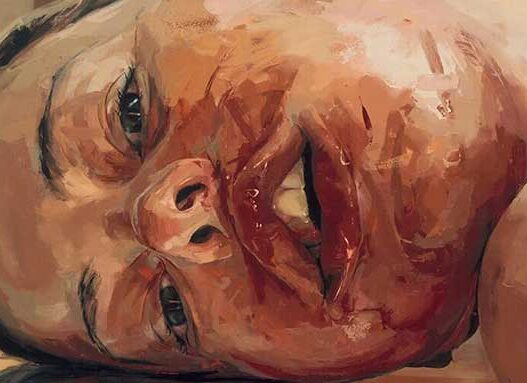






Symbolism often carries an unnecessary weight. It sounds academic, distant, or reserved for those who have studied art, literature, or philosophy. But symbolism isn’t something we learn, it’s something we already know. Long before we can explain it, we feel it.
We encounter symbolism in dreams we struggle to describe, in images that unsettle us without explanation, and in moments that linger emotionally long after they’ve passed.
What is Symbolism?
Symbolism is the use of images or objects to express deeper emotional or psychological meaning beyond their literal appearance.
Historical Context: A Short Timeline of Symbolism in Art and Literature
Symbolism has evolved over centuries, appearing in both art and literature as a way to express ideas beyond literal meaning. From early allegorical works to modern surrealist paintings, artists and writers have used symbols to explore emotion, spirituality, and the subconscious.
Key moments in the history of symbolism:
Late 18th – early 19th century: Romanticism introduces emotional and symbolic elements in poetry and painting.
1850s – 1900s: Symbolist movement emerges in France and Belgium, with poets like Charles Baudelaire and artists like Gustave Moreau.
1890s: Belgian artist Jean Delville pioneers mystical and philosophical symbolism in visual art.
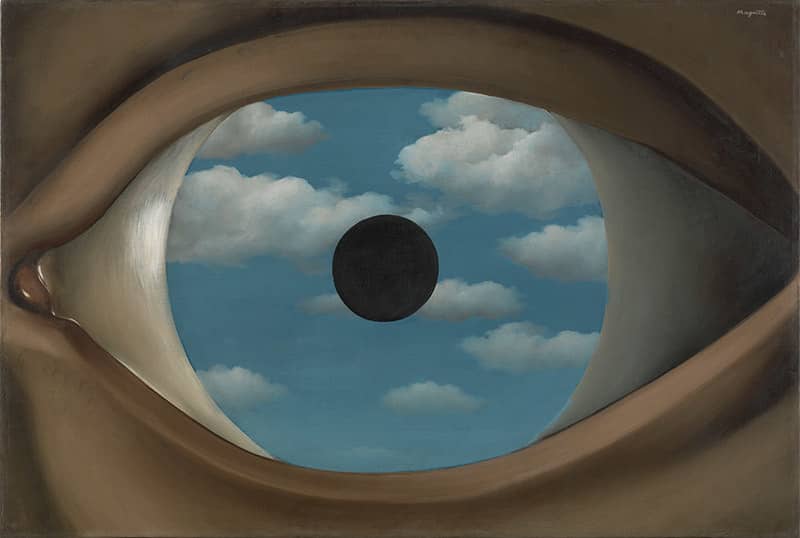
Early 20th century: Surrealism builds on symbolism, connecting dream imagery with subconscious exploration (e.g., Salvador Dalí, René Magritte).
Modern & contemporary art: Symbolism continues in film, graphic novels, and contemporary painting, showing that symbolic language adapts across mediums and cultures.
How Symbolism Works in Art
Vincent van Gogh’s Starry Night is a great example of symbolism in art, showing how colors, shapes, and motion convey emotion beyond literal depiction. The swirling night sky can reflect turbulence, wonder, or longing, while the glowing stars symbolise hope or the eternal. This painting demonstrates how symbolic meaning can evoke emotional truth, even when the subject seems simple at first glance.
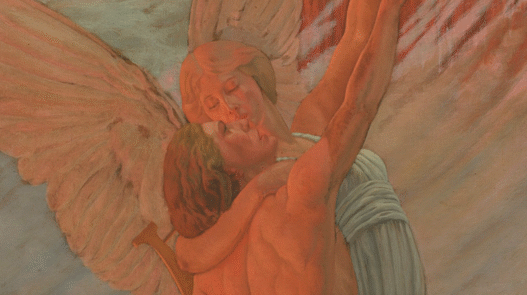
When it comes to symbolism as a movement, many consider The Belgian artist Jean Delville is often considered the godfather of modern symbolism.
His work combines mystical imagery, myth, and philosophy to explore the deeper layers of human experience. Delville’s paintings are perfect examples for anyone wanting a beginner guide to symbolism, as they show how artists use visual elements to express spiritual and psychological truths that go beyond literal representation.
How to Read Symbolism (practical tips)
If you’re new to symbolism, begin simply:
Notice what feels unsettling or emotionally charged
Pay attention to what repeats
Observe what feels out of place or illogical
You don’t need to rush toward interpretation. Sit with the image. Let it work on you. Symbolism reveals itself gradually, often long after you’ve looked away.
Learning how to read symbolism is easier than you think. You can even spot examples of symbolism in everyday life, like a wilting flower for loss or a rising sun for hope
Symbolism in Psychology and Dreams
Have you ever noticed symbols appearing repeatedly in dreams or daily life? The psychology of symbolism in dreams shows how these images reveal hidden emotions and desires.
This is natures game of reminded us that we are all linked by visual language.
Psychologists like Sigmund Freud and Carl Jung explored how symbols reveal hidden emotions, desires, and fears that we might not consciously recognise. This could mean you can take a single image, like a snake, a falling house, or even a wilting flower and analyse the layers of meaning beyond what our waking mind immediately understands.
Jungian archetypes like the Shadow appear not only in dreams but also in art, as explored in this post on Jungian Symbolism.
Freud believed dreams were a window into the unconscious, with symbols representing repressed wishes or unresolved conflicts. Jung, on the other hand, emphasised archetypes and connected our personalities and temperament to universal symbols like the Hero, the Shadow, or the Wise Old Man that appear across cultures and connect us to shared human experiences.
Understanding symbolism in dreams can enhance your ability to read symbolism in art.
Practical tip: Keep a dream journal. Note objects, colours, or feelings that stand out. Over time, you’ll start to recognise personal symbols, your own visual language, and this awareness will make reading art symbols feel intuitive rather than forced.
Symbolism Begins With Feeling
To understand symbolism, you don’t need dates, movements, or terminology. You need attention. The first step is always emotional, not intellectual. When an image feels uncomfortable, familiar, or strangely out of place, that reaction matters. You will often find rational explanation falters.
Another area to explore is how surrealism correlates with the subject matter. This can be noticed when exploring the subconscious and stepping into the shoes of the artist.
Another important aspect to consider, is the deep connection between symbolism and psychology. Freud and Jung are two of the most notable names who discussed the dreamlike scenes where logic and reality collapsed.
Some approach symbolism through psychology, others through art history, myth, or visual analysis. I’ve put together a curated list of 5 Best Books for Artists Who Love Symbolism
Test your Symbolism
Before revealing the hidden meanings, take a moment to study the painting. What do the melting clocks make you feel? What might the ants represent?
Below the image, you’ll find the answers to the symbolism in this painting.
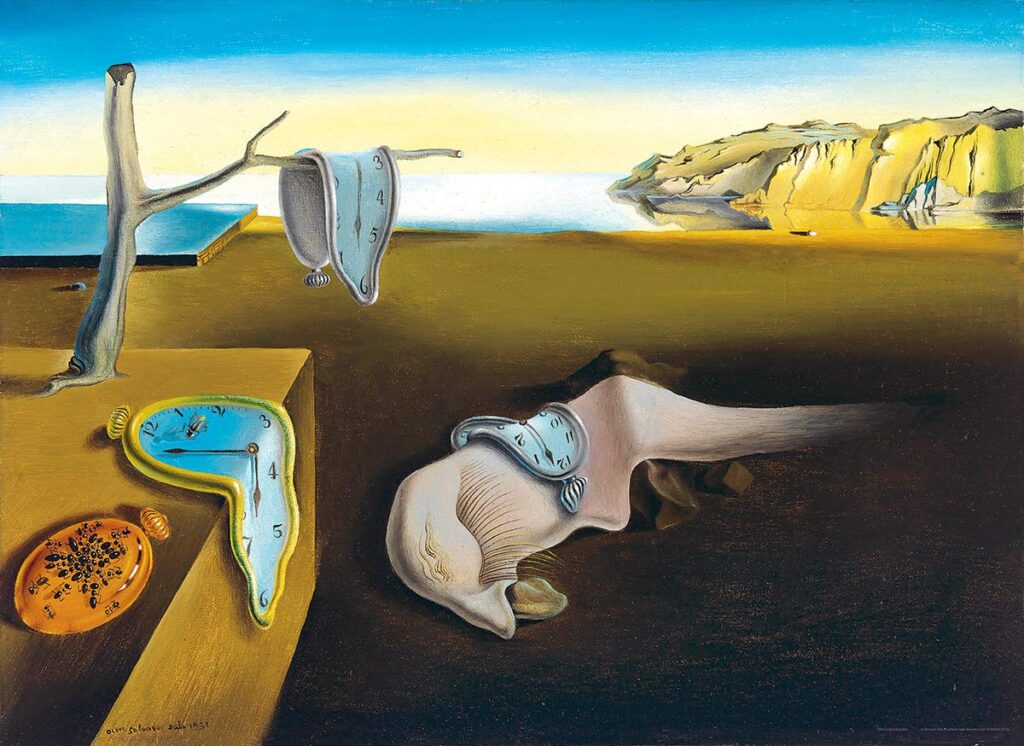
Melting Clocks
Fluidity of time, impermanence
Ants on Watch
Decay, mortality
Pale Creature
Subconscious mind, dissolution of identity
There Are No Correct Answers
One of the biggest misunderstandings about symbolism is the belief that it has a single, hidden meaning waiting to be uncovered. In reality, symbolism resists certainty. It shifts depending on context, memory, and personal experience. Two people can look at the same image and feel entirely different things, and both responses can be valid.
As a thought experiment, think about one of the most iconic pieces created, Salvador Dalí’s The Persistence of Memory.
The melting clocks symbolise the fluidity of time, memory, and perception, while the distorted landscape and strange forms reflect the subconscious mind. Dalí’s work is a prime example of emotional symbolism in paintings, blending reality and dream to communicate ideas that words alone cannot express.
To see if you’re starting to think like a symbolist, check out this blog Persistence of Memory: Surrealism, Time & Dreams
Why Artists Use Symbolism
Artists turn to symbolism when literal language fails. Some experiences cannot be neatly explained, time dissolving during grief, identity blurring during change, fear surfacing in dreams. Symbolism allows artists to express these inner states visually, using metaphor rather than instruction.
In surrealist art especially, symbols becomes a bridge between the conscious and unconscious. Objects lose their fixed roles. Time bends. Familiar forms become unfamiliar. The goal isn’t clarity, it’s resonance.
Symbolic Conversation with Art
It isn’t about dissecting images or arriving at final conclusions. It’s about slowing down, noticing what lingers, and allowing art to reflect something back at you. It’s also a great talking point when visiting a gallery with a friend, you can discuss what each symbol means to you and why it was the first or second thing you noticed.
If an image stays with you, if it quietly returns when you’re not looking, it’s already speaking. Meaning follows feeling, not the other way around.
Symbolism resources:
To understand symbolism from an educational perspective, how objects and imagery represent ideas beyond their literal meaning. Check out this resource from National Geographic’s educational section on symbolism
What remains unsaid
Interpretations that continue beyond what’s written
Thank you!
You have successfully joined our subscriber list.