




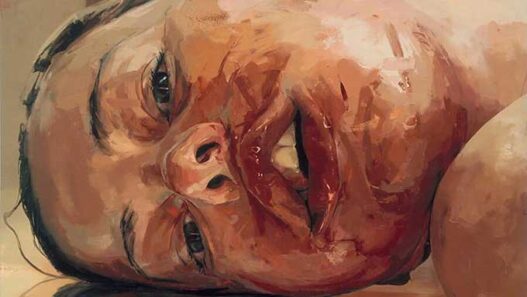


There’s a particular kind of silence that fills a room when you’re truly alone. This can be tied closely to our natural human emotions, what we might call emotional isolation, a state that exists somewhere between the physical and psychological.
Unlike many of my other art blogs on this website, this one will explore the meaning of solitude in art on a more broad spectrum, looking at loneliness symbolism, emotional symbolism in art, and the visual symbols of isolation that appear again and again across centuries of human creativity. You can scroll down to my favourite pieces of art on this subject at the end.
This is not the comfortable solitude of a Sunday morning with coffee and a book, but that deeper, aching quiet that seems to echo with everything you’re not saying to anyone.
I’ve sat in that silence more times than I care to admit, and I’ve learned that loneliness has its own language. What I’ve also realised is a deep spiritual growth that occurs, one that artists have been speaking about for centuries through symbols that somehow capture what words cannot.
Loneliness symbols in art are all aesthetic choices. They’re visual translations of an emotion so universal yet so deeply personal that we often struggle to articulate it. When we encounter these symbols, whether in a painting hanging in a gallery or a photograph scrolling past on our screens, something shifts inside us. We recognise ourselves in them. We feel less alone in our aloneness.
The Empty Room in Art: A Symbol of Solitude
When we think about loneliness in art, the image of an empty room often comes to mind first. The silence is palpable, broken only by the sound of our thoughts. In this space, the absence of people and distractions can feel both comforting and unsettling. It’s as though the room itself becomes a reflection of our inner world, mirroring the voids we feel when we are left alone with ourselves.
Understanding the meaning of an empty room in art is key to understanding how artists show loneliness without depicting a single person. A sparse room is filled with perhaps only a single chair facing a window, which on the surface feels bare but conveys a sense of separation from the outside world. This symbolic meaning of emptiness is one of the most enduring tools in art about solitude.
The window can represent the distant, unreachable parts of ourselves or the world we long to connect with but feel cut off from. This imagery evokes a duality: the comfort of being alone, yet the loneliness of isolation, something we might call “reflective solitude”, that state of being present with yourself in a space that amplifies both peace and pain.
The Empty Chair: A Portrait of Absence
Vincent van Gogh painted his own chair in 1888, and I can’t look at it without feeling something catch in my throat. It’s just a simple wooden chair, empty, casting shadows in afternoon light. Yet it speaks volumes about presence through absence. Have you ever noticed how an empty chair in your own home can feel heavier than a filled one?
Empty chair symbolism is one of the most recognised examples of solitude symbolism in art history. The empty chair represents the space where someone should be but isn’t. It’s the dinner guest who cancelled, the partner who left, the friend you can no longer call, the version of yourself you thought you’d be by now.
Think about your own life for a moment. Is there an empty chair in your home that carries more meaning than just its function? Maybe it’s where your grandmother used to sit, or where you imagined someone would be by now. These ordinary objects become powerful loneliness symbols when they’re inhabited by absence rather than presence.

Windows: The Threshold Between Inner and Outer Worlds
I spent most of last winter standing at my studio window, watching loneliness in my own art, and the world move while I stood still. There’s something about windows that perfectly captures the paradox of modern loneliness, you can see everything, yet feel completely separated from it all.
Artists have known this for centuries. Edward Hopper built an entire career on window symbolism and loneliness, creating that specific feeling of being surrounded by life while simultaneously cut off from it. Scroll down to my favourites painting that explore this subject matter and you’ll see exactly what I’m talking about.
Windows as loneliness symbols work because they’re literal barriers made transparent. You can see through them, but you can’t pass through them without effort. When you’re deeply lonely, the whole world can feel like looking through glass, visible, audible even, but fundamentally unreachable. This visual metaphor for emotion is one of the most powerful in art about isolation, and I find myself drawn to creating art featuring windows during my loneliest periods.
Have you ever stood at a window during a moment of profound loneliness? The pane of separation.
Maybe watching people laugh on the street below, or seeing lights come on in other apartments, each one representing a life you’re not part of? That’s the power of this isolation symbol.
It reminds me of being in a foreign country and hearing people talk but never understanding a single work. It’s simultaneously about emotional disconnection and observation, about being present but not participating.
Single Light Sources: Illuminating the Darkness
There’s a photograph I return to again and again when I’m feeling particularly isolated, a single lamp glowing in an otherwise dark room. The light makes a small, defiant stand against it. That’s what loneliness often feels like, isn’t it?
Not complete darkness, but a tiny circle of light that only emphasises how vast the shadows are.
The symbolism of light in darkness art is deeply tied to existential loneliness. We’ve known for centuries and seen in ancient paintings how light plays a huge role in this expression. Colour and Light in Ancient and Medieval Art is the perfect example of how ancient traditions used color and illumination to explore human perception, connecting sensory experience with deeper symbolic and subconscious meaning.
Artists use single light sources as symbols of loneliness because they capture both the vulnerability and the resilience of the solitary experience. A lone candle, a desk lamp in the night, the glow from a single window in a dark building.
I keep a candle on my desk that I light during my loneliest working hours. It’s become a ritual, a small acknowledgment of my solitude that somehow makes it more bearable. Do you have any rituals like this? Small lights you create for yourself when the world feels dark and far away?
Mirrors: Confronting the Solitary Self
Nothing quite captures the experience of psychological solitude like a mirror. Not the quick glance you catch getting ready in the morning, but those longer moments when you really look at yourself and wonder, “Is this who I am when no one else is watching?”
Frida Kahlo understood this attribute of her subconcious when painting herself again and again, to find out what Frida Kahlo’s self portrait “El Sueño” symbolises is an act of digging deeper than any mirror ever could. You will peel away the shiny surface and find out why solitude has it’s place within your soul. These type of paintings are a prime example of solitude in art that uses mirror symbolism and loneliness to stunning effect.
Mirror symbolism in loneliness forces us to confront the reality that even in our most isolated moments, we’re never truly alone, we always have ourselves. But is that comfort, or just another dimension of inner solitude?
I’m always struck by how being both the observer and the observed intensifies the feeling of isolation. Shining the lens on oneself has never felt so liberating but equally frightening. You’re both the one looking and the one being looked at, creating a feedback loop of solitude and self-reflection.
Those moments when you’re the only witness to your life, the only one who truly knows all your thoughts, all your secrets, all your silent struggles?
Clocks and Hourglasses: Time Becomes Different When You’re Feeling Alone
Time moves differently in loneliness. Sometimes an hour alone stretches into what feels like days. Other times, you look up and realise weeks have passed in what felt like moments. I’ve experienced both, and I’ve learned that clocks and hourglasses become powerful loneliness symbols precisely because they measure this distorted perception of time, one of the most fascinating areas of symbolism in art.
Salvador Dalí’s melting clocks, although an example of textbook surrealism, weren’t just surrealist whimsy. They representing the very thing that ties us down to the physical world, a visual representation of why empty spaces feel lonely and how subjective time really is.
In my loneliest periods, I’ve removed clocks from my space entirely, unable to bear watching time pass so slowly. This was not only an excerise to learn what time really means when you’re alone, but to understand the thoughts which often crop up and see if I can turn them into creative outlets instead of internal rooms.
The Timeless Symbol of Solitude
The symbolism of time in isolation is one of art’s most striking themes. Without the constant pull of schedules, appointments, or external distractions, the passage of time seems to slow down, stretch out, or even stand still. A clock or an hourglass, frozen at a certain time, can be a striking solitude symbol representing this altered state.
In art about isolation, this imagery highlights the endless cycle of thoughts and reflections that occupy our minds when we are alone. Perhaps the clock’s hands are stuck at midnight, a moment of introspection when the world outside has faded away. This is a powerful visual metaphor for how isolation in art allows us to reflect on the past, confront unresolved emotions, and contemplate the future.
Single Figures in Vast Spaces: The Geography of Isolation
Caspar David Friedrich painted lone figures standing before vast mountains and seas, dwarfed by the enormity of nature. The single figure in vast landscape meaning resonates centuries later because it captures a fundamental truth about loneliness. If we look at the symbolism in this painting, we can observe everything feels purposeful and full of vigor, even if the sheer scale of the landscape is overwhelming.
- The central figure, silhouetted by opaque foggy undertones, arching and leaning towards the direction of the adventure, is a powerful display of the internal struggle we all face and how to overcome it. Straight on, without looking back.
- The tilted posture creates a sense of balance on the harsh, solid foundations and perfectly aligns similarly to a skyscraper piercing above the clouds, with a perfect view and clarity of what lies ahead.
- Silent chaos foaming beneath, demonstrating nature’s personality of solitude and how in some spaces you can find it instantly, and in others we must seek it.
- This is how artists show loneliness through geography and space, one of the most recognisable artistic representations of isolation.
Where do you feel most alone? Is it in actual empty spaces, or is it sometimes in crowded rooms where you’re surrounded by people yet feel completely isolated?
Both are valid expressions of human isolation themes, and both appear throughout art history as ways of visualising this invisible emotion.
Next time you visit a gallery, think about simply concepts artist’s are using such as parking garages, fields, abandoned buildings, where the figure is small, overwhelmed by the emptiness surrounding it.
Uneaten Meals: The Ritual of Solo Dining
There’s a particular sadness to setting a table for one, but it’s a moment for deep reflection. One plate, one glass, one napkin folded, these images always generate the strongest reactions from viewers, because solitary meals are universal symbols of loneliness that everyone has experienced at some point.
Edward Hopper’s Automat shows a woman alone at a table, and it’s the cup of coffee that breaks my heart every time. Not the woman’s posture or her averted gaze, but that single cup. The circular shape that speaks to continuity, a meeting point that is a reminder that eating and drinking are social rituals we perform alone when loneliness requires it. This is emotional disconnection made domestic, ordinary, heartbreaking.
Do you eat differently when you’re alone versus with others? Skipping the ritual entirely, or creating an elaborate meal for yourself as an act of self-love? The meaning will shift and evolve when examined through the lens of loneliness meaning and symbol.
Birds Behind Glass: Freedom Observed But Not Experienced
I keep returning to the image of a bird visible through a window, yet separated by an invisible barrier. This isolation symbol resonates because it captures the cruel irony of modern isolation: we can see connection, we can observe freedom and community, but somehow we can’t reach it ourselves. This also frames the concept of desires and how some creatures thrive in isolation, while others require it to survive.
Magritte painted many birds in impossible situations. Le Retour (The Return, 1940) fills the silhouette of a soaring bird with a bright daytime sky while it flies through a starry night. Elective Affinities (1933) places an egg inside a cage where a bird should be. These surrealist images speak to how loneliness can feel like being trapped by something invisible. The Healer_ presents a figure with a birdcage in place of a torso; sometimes it’s our own fear, our depression, our anxiety that keeps us isolated even when the door is technically open.
This is feeling alone symbolism at its most poetic.
Have you felt this way? Seeing others connect easily while you remain behind some invisible barrier? It’s one of the most painful aspects of loneliness, not just being alone, but feeling unable to change it despite opportunities being theoretically available.
Unmade Beds: The Private Space of Solitude
A bed appears frequently in art that represents loneliness. We all rest at some point, and understand the important of this sacred space. Emin herself described the moment she saw it clearly:
“I couldn’t believe what I could see; this absolute mess and decay of my life.”
“Yet even in that darkness, she found something worth preserving — “a beautiful place that’s kept me alive.”
There’s something deeply intimate about an unmade bed. Psychologists have long noted that our sleeping environment reflects our inner state. Throughout the night, even if we’re not alone, the transformation of our subconscious is written into the sheets, the pillows, the creases we leave behind. It’s where we’re most vulnerable, most ourselves, most alone. Each morning we face a small but telling choice: reset the space to its original form, or leave it as a quiet reminder that some things still need to be addressed. In art, this private ritual becomes a mirror for the human condition.
Art is always a native process of capturing evidence of existence without witness. This is how to depict loneliness in art in its most raw and honest form, not through grand metaphors, but through the small, private evidence of a life lived alone. Artist’s riddle their most famous artwork with evidence of lineliness and solitude endured.
Is it a refuge or a prison? Both are valid. The bed as solitude symbol holds both possibilities and is where we retreat to heal, but also where we might hide too long from the world.
Your Own Loneliness Symbols: Creating Personal Meaning
The beauty of understanding symbols of loneliness in art is that it gives us permission to create our own visual language for isolation. Maybe for you, what symbolizes loneliness in art looks like:
– An empty inbox that never fills
– A phone that doesn’t ring
– A door no one knocks on
– Photos where you’ve been cropped out
– Chairs arranged for conversation that never happens
What are your personal symbols of loneliness? I encourage you to identify them, and if you’re artistically inclined, to capture them. There’s profound healing in making the invisible visible, in taking the abstract emotion of loneliness and giving it concrete form through emotional symbolism in art.
My Favourite Pieces of Art When I Feel Lonely
When I experience feelings of loneliness, I find solace in certain paintings that express loneliness and resonate deeply with my emotions.
The first painting that is riddled with symbolism in art is Edward Hopper’s Nighthawks (1942). This painting captures a quiet solitude within an urban setting, reflecting moments of introspection and urban isolation.
Often interpreted as a meditation on modern loneliness, Nighthawks presents a seemingly ordinary late-night diner scene that becomes psychologically charged through composition, light, and silence. The glass acts as a metaphor for unseen emotional barriers between individuals, a glimpse through this shield into an intimate setting where conversations are muffled and eye contact is stifled. The figures sit close together yet do not interact. No eye contact suggests emotional disconnection and separation. It represents modern city life where proximity does not equal connection.
Hopper portrays loneliness not as the physical absence of people, but as emotional disconnection within shared space. We’ve all experienced sitting in a café, feeling the closeness of human energy with strangers but the emptiness of meaningful connection.
Edvard Munch’s The Scream (1893) embodies raw emotional anguish and vulnerability, one of the most iconic paintings that express loneliness and existential loneliness in the Western canon. Meanwhile, Caspar David Friedrich’s Wanderer above the Sea of Fog(1818) inspires contemplation and awe, reminding us of the vastness beyond our immediate feelings. Together these are some of the finest examples of solitude in art ever created. These pieces provide comfort and understanding, transforming loneliness into an opportunity for introspection in art and connection through shared human experience.
Historical Significance of Loneliness
Loneliness is often described as a modern problem, but the experience of being alone has deep historical roots. What has changed is how societies understand and value reflective solitude.
In earlier centuries, solitude was often seen as meaningful rather than painful. Religious hermits and monks withdrew from society in search of spiritual clarity, believing isolation could lead to enlightenment and inner peace, an early form of what we now call inner solitude meaning.
As cities expanded during the Industrial Revolution, traditional communities weakened. People left rural life for urban centres, finding themselves surrounded by crowds yet disconnected from familiar social bonds. Urban isolation began to emerge as a defining emotional experience of modern life.
By the 20th century, artists began capturing this quiet alienation. Paintings that express loneliness like Nighthawks reflect a new reality: individuals sharing space while remaining emotionally separate rendered visible for the first time in mass culture.
Finding Connection Through Isolated Art
Here’s the paradox I’ve discovered: creating and sharing art about loneliness has made me feel less alone.
When I post photographs exploring isolation symbols, I receive messages from people who say, “That’s exactly how I feel.” Suddenly, the most isolating emotion becomes a point of connection.
Loneliness symbols in art work because they’re a universal language. We might speak different languages, live in different countries, exist in completely different circumstances, but we recognise that empty chair, that single light in darkness, that figure dwarfed by vast space. We’ve all been there. We’ve all felt that.
So if you’re feeling lonely right now, as you read this, I want you to know that your experience is valid. It’s been felt by countless others, and it’s worthy of expression. Whether you’re an artist exploring visual symbols of isolation in your own work, or someone who finds comfort in viewing such art, you’re participating in a conversation that spans centuries.
Moving Forward: From Symbol to Understanding
Understanding what does solitude symbolise in art doesn’t cure loneliness, but it does something perhaps equally important: it validates it. It says that your loneliness is real enough that countless artists across history have attempted to capture it. It’s significant enough that specific symbols of loneliness in art exist to represent it. You’re not imagining it, you’re not being dramatic, you’re experiencing something fundamentally human.
I’ve learned that my loneliest moments often produce my most honest art. Not my best art, necessarily, but my truest. When I remove the performance of connection and sit with psychological solitude, symbols emerge naturally. The empty chair appears in my compositions without conscious planning. The single light source illuminates my photographs. The vast, empty spaces call to me.
I hope this exploration of loneliness symbolism and solitude meaning helps you identify and understand your own visual language, and I hope it reminds you that even in loneliness, we’re connected by our shared human experience. You can share your stories with me on instagram @artwithsymbols if you’d like to connect with a community that shares the love for symbolism.