The Art of Loneliness: Symbols of Solitude

In 2026 the loneliness epidemic continues to deepen. The WHO’s landmark report declared it a global public health crisis. One in six people worldwide now experiences persistent loneliness. Artists have been mapping this feeling for centuries, long before we had a name for it.
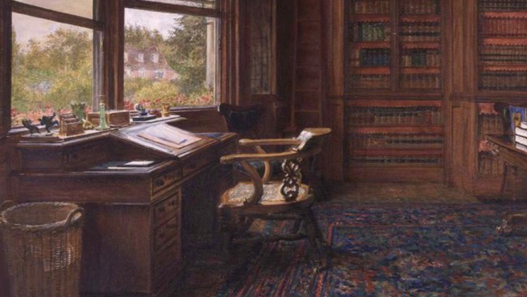
an empty room that looks lonely and solitude an empty room that looks lonely and solitude
Symbolism of Loneliness

The Symbols of Loneliness in Art: A Visual Guide

There’s a particular kind of silence that fills a room when you’re truly alone.

Not the peaceful silence of an early morning, when the kettle is beginning to boil and the rest of the world hasn’t quite woken up. 

Something different. 

A silence that seems to make the room larger. The chair across from you becomes noticeable. The window feels further away. Even the ticking of a clock can suddenly sound like company.

This is the loneliness I’m interested in: not simply being alone, but the strange space between physical solitude and emotional isolation. The feeling of being separate from something or someone you cannot quite reach.

Unlike many of my other art blogs, this one takes a broader look at how artists have made that feeling visible. Across centuries, certain images return again and again: the empty chair, the distant figure, the window, the solitary light, the vast landscape. They appear in different cultures and different periods, yet somehow we recognise them immediately.

I’ve sat in that silence more times than I care to admit. And I’ve come to think that loneliness has its own language.

Artists have been speaking that language for centuries.

They use space, light, objects, distance and absence to give shape to something that is otherwise difficult to put into words. Sometimes the symbol is obvious. Sometimes it is hidden in the corner of a painting, waiting for us to notice it.

And perhaps that’s why these images stay with us.

For a moment, we recognise ourselves in them.

And strangely, we feel a little less alone.

The Empty Room in Art: A Symbol of Solitude

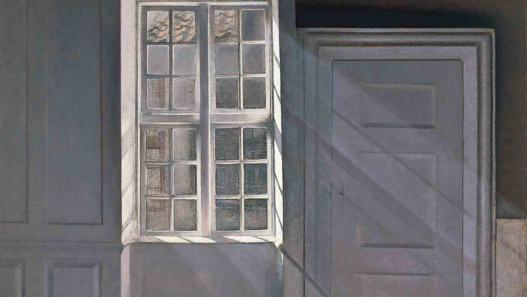
An empty room can feel strangely different when you are the only person in it.

At first, there may be nothing remarkable about it. A chair sits where it always has. Light falls across the floor. A window looks out onto the world beyond. But remove the people, the conversation and the small distractions of everyday life, and suddenly the room seems to say something.

Perhaps that is why artists have returned to empty rooms for centuries. They can speak about loneliness without showing a lonely person at all.

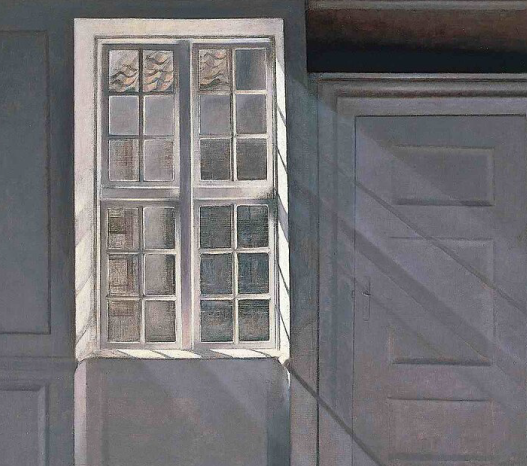
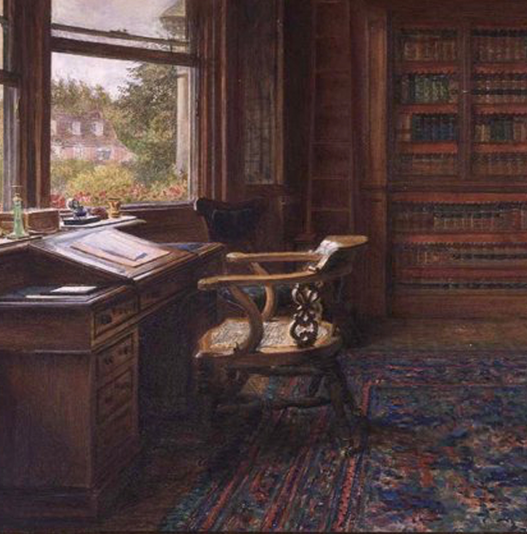
A sparse interior, with little more than a chair facing a window, can make absence feel almost physical. The chair suggests someone who could be there but isn’t. The window offers a view of somewhere else, yet the person inside remains separated from it. The room becomes a boundary between the self and the world beyond it.

The most interesting part is that an empty room does not always feel sad.

There is a kind of solitude that can be peaceful. A quiet room can give us somewhere to think, to read, to recover, or simply to exist without being watched. But the same silence can become oppressive when we have nowhere else to turn. What begins as privacy can slowly become isolation.

This is where the empty room becomes more than an image of absence. It becomes a reflection of whatever we bring into it.

For one person, an empty chair might mean freedom. For another, it might be the space left behind by someone they miss. The room has not changed. Only the person looking at it has.

Perhaps that is what makes the symbol so enduring. Artists do not have to tell us that a figure is lonely. Sometimes all they need to show us is what is missing.

The Empty Chair: A Portrait of Absence

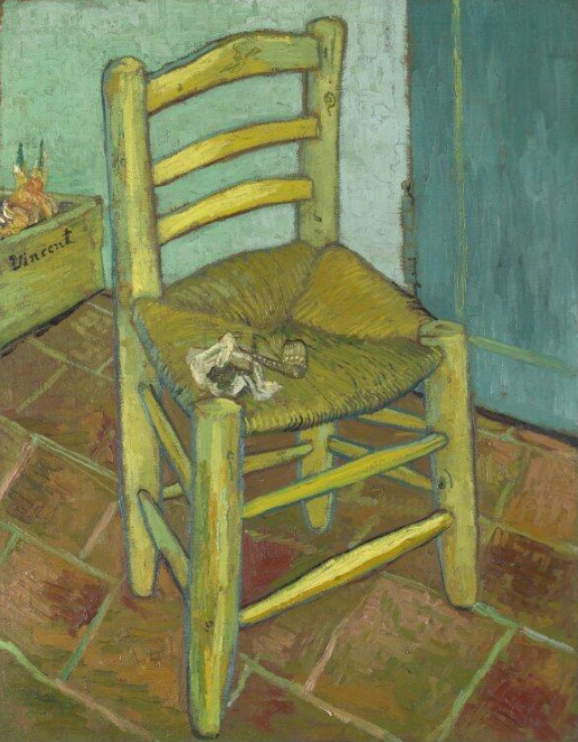
Vincent van Gogh painted his own chair in 1888, and I can’t look at it without feeling something catch in my throat. Why does a simple wooden chair, empty and casting shadows in the afternoon light, speak so loudly about presence through absence?

Have you ever noticed how an empty chair in your own home can feel heavier than a filled one?

The empty chair is one of the most recognisable symbols of solitude in art. It represents the space where someone should be but isn’t. The dinner guest who cancelled, the partner who left, the friend you can no longer call, or the version of yourself you thought you’d be by now.

Think about your own life for a moment. Is there an empty chair in your home that carries more meaning than just its function? Maybe it’s where your grandmother used to sit, or where you imagined someone would be by now.

That’s what makes these ordinary objects so powerful. The chair hasn’t changed. But the person looking at it has.

Windows: The Threshold Between Inner and Outer Worlds

I spent most of last winter standing at my studio window, watching the world move while I stood still. There’s something about a window that perfectly captures the strange feeling of loneliness. You can see everything, yet feel completely separated from it all.

Artists have known this for centuries. Edward Hopper returned again and again to scenes of people behind windows, surrounded by the signs of everyday life yet somehow removed from it. His paintings capture that particular feeling of being surrounded by life while simultaneously cut off from it.

A window is a strange kind of barrier because it is transparent. You can see through it, hear the world beyond it, and watch people moving through their lives, but you can’t simply step through the glass. When you’re deeply lonely, the whole world can feel like that. Visible. Audible. Close enough to watch, but somehow unreachable.

I find myself drawn to creating art featuring windows during my loneliest periods. Perhaps it’s because they allow you to be both an observer and an outsider at the same time.

Have you ever stood at a window during a moment of profound loneliness?

Maybe you’ve watched people laughing on the street below, or seen lights come on in other apartments, each one representing a life you’re not part of. You don’t know anything about the people behind those windows, yet for a moment, their ordinary lives can feel impossibly distant from your own.

That’s what makes the window such a powerful image of isolation. It isn’t a wall. You can see through it. The world is right there.

You just can’t reach it.

It reminds me of being in a foreign country and hearing people talk without understanding a single word. You’re surrounded by voices, movement and life, but none of it quite belongs to you. It’s simultaneously about emotional disconnection and observation, about being present but not participating.

Single Light Sources: Illuminating the Darkness

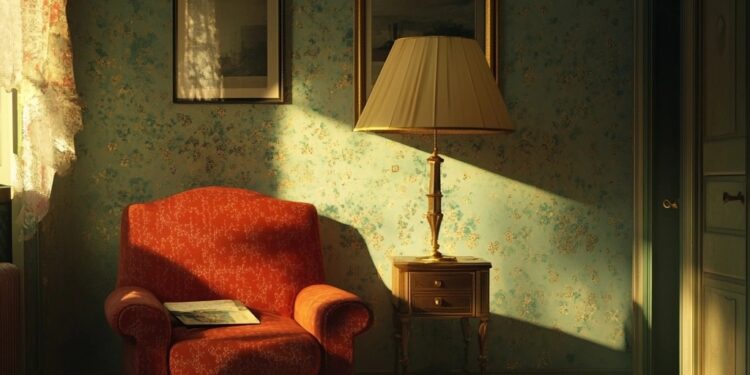
There’s a photograph I return to again and again when I’m feeling particularly isolated. A single lamp glowing in an otherwise dark room. The light makes a small, defiant stand against the darkness. That’s what loneliness often feels like, isn’t it?

Not complete darkness, but a tiny circle of light that somehow makes the shadows around it feel even larger.

Artists have understood the power of light for centuries. A candle in a dark room, a desk lamp burning late into the night, the glow from a single window in an otherwise dark building. The light draws our attention precisely because of everything surrounding it.

Perhaps that’s why a single light can feel so lonely.

It doesn’t defeat the darkness. It simply exists within it.

That can be comforting too. When you’re alone, a small source of light can become a kind of company. It gives the room a centre. It makes the darkness feel contained, even if only for a little while.

I keep a candle on my desk that I light during my loneliest working hours. It’s become a ritual, a small acknowledgment of my solitude that somehow makes it more bearable.

Maybe that’s another reason we’re drawn to light in images of loneliness. It doesn’t always symbolise hope in some grand, dramatic sense. Sometimes it simply represents the small things we do to make being alone feel less empty.

Do you have any rituals like this? A light you switch on, a candle you burn, a particular song you play when the world feels dark and far away?

Sometimes we don’t need to chase the darkness away.

Sometimes we just need something small enough to sit beside us in it.

Mirrors: Confronting the Solitary Self

Nothing quite captures the experience of psychological solitude like a mirror. The quick glance you catch getting ready in the morning, and those longer moments when you really look at yourself and wonder, “Is this who I am when no one else is watching?

That was me today, just like every other day when you return to the same place, observe the same features and watch the graceful nature of time leave its mark.

I am The Desperate Man in Courbet’s self-portrait, widening my eyes to see what is missing.

There is something almost uncomfortable about looking at his face. His eyes meet yours so directly that it feels less like looking at a painting and more like being caught looking at someone who doesn’t want to be seen.

What unsettles me about mirrors too, is that you are both the person looking and the person being looked at. There is nowhere else to direct your attention. Just yourself, staring back, even if the features are distorted, you can feel your way to the truth.

Perhaps loneliness and self-observation are closer than we realise. When there is nobody else to look at, your attention inevitably turns back towards yourself. It creates a strange distance between the person we see and the person doing the looking.

I think Frida Kahlo understood something about this. She returned to her own face again and again, never quite allowing the self-portrait to become simply a record of what she looked like.There is always something else happening beneath the surface.

I find myself wondering what it must have felt like to spend so much time looking at your own face and then turn that gaze into a painting. I imagine at some point, you stop seeing the person in the mirror and start searching for something underneath them.

But is that actually comforting?

Sometimes, being alone with yourself is the very thing you’re trying to escape.

I’m always struck by how being both the observer and the observed can intensify that feeling. You’re the person looking, but you’re also the person being examined. Everything you notice is yours alone to witness.

There are moments when you’re the only witness to your own life. The only person who knows what happened, what you thought, what you didn’t say, and what you kept to yourself.

Not the loneliness of having nobody around you, but the strange solitude of being left alone with a person you can never quite escape, and may never completely understand.

Clocks and Hourglasses: Time Becomes Different When You’re Feeling Alone

In my loneliest periods, I’ve removed clocks from my space entirely, unable to bear watching time pass so slowly. This wasn’t only an exercise in trying to understand what time means when you’re alone. I wanted to understand the thoughts that kept appearing and see if I could turn them into something creative instead of letting them stay inside me. 

When we’re truly alone, an hour can stretch into what feels like days. Our entire body relentlessly tries to remind us when to eat, when to rest and when to move, even when our sense of time has become completely distorted. But is that enough to get over the sadness?

I’ve learned that clocks, ticking to the rhythm of the heart, can become strangely uncomfortable when you’re alone. Every tick reminds you that time is still moving, even when you feel as though you aren’t. 

Think about Salvador Dalí’s melting clocks. At first they seem like surrealist whimsy, but I’ve always found something more unsettling about them. The clocks appear soft, almost exhausted, as though time itself has lost its shape. They remind me of those periods when the hours don’t feel real anymore, when five minutes can feel like an eternity and an entire week can disappear without you quite knowing where it went.

Single Figures in Vast Spaces: The Geography of Isolation
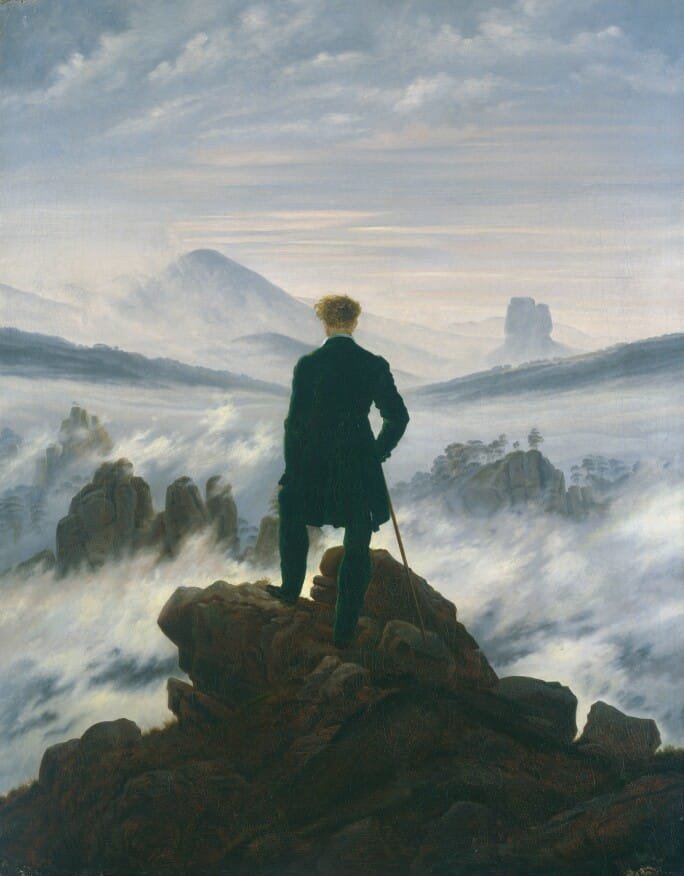
 
Caspar David Friedrich Wanderer above the Sea of Fog 1818 oil on canvas Hamburger Kunsthalle solitary figure standing on rocky peak overlooking fog filled valley
Caspar David Friedrich, Wanderer above the Sea of Fog, 1818. Oil on canvas, 94.8 × 74.8 cm.

Caspar David Friedrich’s Wanderer Above the Sea of Fog is one of those paintings I can stare at for longer than I probably should.

This strange figure stands there, completely alone, surrounded by mountains and fog, yet he doesn’t look frightened. If anything, he looks as though he has deliberately gone there to be alone. Better yet, he’s dressed for a ballroom, not for hiking towards a cliff edge.

But what is he looking at?

We can’t see his face, so we don’t know what he’s thinking. We only see his back, his walking stick and the landscape opening out in front of him. The fog hides whatever comes next.

Perhaps that’s what I find so interesting about this painting. The landscape is enormous, but the figure doesn’t disappear into it. He stands there looking out, almost as though the emptiness gives him somewhere to think.

I’ve spent time in places where being alone felt like freedom. There is a forest in the UK that, on a rainy day, will crowd your entire being with texture and sound. I’ve also been in rooms full of people where I felt more isolated than I ever could have standing on a mountain.

Where do you feel most alone? Is it in actual empty spaces, or is it sometimes in crowded rooms where you’re surrounded by people yet feel completely isolated?

Friedrich’s painting makes me think that loneliness isn’t always about how much space surrounds us. Sometimes it’s about whether we feel connected to anything within that space.

Uneaten Meals: The Ritual of Solo Dining
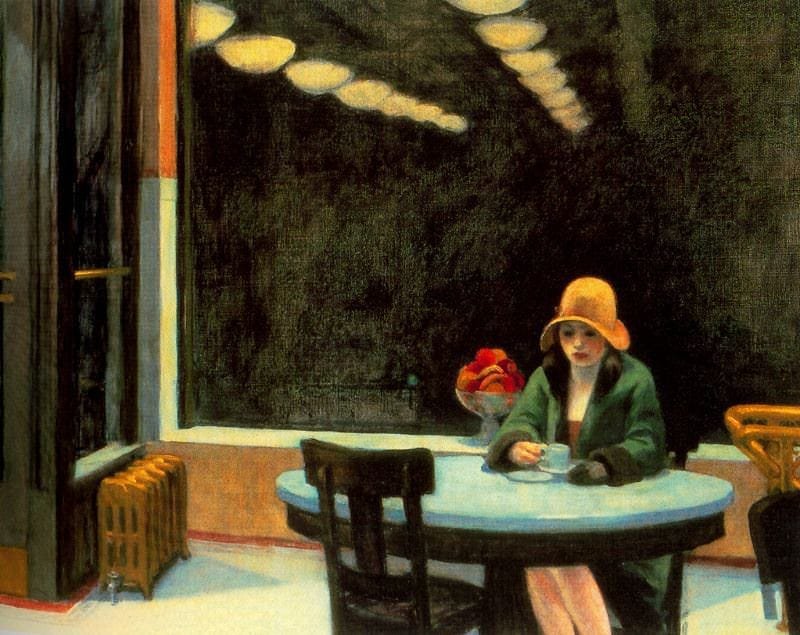
Edward Hopper Automat 1927 oil on canvas Des Moines Art Center lone woman sitting alone at night staring into coffee cup urban loneliness isolation
Edward Hopper, Automat, 1927. Oil on canvas, 71.4 × 91.4 cm. Des Moines Art Center, Iowa. © Heirs of Josephine N. Hopper / Licensed by Artists Rights Society (ARS), New York

There’s a particular sadness to setting a table for one, but it’s a moment for deep reflection. One plate, one glass, one napkin folded, these images always generate the strongest reactions from viewers, because solitary meals are universal symbols of loneliness that everyone has experienced at some point.

Edward Hopper’s Automat shows a woman alone at a table, and it’s the cup of coffee that breaks my heart every time. Not the woman’s posture or her averted gaze, but that single cup. The circular shape that speaks to continuity, a meeting point that is a reminder that eating and drinking are social rituals we perform alone when loneliness requires it. This is emotional disconnection made domestic, ordinary, heartbreaking.

Do you eat differently when you’re alone versus with others? Skipping the ritual entirely, or creating an elaborate meal for yourself as an act of self-love? The meaning will shift and evolve when examined through the lens of loneliness meaning and symbol.

Birds Behind Glass: Freedom Observed But Not Experienced
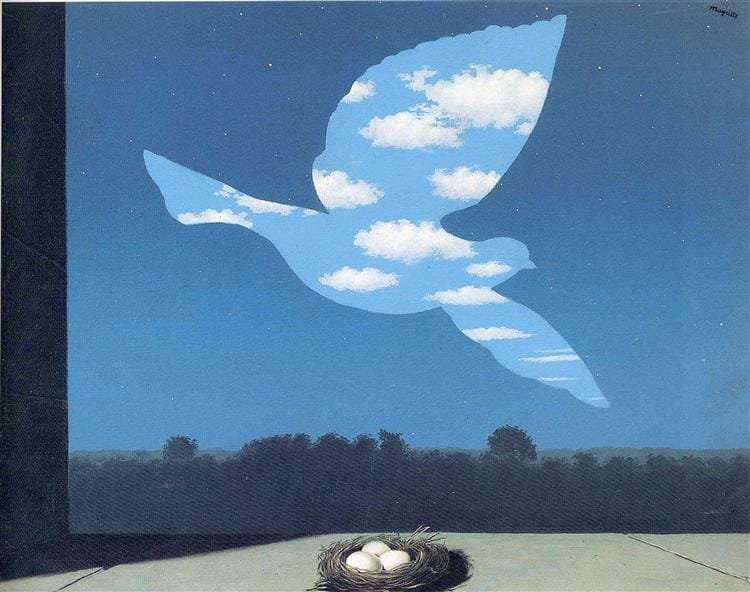
René Magritte Le Retour The Return 1940 oil on canvas surrealist painting bird silhouette made of daytime sky against night background nest with three eggs windowsill
René Magritte, Le Retour (The Return), 1940. Oil on canvas, 50 × 65 cm. Copyright
© René Magritte Estate / ADAGP, Paris / DACS, London

I keep returning to the image of a bird visible through a window, yet separated by an invisible barrier. This isolation symbol resonates because it captures the cruel irony of modern isolation: we can see connection, we can observe freedom and community, but somehow we can’t reach it ourselves. This also frames the concept of desires and how some creatures thrive in isolation, while others require it to survive. 

Magritte painted many birds in impossible situations. Le Retour (The Return, 1940) fills the silhouette of a soaring bird with a bright daytime sky while it flies through a starry night. Elective Affinities (1933) places an egg inside a cage where a bird should be. These surrealist images speak to how loneliness can feel like being trapped by something invisible. The Healer_ presents a figure with a birdcage in place of a torso; sometimes it’s our own fear, our depression, our anxiety that keeps us isolated even when the door is technically open.

This is feeling alone symbolism at its most poetic.

Have you felt this way? Seeing others connect easily while you remain behind some invisible barrier? It’s one of the most painful aspects of loneliness, not just being alone, but feeling unable to change it despite opportunities being theoretically available.

Unmade Beds: The Private Space of Solitude
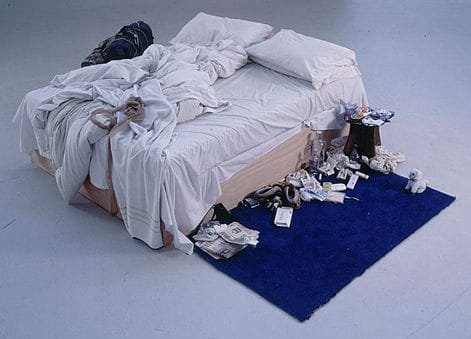
Tracey Emin My Bed 1998 mixed media installation unmade bed stained sheets vodka bottles underwear personal objects Tate Britain Turner Prize loneliness depression - Art with Symbols
Tracey Emin, My Bed, 1998. Mixed media installation, 79 × 211 × 234 cm. Copyright
© Tracey Emin. All rights reserved, DACS, London / Artists Rights Society (ARS), New York

A bed appears frequently in art that represents loneliness. We all rest at some point, and understand the importance of this sacred space. Emin herself described the moment she saw it clearly: 

“I couldn’t believe what I could see; this absolute mess and decay of my life.”

Yet even in that darkness, she found something worth preserving — “a beautiful place that’s kept me alive.”

There’s something deeply intimate about an unmade bed. Psychologists have long noted that our sleeping environment reflects our inner state. Throughout the night, even if we’re not alone, the transformation of our subconscious is written into the sheets, the pillows, the creases we leave behind. It’s where we’re most vulnerable, most ourselves, most alone. Each morning we face a small but telling choice: reset the space to its original form, or leave it as a quiet reminder that some things still need to be addressed. In art, this private ritual becomes a mirror for the human condition.

Art is always a native process of capturing evidence of existence without witness. This is how to depict loneliness in art in its most raw and honest form, not through grand metaphors, but through the small, private evidence of a life lived alone. Artists riddle their most famous artwork with evidence of lineliness and solitude endured.

Is it a refuge or a prison? Both are valid. The bed as solitude symbol holds both possibilities and is where we retreat to heal, but also where we might hide too long from the world.

Your Own Loneliness Symbols: Creating Personal Meaning

The beauty of understanding symbols of loneliness in art is that it gives us permission to create our own visual language for isolation. Maybe for you, what symbolises loneliness in art looks like:

– An empty inbox that never fills
– A phone that doesn’t ring
– A door no one knocks on
– Photos where you’ve been cropped out
– Chairs arranged for conversation that never happens

What are your personal symbols of loneliness? I encourage you to identify them, and if you’re artistically inclined, to capture them. There’s profound healing in making the invisible visible, in taking the abstract emotion of loneliness and giving it concrete form through emotional symbolism in art.

My Favourite Pieces of Art When I Feel Lonely
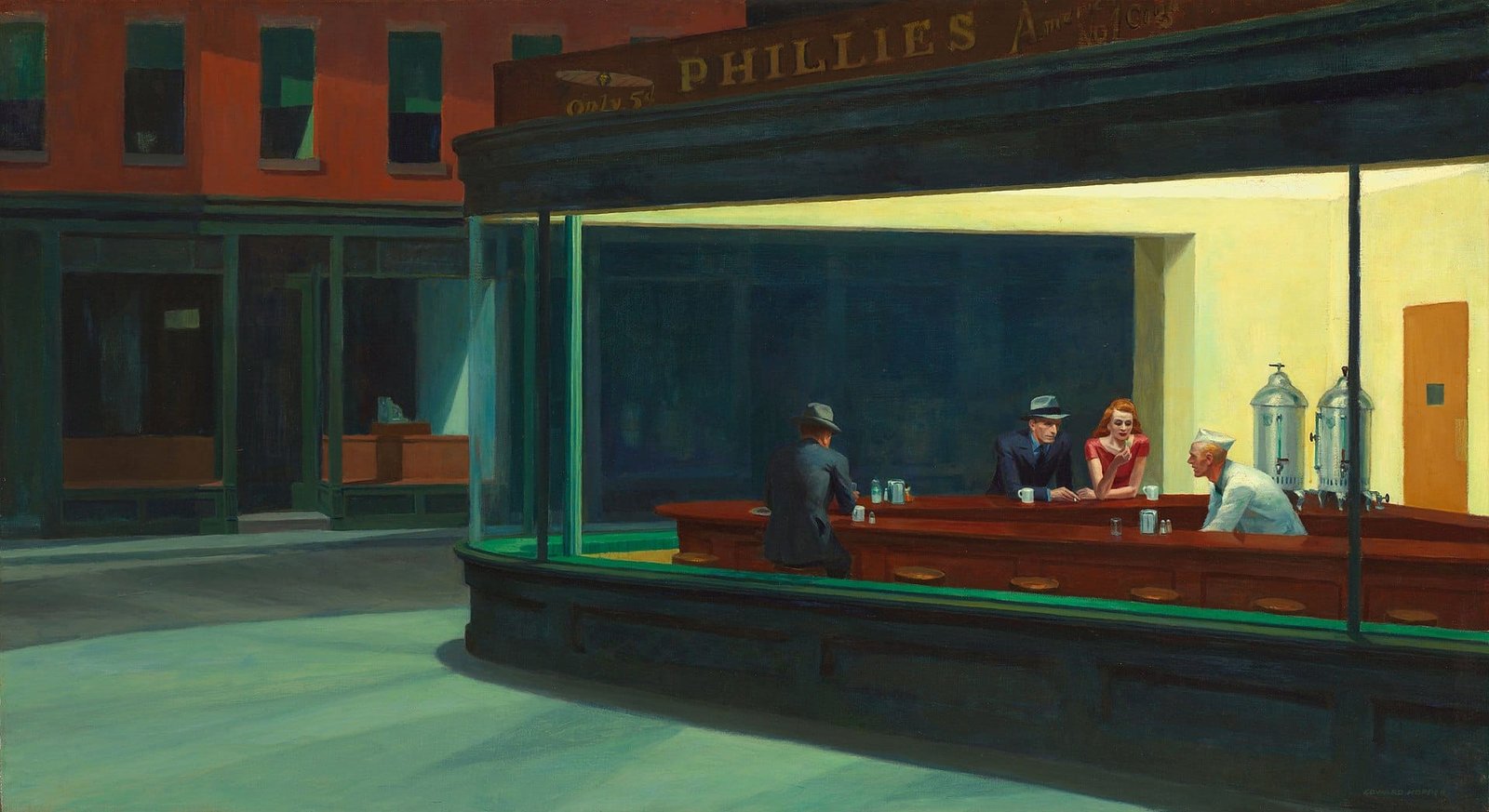
Edward Hopper Nighthawks 1942 oil on canvas Art Institute of Chicago late night diner fluorescent light four figures urban isolation solitude American Realism
Edward Hopper, Nighthawks, 1942. Oil on canvas, 84.1 × 152.4 cm. The Art Institute of Chicago.

When I experience feelings of loneliness, I find solace in certain paintings that express loneliness and resonate deeply with my emotions.

The first painting that is riddled with symbolism in art is Edward Hopper’s Nighthawks (1942). This painting captures a quiet solitude within an urban setting, reflecting moments of introspection and urban isolation.

Often interpreted as a meditation on modern loneliness, Nighthawks presents a seemingly ordinary late-night diner scene that becomes psychologically charged through composition, light, and silence. The glass acts as a metaphor for unseen emotional barriers between individuals, a glimpse through this shield into an intimate setting where conversations are muffled and eye contact is stifled. The figures sit close together yet do not interact. No eye contact suggests emotional disconnection and separation. It represents modern city life where proximity does not equal connection.

Hopper portrays loneliness not as the physical absence of people, but as emotional disconnection within shared space. We’ve all experienced sitting in a café, feeling the closeness of human energy with strangers but the emptiness of meaningful connection.

Edvard Munch’s The Scream (1893) embodies raw emotional anguish and vulnerability, one of the most iconic paintings that express loneliness and existential loneliness in the Western canon. Meanwhile, Caspar David Friedrich’s Wanderer above the Sea of Fog (1818) inspires contemplation and awe, reminding us of the vastness beyond our immediate feelings. Together these are some of the finest examples of solitude in art ever created. These pieces provide comfort and understanding, transforming loneliness into an opportunity for introspection in art and connection through shared human experience.

Historical Significance of Loneliness

Loneliness is often described as a modern problem, but the experience of being alone has deep historical roots. What has changed is how societies understand and value reflective solitude.

In earlier centuries, solitude was often seen as meaningful rather than painful. Religious hermits and monks withdrew from society in search of spiritual clarity, believing isolation could lead to enlightenment and inner peace, an early form of what we now call inner solitude meaning.

As cities expanded during the Industrial Revolution, traditional communities weakened. People left rural life for urban centres, finding themselves surrounded by crowds yet disconnected from familiar social bonds. Urban isolation began to emerge as a defining emotional experience of modern life.

By the 20th century, artists began capturing this quiet alienation. Paintings that express loneliness like Nighthawks reflect a new reality: individuals sharing space while remaining emotionally separate rendered visible for the first time in mass culture.

Finding Connection Through Isolated Art

Here’s the paradox I’ve discovered: creating and sharing art about loneliness has made me feel less alone. 

When I post photographs exploring isolation symbols, I receive messages from people who say, “That’s exactly how I feel.” Suddenly, the most isolating emotion becomes a point of connection.

Loneliness symbols in art work because they’re a universal language. We might speak different languages, live in different countries, exist in completely different circumstances, but we recognise that empty chair, that single light in darkness, that figure dwarfed by vast space. We’ve all been there. We’ve all felt that.

So if you’re feeling lonely right now, as you read this, I want you to know that your experience is valid. It’s been felt by countless others, and it’s worthy of expression. Whether you’re an artist exploring visual symbols of isolation in your own work, or someone who finds comfort in viewing such art, you’re participating in a conversation that spans centuries.

Moving Forward: From Symbol to Understanding

Understanding what does solitude symbolise in art doesn’t cure loneliness, but it does something perhaps equally important: it validates it. It says that your loneliness is real enough that countless artists across history have attempted to capture it. It’s significant enough that specific symbols of loneliness in art exist to represent it. You’re not imagining it, you’re not being dramatic, you’re experiencing something fundamentally human.

I’ve learned that my loneliest moments often produce my most honest art. Not my best art, necessarily, but my truest. When I remove the performance of connection and sit with psychological solitude, symbols emerge naturally. The empty chair appears in my compositions without conscious planning. The single light source illuminates my photographs. The vast, empty spaces call to me.

I hope this exploration of loneliness symbolism and solitude meaning helps you identify and understand your own visual language, and I hope it reminds you that even in loneliness, we’re connected by our shared human experience. You can share your stories with me on instagram @artwithsymbols if you’d like to connect with a community that shares the love for symbolism.

Previous Post
Gustav Klimt The Kiss 1907-08 oil and gold leaf on canvas Belvedere Museum Vienna

Klimt's The Kiss: Why It Haunts Every Room It Enters

Next Post
Greek mythology in art, Bernini's Rape of Persephone, Hades gripping Persephone as he pulls her into the underworld, marble sculpture Borghese Gallery Rome

Greek Mythology in Art: The Stories Behind the Greatest Paintings