





1. George Frederic Watts
Key worksHope (1886), Love and Life (1884–85)
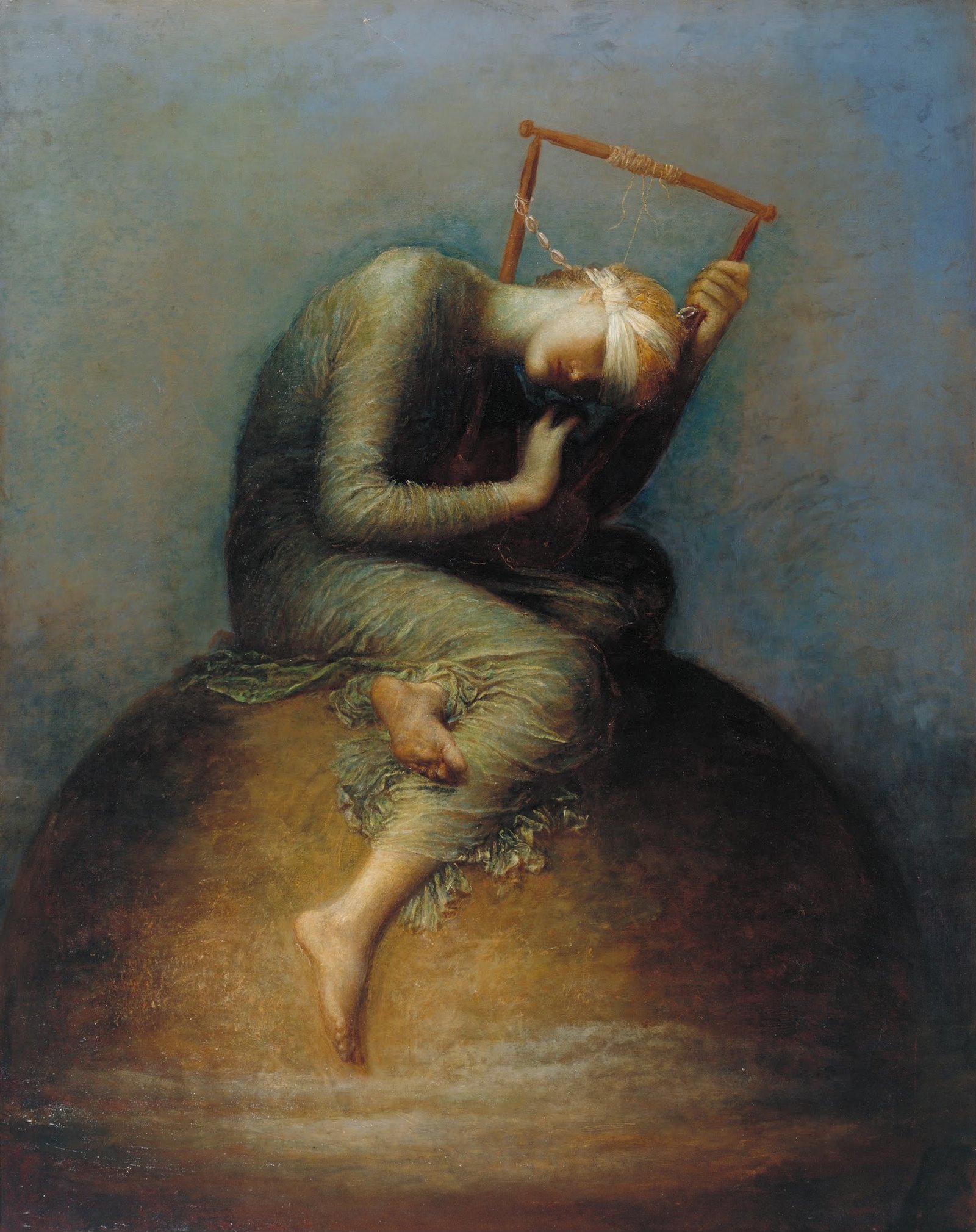
In Hope, a blindfolded woman sits on a globe, bent over a lyre with every string broken but one. She is straining to hear the last faint note. Watts' point is that hope isn't confident optimism. It's what remains when almost everything has gone. A single small star glows above her.
Why he mattersHope became one of the most reproduced paintings of its era. More than a century later, a sermon about it inspired the title of Barack Obama's book The Audacity of Hope.
Where to see itTate Britain, London. Watts Gallery in Compton, Surrey, is devoted to his work.
2. Pierre Puvis de Chavannes
Key worksThe Poor Fisherman (1881), murals of Saint Genevieve in the Panthéon, Paris
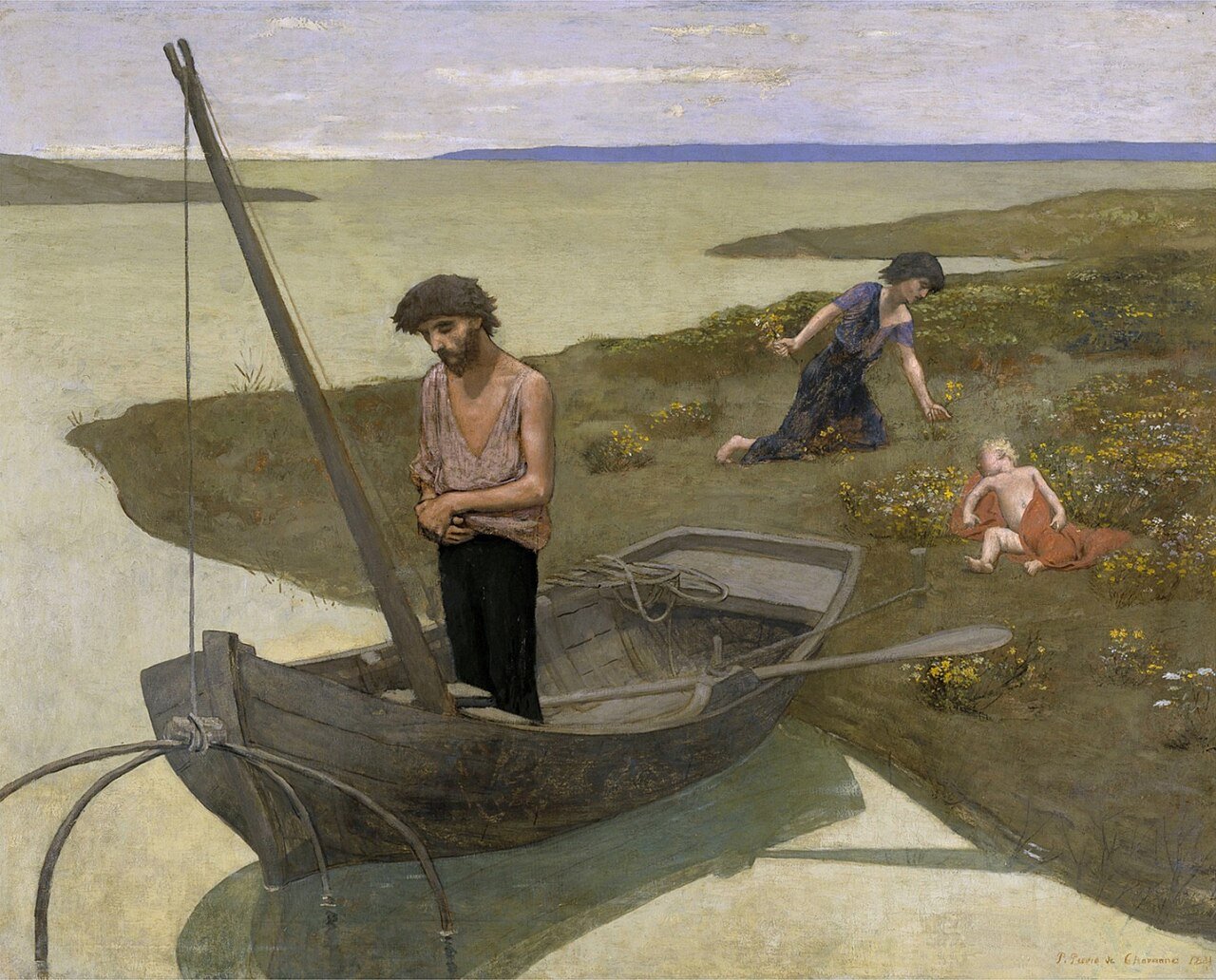
A fisherman stands in his boat with his head bowed, while his wife and child sit on the bare shore behind him. The flat, washed-out colours and the empty landscape make poverty feel like a spiritual state as much as a physical one: patient, silent, enduring.
Why he mattersPuvis created a calm, simplified style with flat colour and frozen figures that influenced Gauguin, Seurat and Picasso's Blue Period. Critics mocked The Poor Fisherman at first, but the French state bought it in 1887.
Where to see itMusée d'Orsay, Paris.
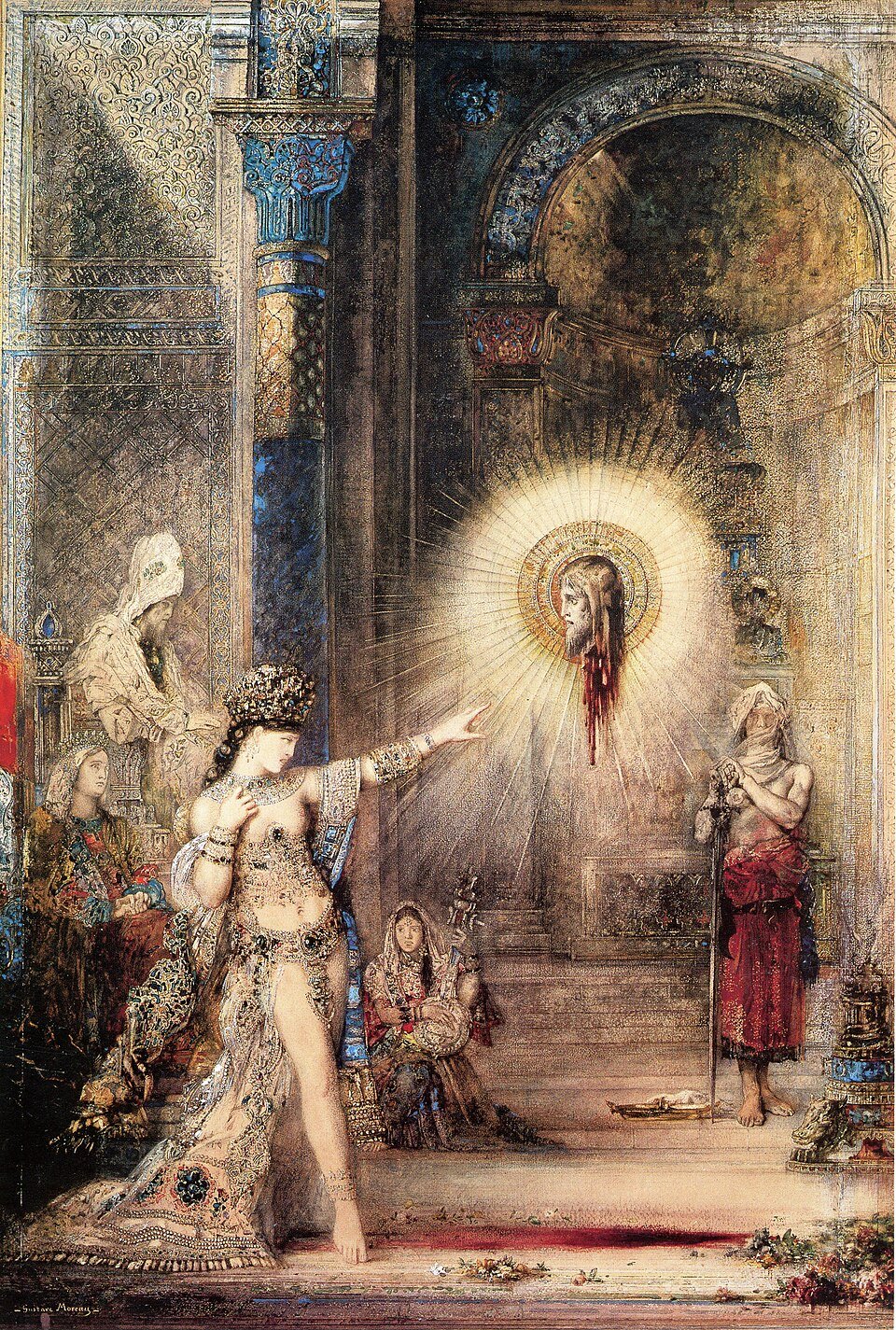
3. Gustave Moreau
Key worksThe Apparition (1876), Orpheus (1865), Jupiter and Semele (1895)
In The Apparition, Salome points at the severed head of John the Baptist hovering in the air, blazing with light. No one else in the room seems to see it. The head is a vision of guilt, and of the consequences of her desire, that only she can see.
Why he mattersMoreau is often called the father of Symbolist painting. His jewel-encrusted, dreamlike scenes from myth and the Bible defined the movement's look. As a teacher at the École des Beaux-Arts, he taught both Henri Matisse and Georges Rouault.
Where to see itMusée Gustave Moreau, his former home and studio in Paris, holds thousands of his works. Musée d'Orsay holds a watercolour version of The Apparition and Orpheus.
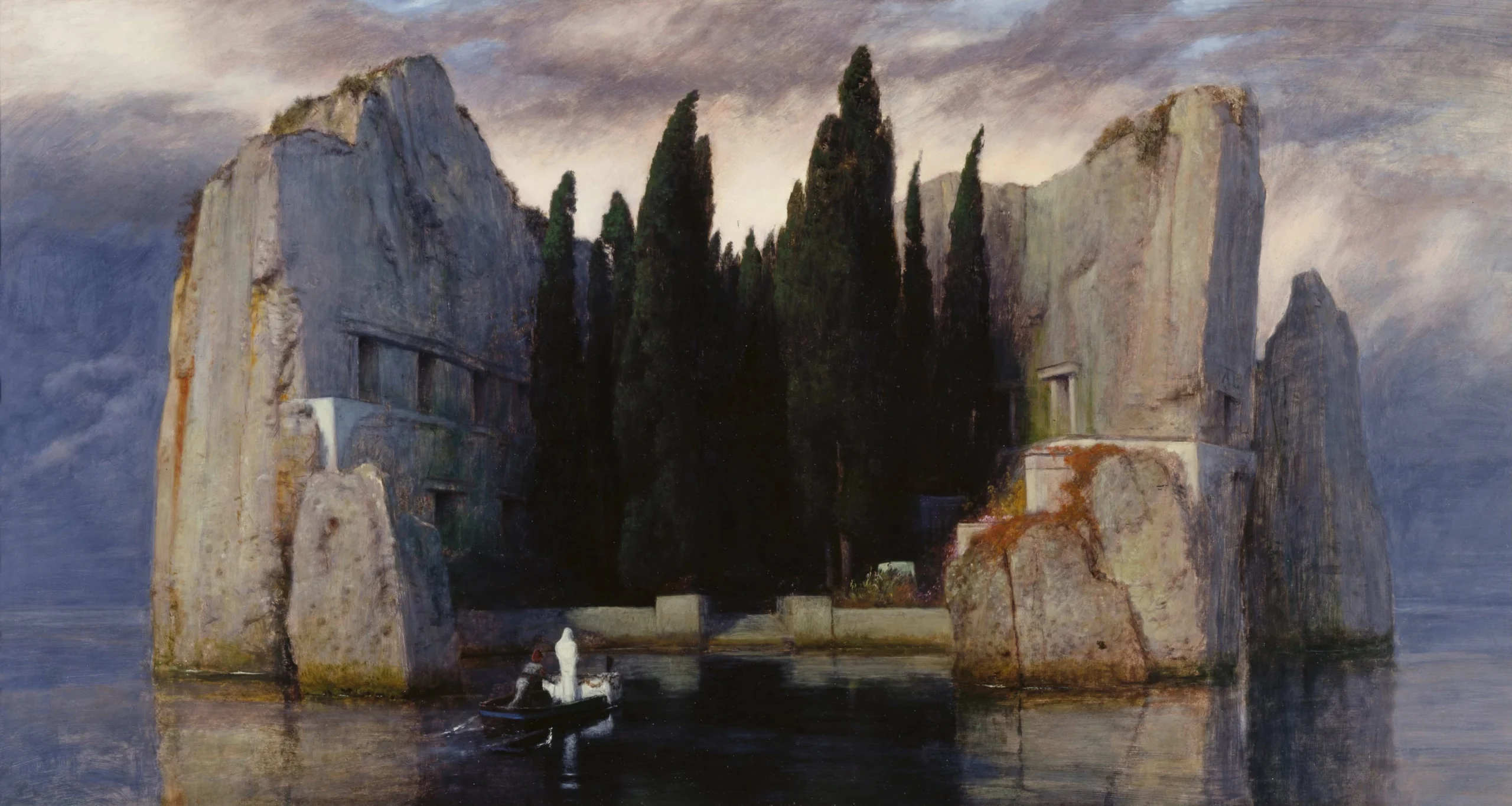
4. Arnold Böcklin
Key worksIsle of the Dead (five versions, 1880–1886), Self-Portrait with Death Playing the Fiddle (1872)
A small boat carries a standing figure wrapped in white toward a rocky island crowded with dark cypress trees, the traditional tree of mourning. The figure is usually read as a soul, or a mourner with a coffin, crossing over to death. The ferryman echoes Charon, who in Greek myth rowed the dead across the river Styx.
Why he mattersIsle of the Dead was so popular that reproductions hung in homes across Germany. It inspired Sergei Rachmaninoff's symphonic poem of the same name (1909).
Where to see itKunstmuseum Basel (first version), the Metropolitan Museum of Art in New York (second), and the Alte Nationalgalerie in Berlin (third).
Read more: Arnold Böcklin and his symbolic world →
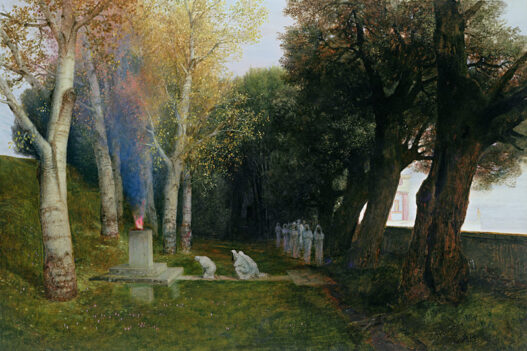
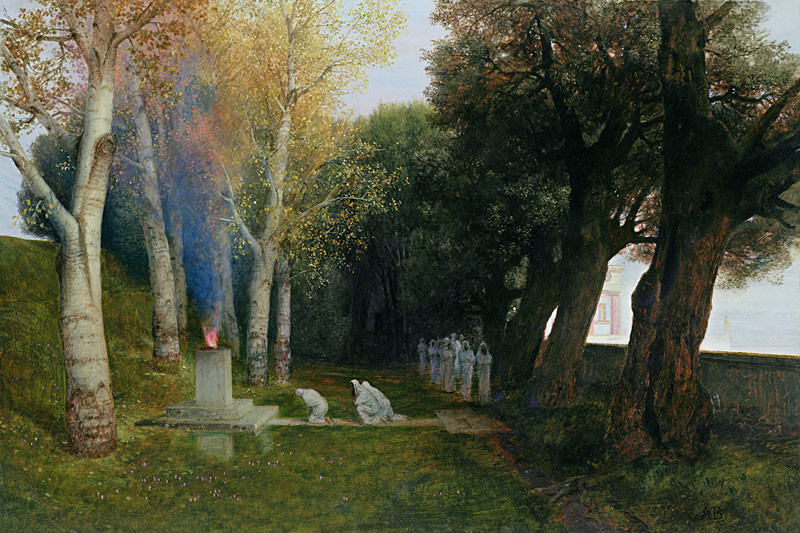
Read more: The Sacred Grove by Arnold Böcklin →
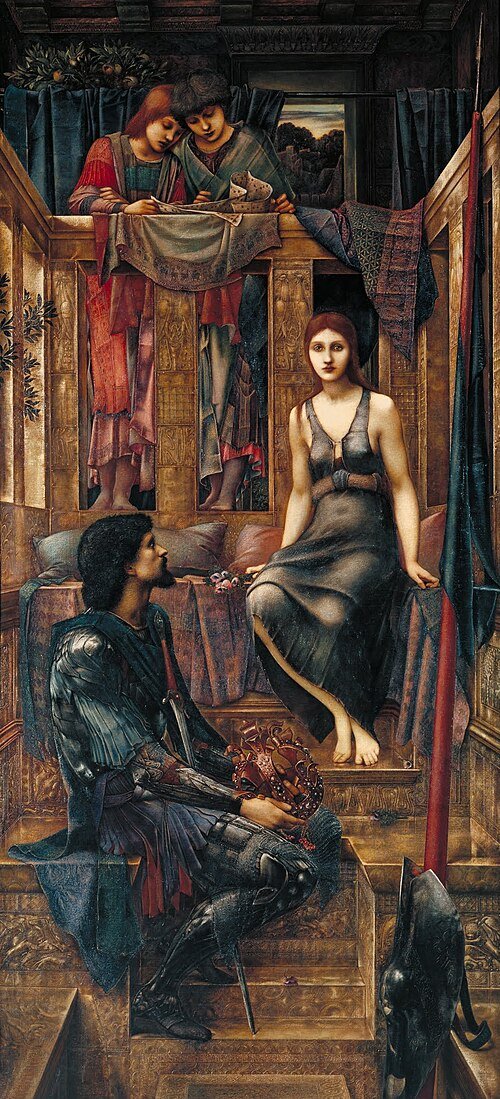
5. Edward Burne-Jones
Key worksKing Cophetua and the Beggar Maid (1884), The Golden Stairs (1880), The Briar Rose series
In the old legend, an African king falls in love with a beggar girl. Burne-Jones shows him sitting below her, holding his crown in his lap. Earthly power bows to beauty and love.
Why he mattersBurne-Jones belonged to the second wave of the Pre-Raphaelites, and King Cophetua was greatly admired when it was shown at the 1889 Paris Exposition Universelle. That brought British Symbolism to the attention of French artists.
Where to see itTate Britain, London. Buscot Park in Oxfordshire has the Briar Rose series.
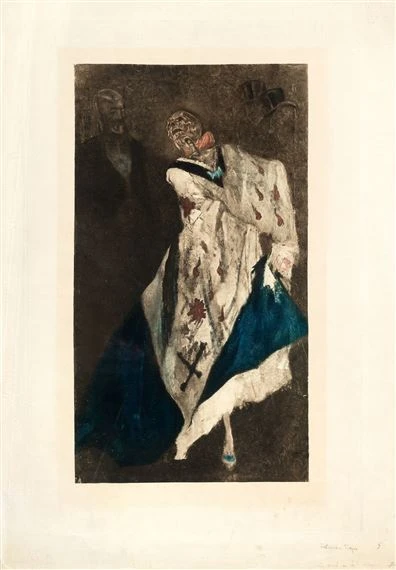
6. Félicien Rops
Key worksDeath at the Ball (c. 1865–75), Pornocratès (1878), The Temptation of Saint Anthony (1878)
A skeleton dressed in an elegant ball gown dances alone in the dark. Rops is drawing on the medieval danse macabre, the Dance of Death, in which death leads everyone away regardless of wealth or rank. Here death has dressed up for a fashionable Paris party. Beneath the glamour and finery of high society, he reminds us, everyone is the same skeleton.
Why he mattersRops was the most provocative of the Symbolists, a brilliant printmaker who explored vice, eroticism, death and the occult. He was a close friend of Charles Baudelaire and designed the frontispiece for his banned poems Les Épaves (1866).
Where to see itDeath at the Ball is at the Kröller-Müller Museum in Otterlo, Netherlands. The Musée Félicien Rops in Namur, Belgium, his hometown, holds the largest collection of his work, including Pornocratès.
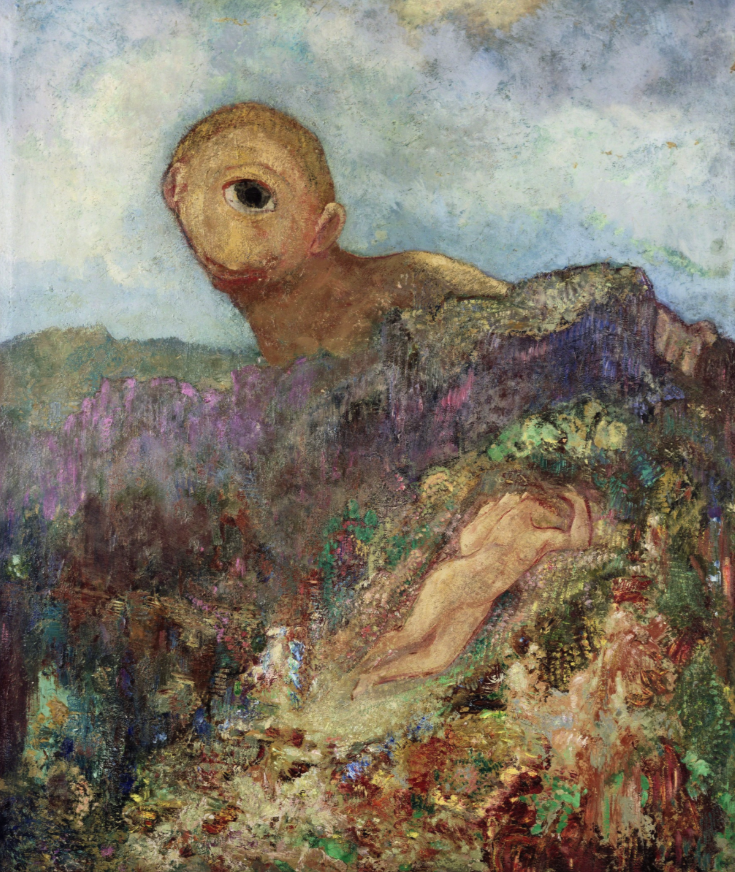
7. Odilon Redon
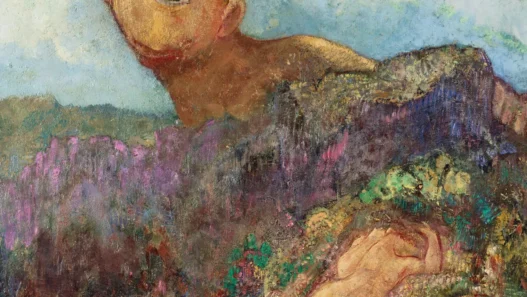
Key worksThe Cyclops (c. 1914), The Smiling Spider (1881), The Eye, Like a Strange Balloon, Mounts Toward Infinity (1882)
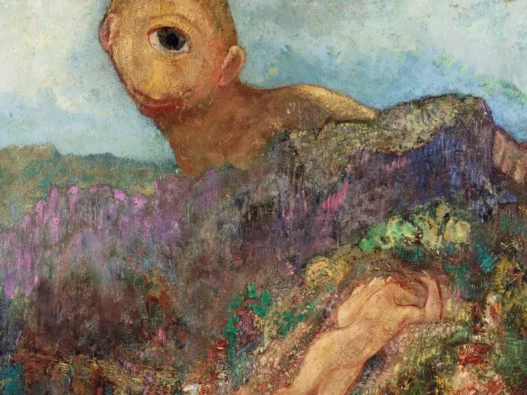
In Greek myth, the giant Cyclops Polyphemus fell in love with the sea nymph Galatea, who rejected him. Redon shows him peering shyly over the hills at her as she sleeps. He isn't a monster here but a lonely figure. The giant eye becomes a symbol of longing: endless watching without ever being seen back.
Why he mattersFor the first 20 years of his career, Redon worked almost entirely in black charcoal and lithography, producing strange creatures he called his noirs. Around 1890 he burst into rich colour. His dream imagery later fascinated the Surrealists.
Where to see itThe Cyclops is at the Kröller-Müller Museum in Otterlo, Netherlands. The Smiling Spider is at the Musée d'Orsay, Paris.
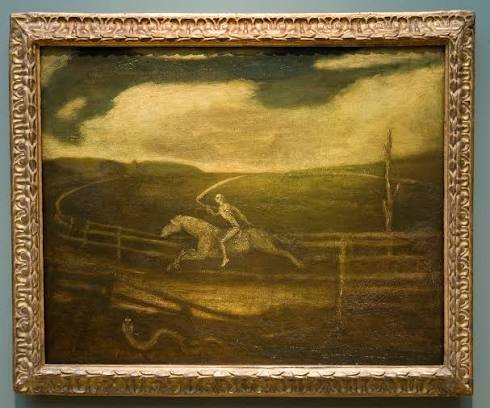
8. Albert Pinkham Ryder
Key worksThe Race Track (Death on a Pale Horse) (c. 1896–1908), Jonah (c. 1885–95), The Flying Dutchman (c. 1887)
A skeleton carrying a scythe rides around a deserted track under a stormy sky, and a snake lies in the foreground. Ryder painted it after hearing that a waiter he knew had lost his savings on a horse race and taken his own life. Death becomes the only winner of the race.
Why he mattersRyder is America's most important Symbolist. His brooding, almost abstract seascapes influenced Jackson Pollock and other Abstract Expressionists. Sadly, his habit of layering wet paint over wet paint means many of his works have darkened and cracked badly.
Where to see itCleveland Museum of Art. The Smithsonian American Art Museum in Washington has many others.
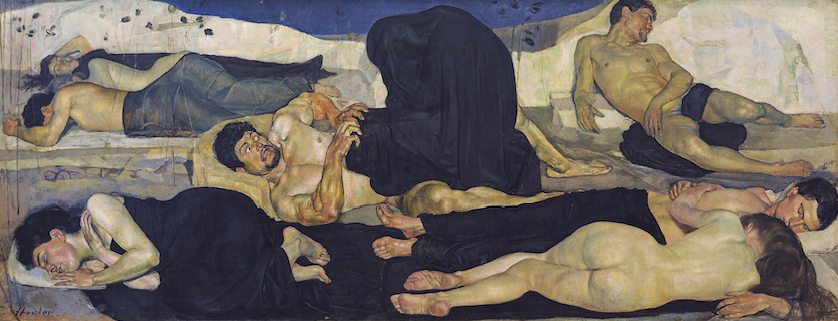
9. Ferdinand Hodler
Key worksNight (1889–90), The Chosen One (1893–94), Tired of Life (1892)
Several figures sleep peacefully, but in the centre one man has woken in terror, because a figure wrapped in black is crouching over him. It is death, arriving in the night. Hodler painted himself as the man.
Why he mattersNight was removed from an exhibition in Geneva in 1891 for being indecent, so Hodler showed it privately and charged admission. It then made him famous in Paris. He developed a style he called Parallelism, using repeated figures and symmetry to suggest universal order.
Where to see itKunstmuseum Bern, Switzerland.
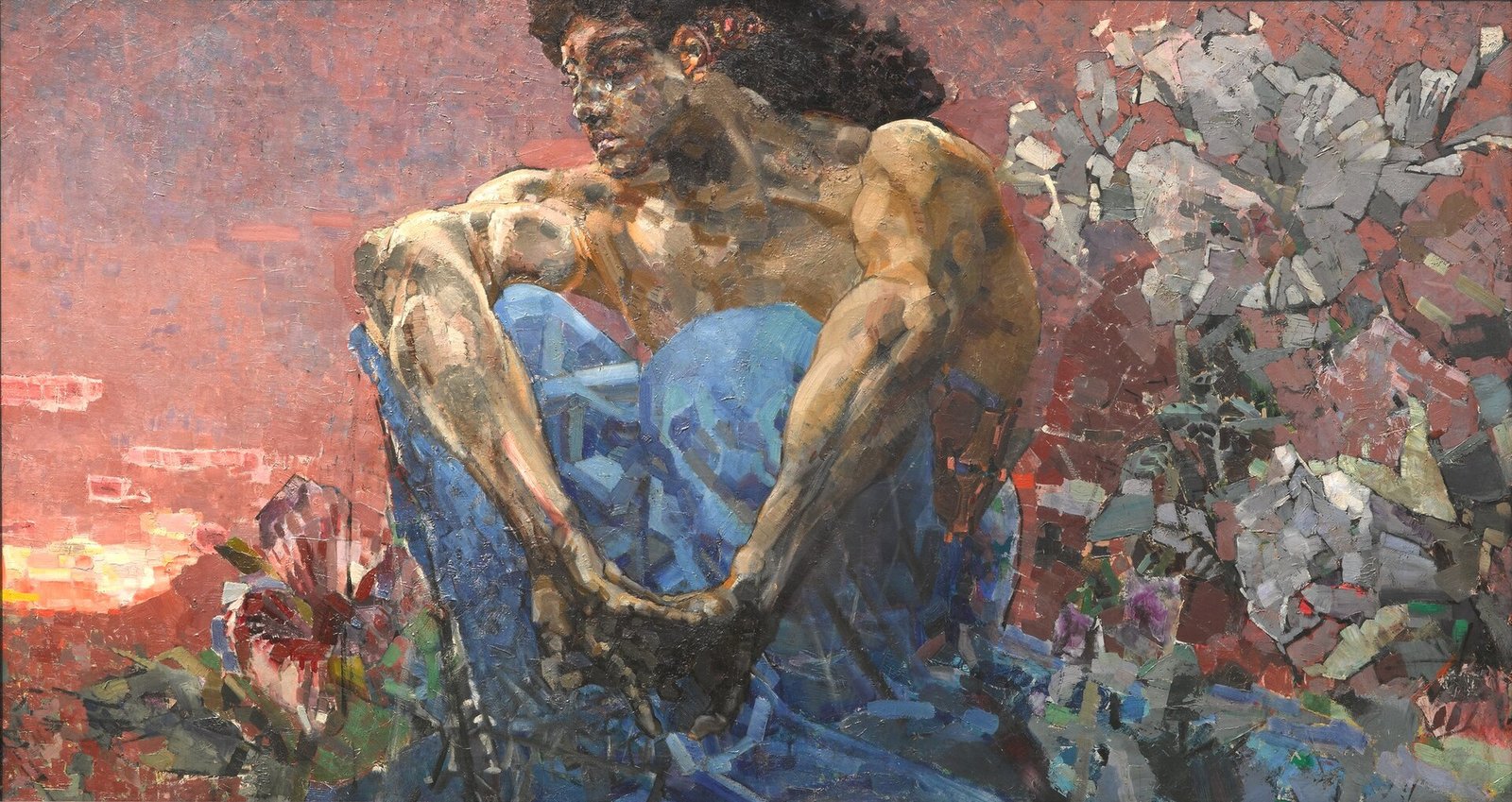
10. Mikhail Vrubel
Key worksDemon Seated (1890), Demon Downcast (1902), The Swan Princess (1900)
Vrubel's Demon isn't evil. He's a young man sitting with his hands locked tightly together, staring into nothing, surrounded by flowers that look like broken crystal. Based on Mikhail Lermontov's poem The Demon, he represents a soul in torment, longing and unable to belong anywhere.
Why he mattersVrubel is the great Russian Symbolist, with a fractured, mosaic-like style unlike anyone else's. The Demon obsessed him for 20 years. He suffered mental illness and lost his sight before his death in 1910.
Where to see itState Tretyakov Gallery, Moscow.
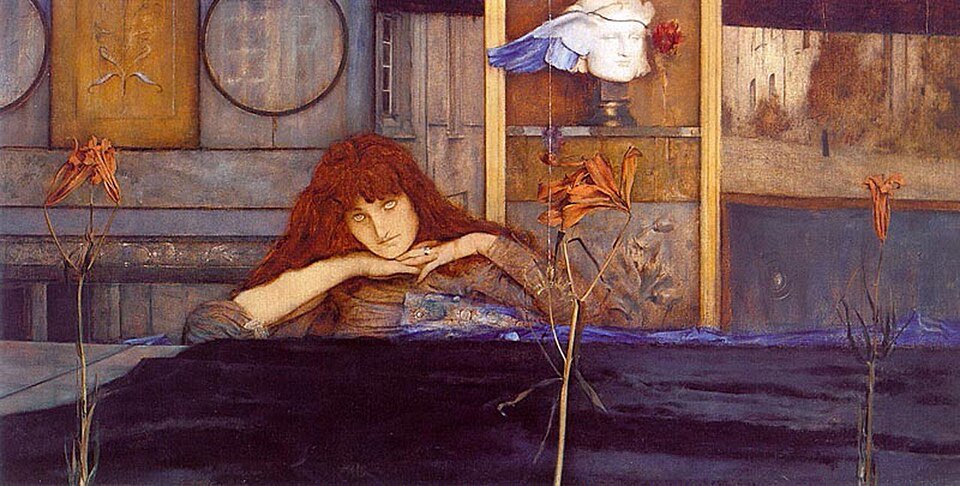
11. Fernand Khnopff
Key worksI Lock My Door Upon Myself (1891), The Caress (1896), Memories (1889)
A woman stares past us, lost in thought. Behind her sits a bust of Hypnos, the Greek god of sleep, with a wing on his head, and beside her lie lilies, symbols of purity and death. The title comes from a poem by Christina Rossetti. This is a painting about withdrawing completely into your inner world.
Why he mattersKhnopff was a founding member of the Brussels avant-garde group Les XX (Les Vingt) and one of the movement's most mysterious painters. His sister Marguerite was his favourite model, and her face appears again and again in his work.
Where to see itI Lock My Door Upon Myself is at the Neue Pinakothek, Munich. The Caress is at the Royal Museums of Fine Arts of Belgium, Brussels.
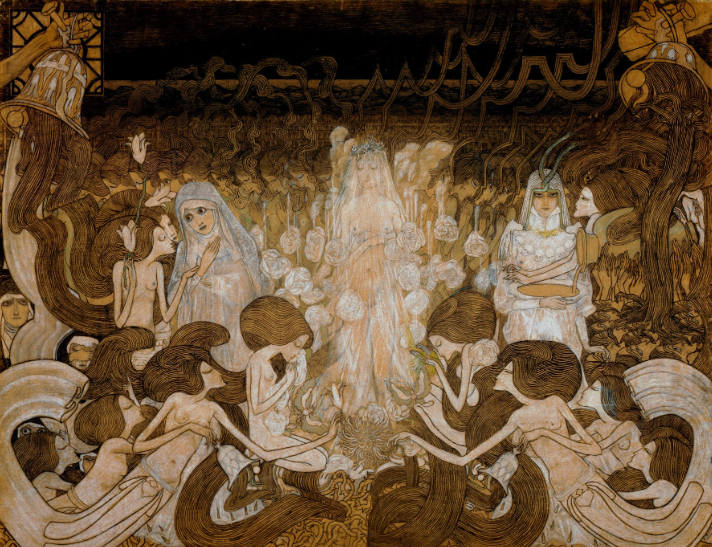
12. Jan Toorop
Key worksThe Three Brides (1893), Delftsche Slaolie poster (1894)
On one side is a nun, the bride of Christ, representing spiritual purity. In the centre is a human bride, caught between the two. On the other side is a bride of hell, wearing a necklace of skulls. Long flowing lines of hair and sound waves sweep through the whole picture, pulling the figures toward good or evil.
Why he mattersToorop's swirling, rhythmic lines, partly inspired by the art of Java where he was born, helped shape Art Nouveau. His salad oil poster was so influential that Dutch Art Nouveau was nicknamed the "salad oil style."
Where to see itKröller-Müller Museum, Otterlo, Netherlands.
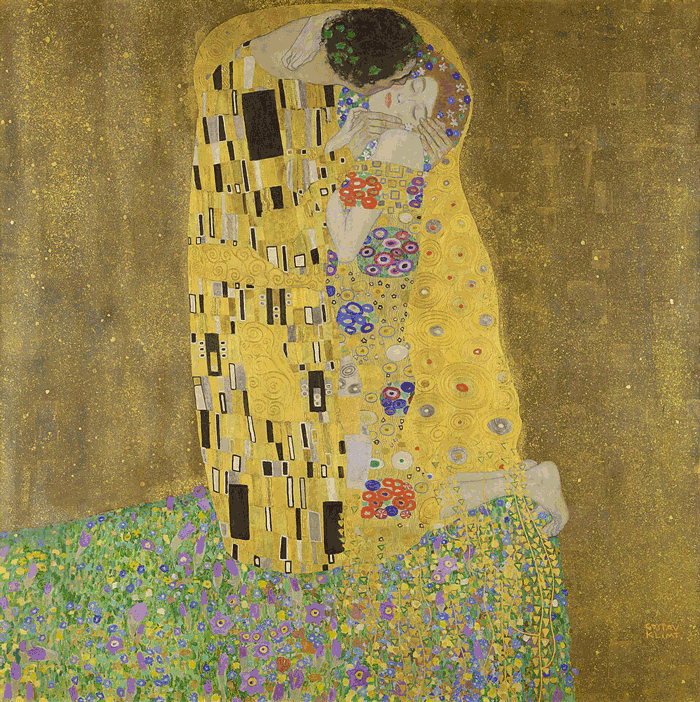
13. Gustav Klimt
Key worksThe Kiss (1907–08), Beethoven Frieze (1902), Judith and the Head of Holofernes (1901)
Look closely at the couple's golden robes. The man's is covered in black and white rectangles, the woman's in colourful circles and flowers. Klimt uses these shapes to represent masculine and feminine, merging into one golden form. The flower meadow ends abruptly at the edge of a cliff, suggesting love on the edge of a fall.
Why he mattersKlimt co-founded and led the Vienna Secession in 1897, breaking away from the traditional art establishment. His use of real gold leaf, inspired by Byzantine mosaics he saw in Ravenna, makes his work instantly recognisable.
Where to see itThe Kiss is at the Belvedere in Vienna. The Beethoven Frieze is in the Secession Building, Vienna.
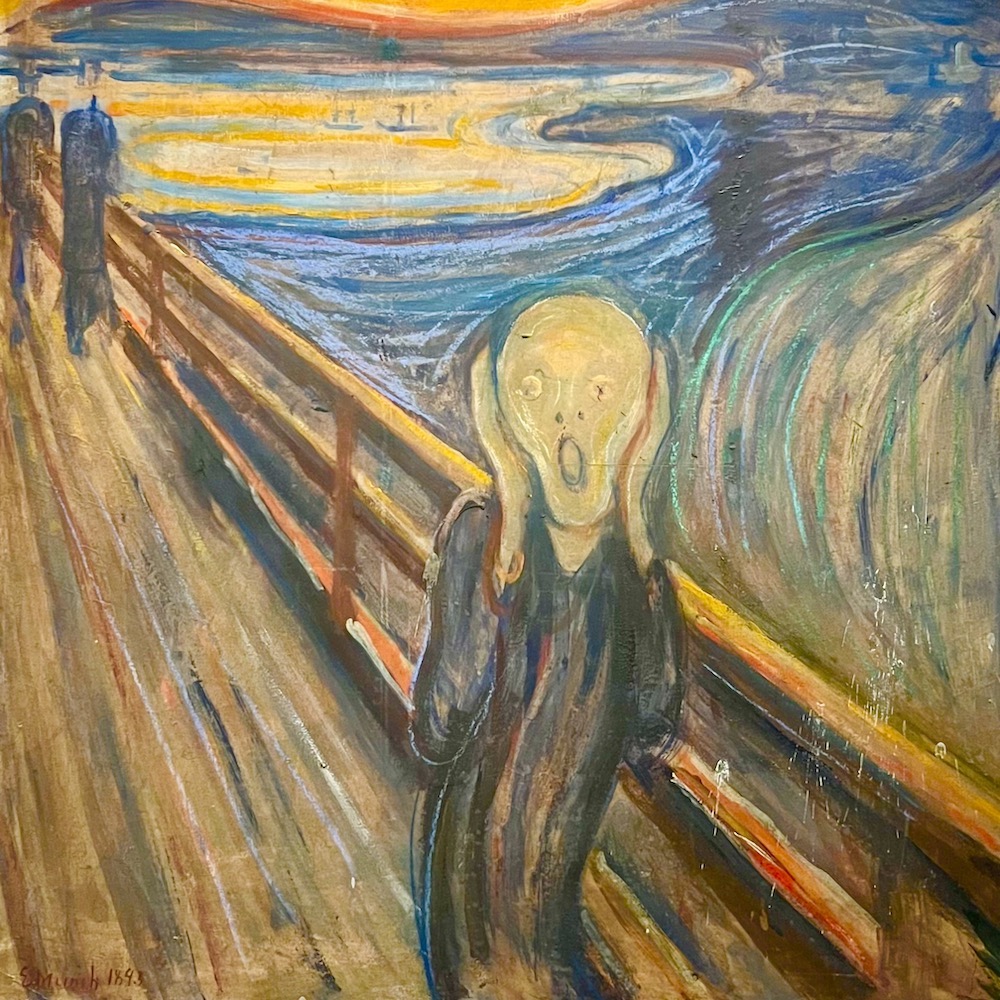
14. Edvard Munch
Key worksThe Scream (1893), Madonna (1894–95), The Sick Child (1885–86)
Munch described walking at sunset when the sky turned blood red and he felt a vast scream passing through nature. The figure on the bridge isn't screaming. It's covering its ears against the scream of the world. The swirling sky and landscape turn inner panic into something you can see.
Why he mattersMunch grouped his major works into The Frieze of Life, a cycle about love, anxiety and death. His raw, emotional style connected Symbolism to Expressionism, and The Scream has become one of the most recognised images of modern anxiety.
Where to see itThe National Museum and the Munch Museum, both in Oslo, which hold different versions.
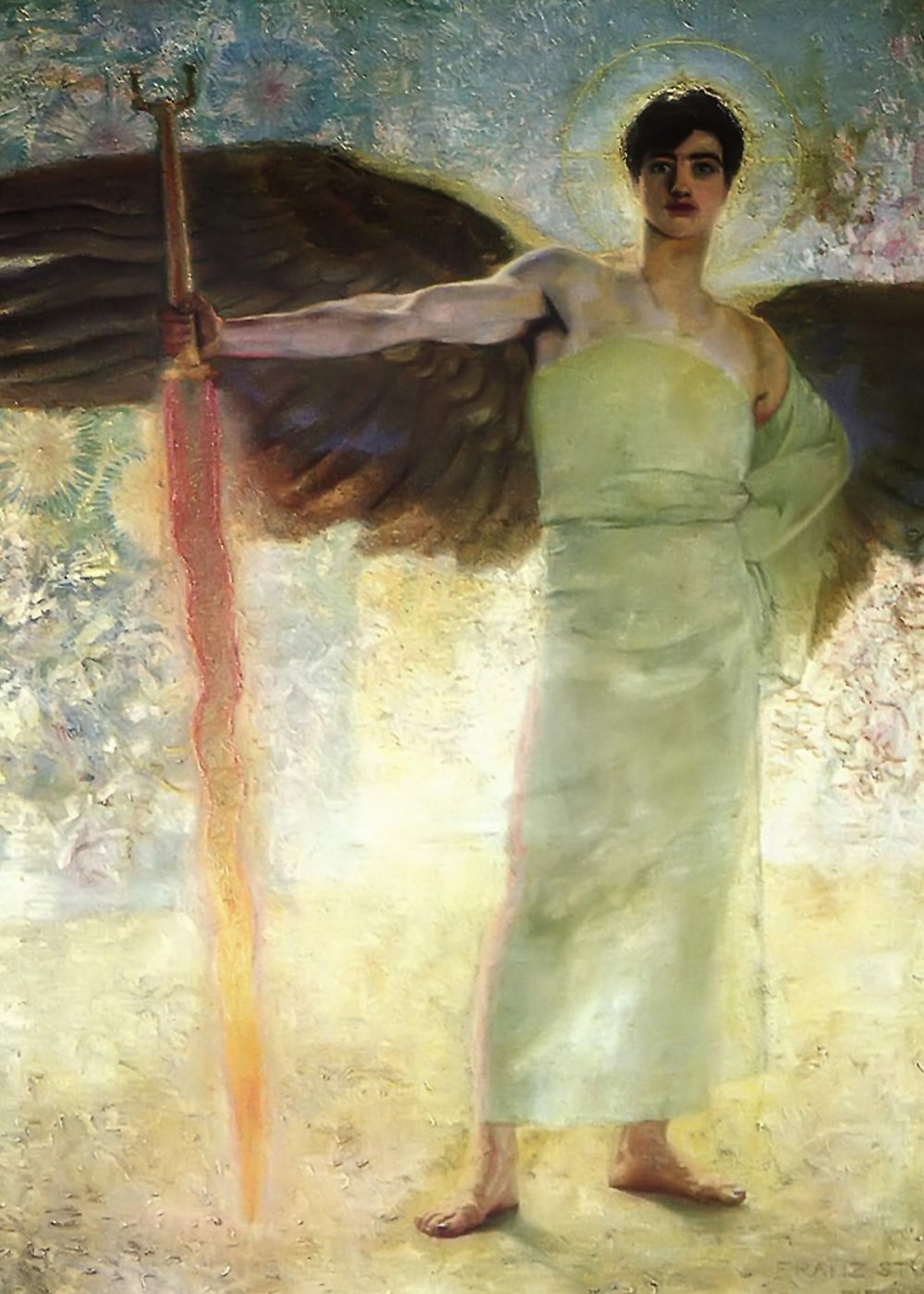
15. Franz von Stuck
Key worksThe Guardian of Paradise (1889), The Sin (1893), Sphinx (1904)
In the Book of Genesis, after Adam and Eve are driven out of Eden, God places an angel with a flaming sword at the gate to stop anyone returning. Stuck paints that angel standing guard, wings spread, sword in hand, glowing against the light of the garden behind. The sword is a symbol of paradise lost: innocence, once gone, can never be won back.
Why he mattersThe Guardian of Paradise made Stuck famous almost overnight. He went on to co-found the Munich Secession in 1892, and his painting The Sin (1893), which shows Eve and the serpent merged into one figure, became so central to his work that he hung it in an altar-like frame in his own home. As a professor at the Munich Academy, he taught Paul Klee and Wassily Kandinsky.
Where to see itThe Guardian of Paradise is at the Museum Villa Stuck, the artist's former home in Munich. The Sin is at the Neue Pinakothek, Munich.
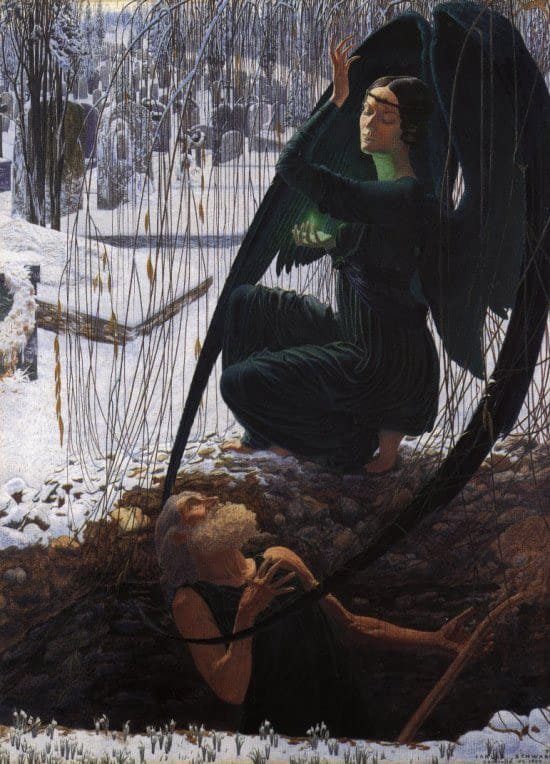
16. Carlos Schwabe
Key worksDeath and the Gravedigger (1895–1900), Spleen and Ideal (1907), illustrations for Baudelaire's Les Fleurs du mal (1900)
An old gravedigger stands in a grave he has been digging. Above him stands a beautiful winged angel of death, dressed in black and holding a small green light. Death is shown not as terrifying but as gentle and almost tender, calmly coming for the man who has spent his life burying others.
Why he mattersSchwabe designed the poster for the first Salon de la Rose+Croix (1892), the mystical exhibitions organised by Joséphin Péladan that brought many Symbolist painters together.
Where to see itMusée d'Orsay, Paris.
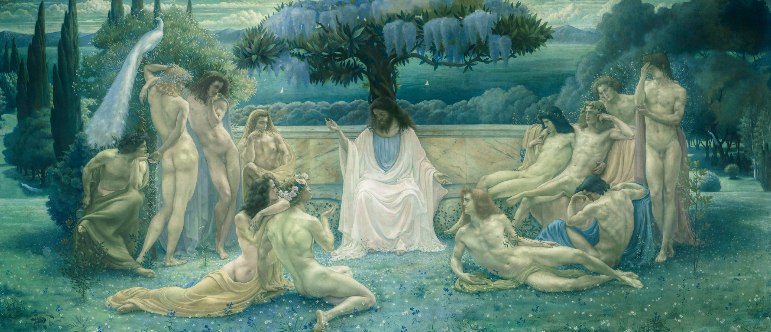
17. Jean Delville
Key worksThe School of Plato (1898), The Treasures of Satan (1895), The Love of Souls (1900)
Plato teaches in a sunlit garden, surrounded by twelve idealised young men. The number is deliberate: it turns Plato into a Christ-like figure with his apostles, merging ancient philosophy and Christian spirituality. The dreamy, androgynous figures represent Delville's idea of perfect spiritual beauty.
Why he mattersDelville was deeply involved in mysticism and the occult. He founded his own exhibitions, the Salon d'Art Idéaliste, in 1896, to promote art with a spiritual purpose.
Where to see itThe School of Plato is at the Musée d'Orsay, Paris. The Treasures of Satan is at the Royal Museums of Fine Arts of Belgium, Brussels.