




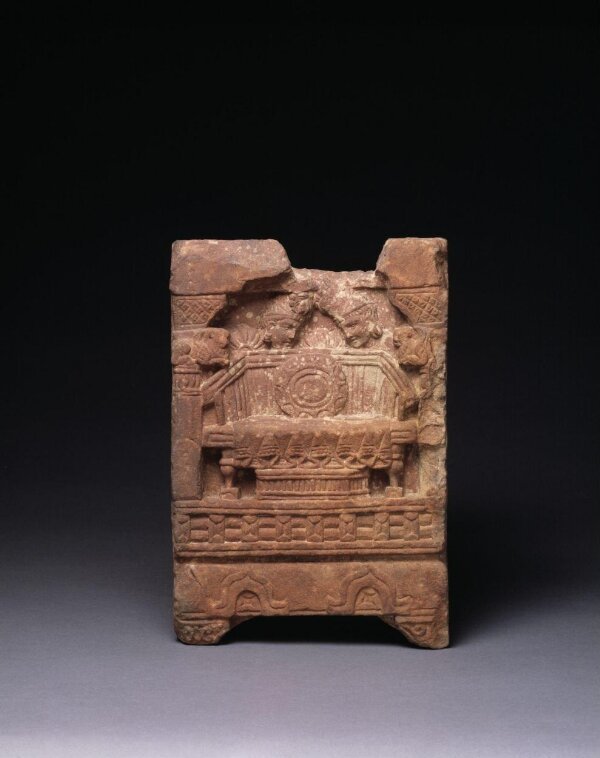
Two thousand years ago, sculptors carving the stone gateways and railings of sites like Sanchi and Bharhut in India faced a problem. How do you show someone who has reached enlightenment, who has passed beyond the cycle of birth and death?
Their answer was not to show the Buddha at all. Instead, they carved an empty throne beneath the Bodhi tree, as if he had only just stood up.
This is what the empty chair symbolises to me. It’s the idea of a space designated for reflection, a place whose purpose is finding a moment to breathe.
The Most Symbolic Chair in Art: The Empty Throne
If I had to choose the single most symbolic chair in the history of art, it wouldn’t be Van Gogh’s.
It would be a throne with no one sitting on it. Think about this for a moment. How many people have ever sat on a throne? Very few, and that’s exactly what gives it its power. Why is this one chair so full of opulence and greatness? Sometimes it’s carved in a castle; other times it’s nestled beneath the Bodhi tree, surrounded by footprints, Dharma wheels and hollow cups, where worshippers kneel before the empty seat as though someone is sitting there. Because, for them, someone is.
The Prepared Throne in Christian Art
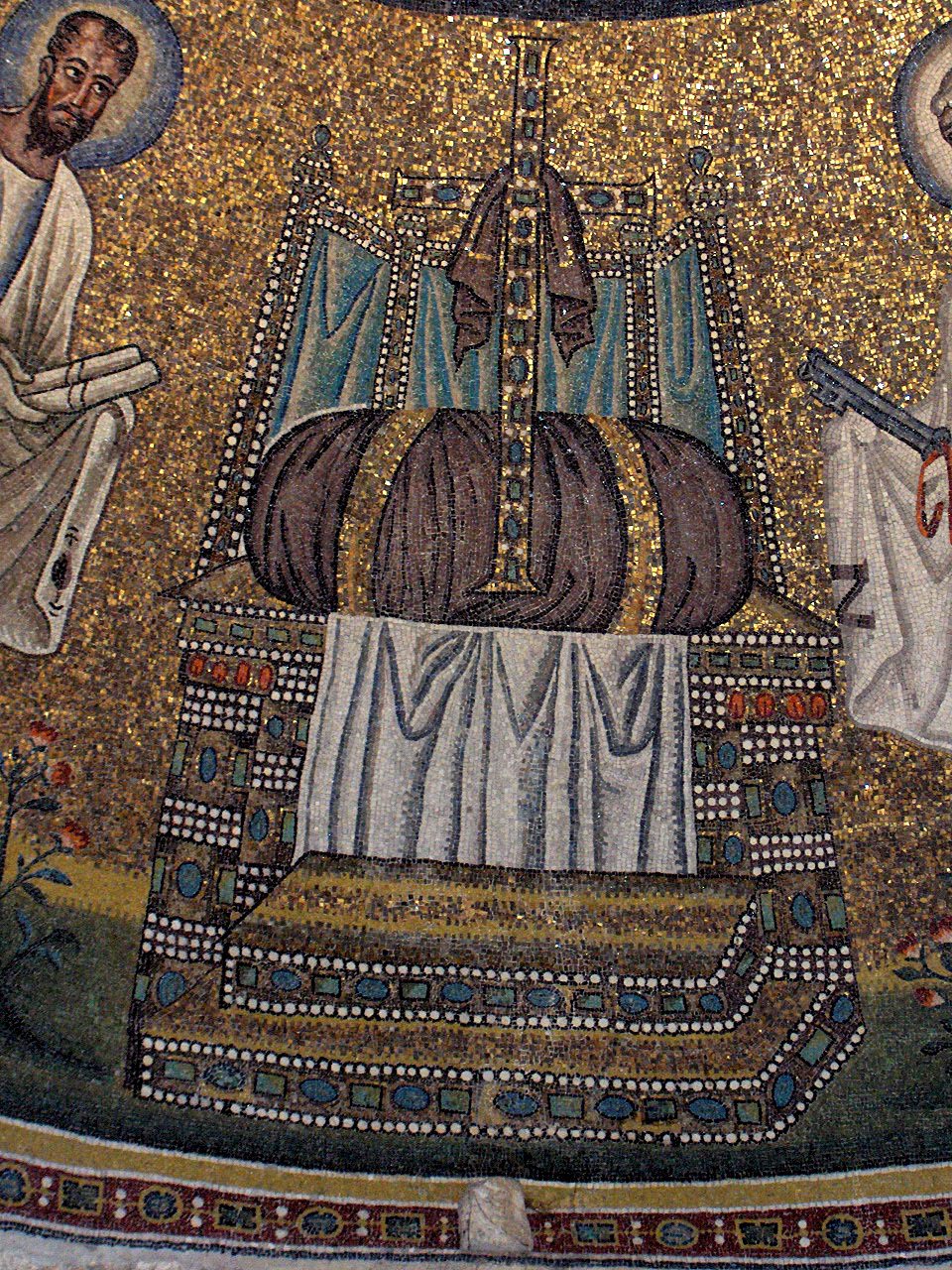
Several centuries later, Christian artists arrived at a strikingly similar symbol. In early mosaics in Rome and Ravenna, you can find an empty throne glittering in gold, often holding a cross, a closed book, a cushion, or a dove. It is called the *Hetoimasia*, from a Greek word meaning “preparation”: the throne prepared for Christ’s return at the end of time.
If you’ve ever stepped into a church, you will find that your eyes are drawn forward, toward the altar and the light above it. In some of the oldest churches, like Santa Maria Maggiore in Rome, what waits there is surprising: a golden throne with no one on it. Saints and angels gather around it, all turned toward the empty seat.
The mosaic was made in the 430s, only about twenty years after Rome had been sacked by the Goths. Earthly thrones were proving fragile. Yet here, shining in gold above the altar, was a throne that no army could take, kept ready for a King who would one day return. If that isn’t importance, I don’t know what is.
Then we can study the aesthetic of the throne. Every element is tuned to someone who is expected to sit down, and to the responsibility that comes with that seat. What really makes this chair symbolic, in my eyes, is the importance it has held for so many civilisations. It goes as far as the Maya, whose rulers appeared high above the crowds on towering pyramids, a spectacle people had to look up to, toward the heavens.
Keep that in mind as we move forward, because I think a little of that sacred waiting survives in every empty chair painted since.
Grief: Luke Fildes and Dickens’s Empty Chair
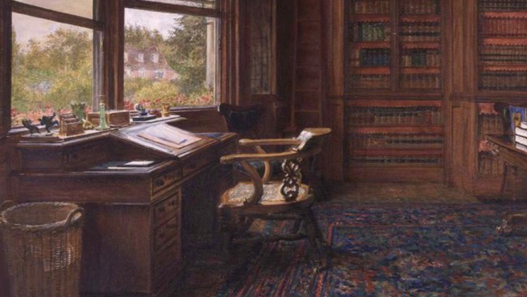
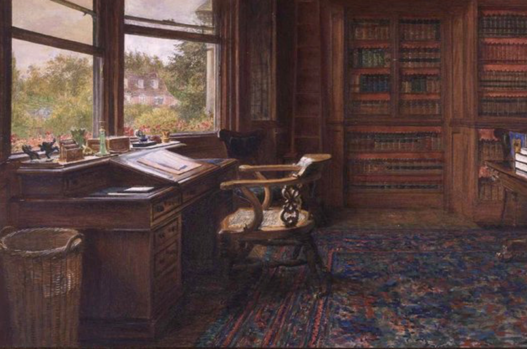
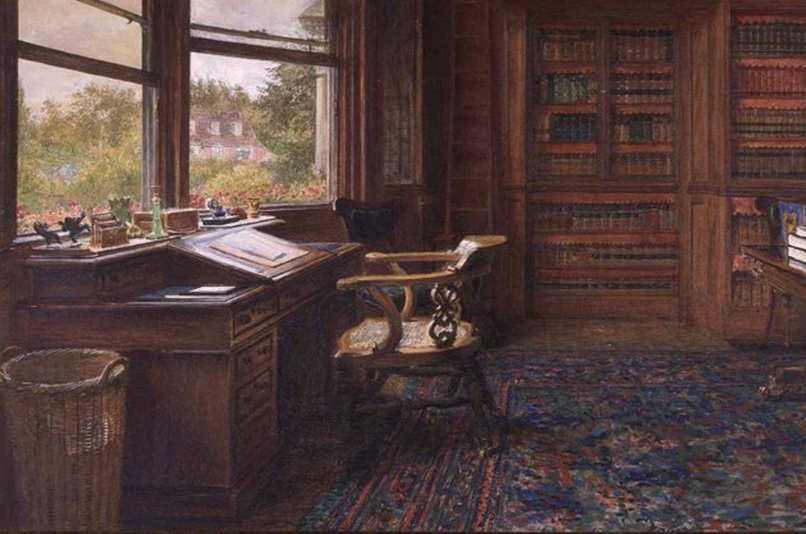
When Charles Dickens died in June 1870, the illustrator Luke Fildes was working with him on his final novel, The Mystery of Edwin Drood. Fildes visited Dickens’s study at Gad’s Hill and drew it as it had been left: the desk, the books, and the writer’s chair, pushed back and empty.
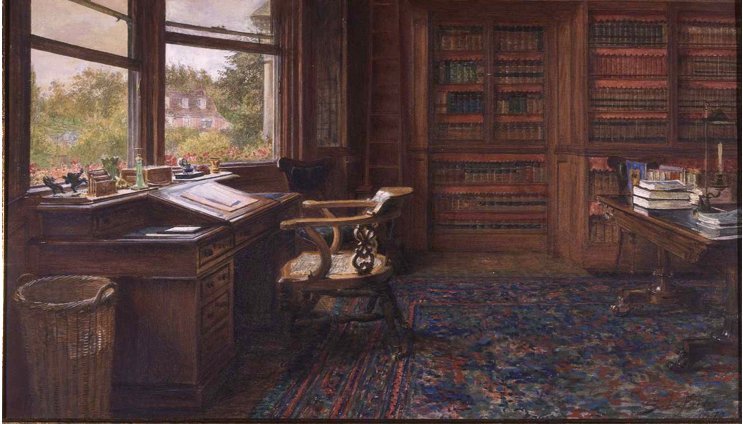
He called it The Empty Chair, Gad’s Hill: Ninth of June 1870. Published as a print in The Graphic that Christmas, it moved readers across Britain.
Everyone understood immediately what the chair meant. The voice behind so many stories had gone quiet. I think of a writer’s chair as the place where the flow state happens, where hours disappear and the words just come. Seeing it empty is like seeing that flow cut off mid-sentence, and for Dickens it literally was, since *Edwin Drood* was never finished.
Lately, I’ve been thinking about the objects we leave behind that tell a story: a cup of coffee gone cold and half finished, a book left open face down. Like Dickens’s chair, they hold the shape of a moment that was interrupted.
Notice how the symbol has changed. The sacred throne waited for someone to come. Dickens’s chair waits for someone who never will. That makes me feel uncomfortable about the things I’ve left unfinished.
Friendship and Its Loss: Van Gogh’s Two Chairs (1888)
Fildes’s drawing travelled further than he could have imagined. Years later, a young Vincent van Gogh, who collected prints from The Graphic, owned a copy and wrote to his brother about how deeply it moved him. The empty chair was being passed from one artist to the next.
In late 1888, Paul Gauguin came to stay with Van Gogh at the Yellow House in Arles.
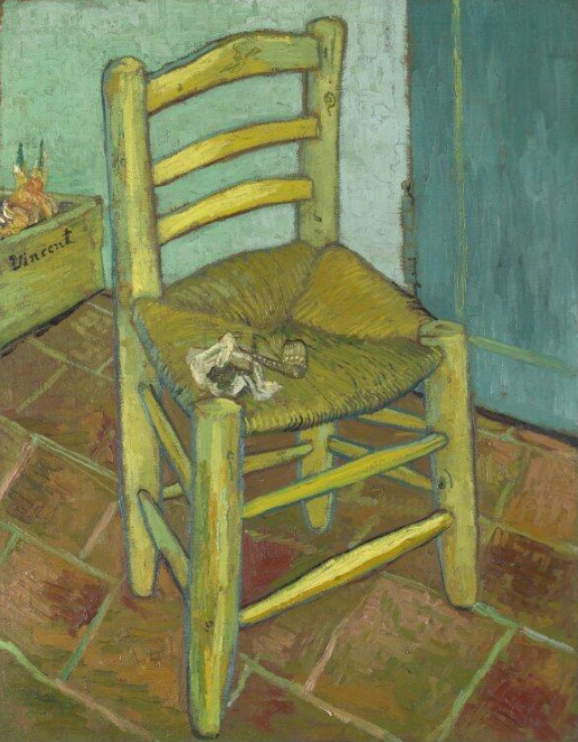
If you know about Van Gogh’s ear, you’re well aware of his tumultuous relationship with his dear friend. It wasn’t long, barely a month, before their friendship began to crack. Around then, Van Gogh painted two chairs as a pair, and every object in them is a symbol.
Van Gogh’s Chair is a plain wooden chair with a rush seat on a red-tiled floor, in daylight. On the seat lie his pipe and tobacco, symbols of quiet, everyday contemplation. Behind it, a box of sprouting onions carries his signature, “Vincent”: life pushing up from the earth, humble and rooted. It is the artist as he saw himself.
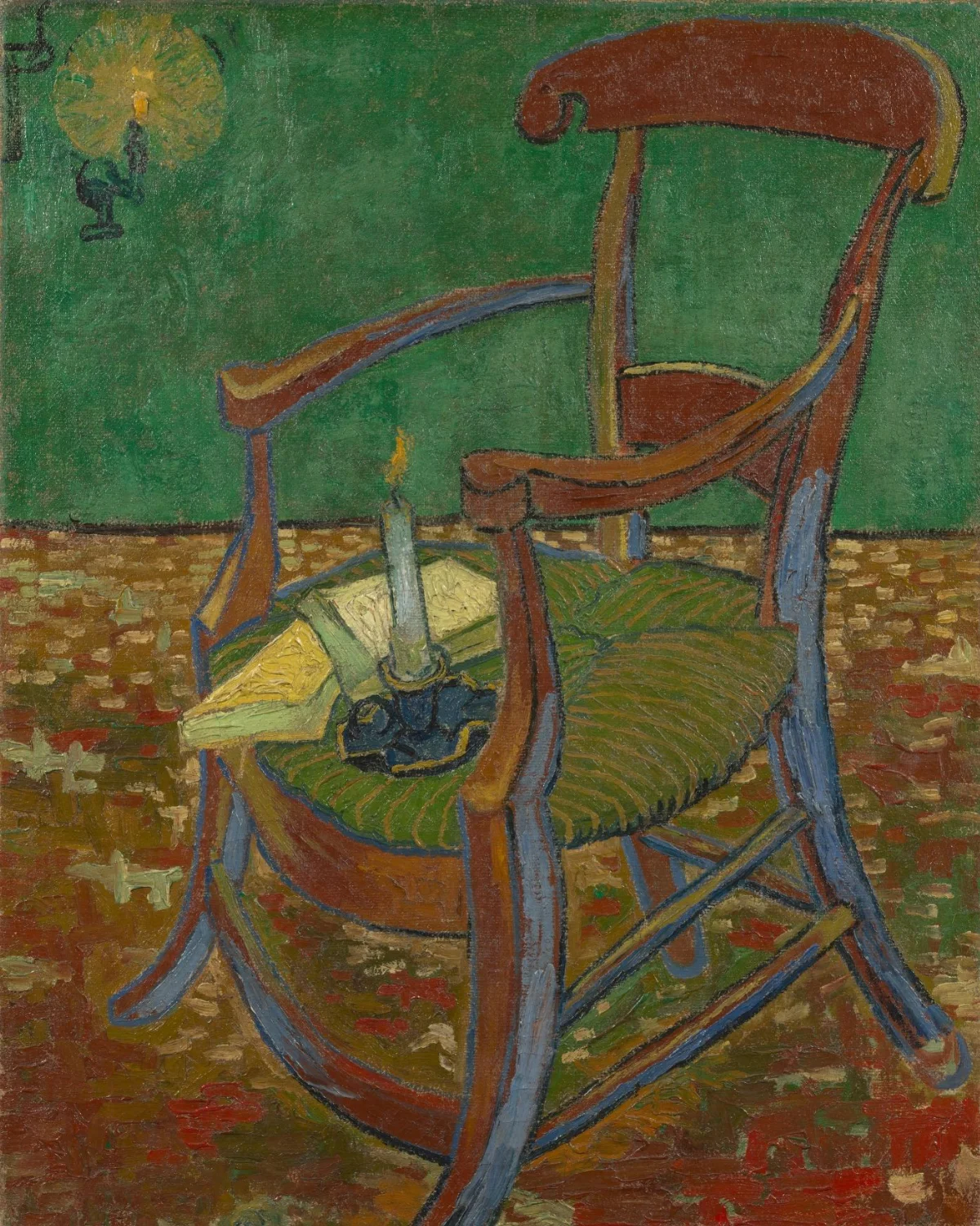
Gauguin’s Chair is an elegant armchair painted at night under a gas lamp. On its seat sit a lit candle and two novels. The candle suggests imagination and inner light, but also how quickly a flame burns down. The books suggest a man of ideas and invention. Daylight against night, earth against imagination: Van Gogh was painting their differences.
The beauty of these paintings isn’t the style, the brushstrokes, or the composition, but the profound character study hidden in the details. You can see two men who are like oil and water, trying to coexist and share ideas, yet constantly slipping around each other, holding off the catastrophe that was coming.
Just before Christmas 1888, after a violent quarrel, Van Gogh cut off part of his own ear. Gauguin left Arles, and the two men never saw each other again. Van Gogh later wrote that he had tried to paint his friend’s “empty place” in that armchair. Today the two chairs hang in different countries: Van Gogh’s in the National Gallery in London, Gauguin’s in the Van Gogh Museum in Amsterdam.
Even now, they are kept apart. I think that’s the irony of it all. Perhaps they are exactly where they need to be, watching each other from afar instead of crowding into each other’s space.
Whenever I visit the National Gallery, I can’t look at Van Gogh’s chair without feeling something heavy in my gut. It is such a modest object, painted with such care. Knowing what came next makes it almost unbearable: a portrait of a man, and a friendship, just before both began to break. I wonder if that feeling ever left him.
Waiting: Vilhelm Hammershøi’s Silent Rooms
If you’ve read my blog post about empty rooms, you’ll know Vilhelm Hammershøi already, and his chairs carry the same quiet.
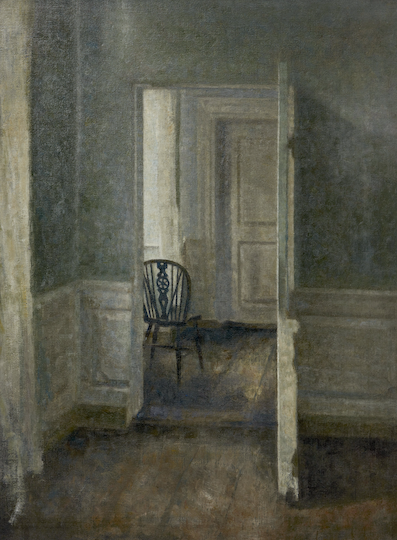
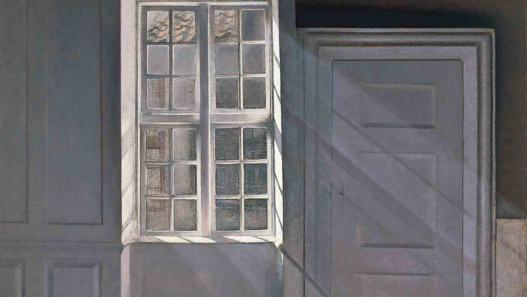
Around the turn of the twentieth century, Hammershøi painted the same few rooms of his Copenhagen apartment, at Strandgade 30, again and again. Often it’s just a single chair set against a bare wall. Sometimes his wife, Ida, appears with her back to us, sitting in that same chair or standing nearby, never quite letting us in. In paintings like Interior with Young Woman Seen from the Back (1904), you find yourself waiting for her to turn around. She never does.
His paintings have an unusually strange, suspended feeling, like a quiet afternoon at home when you can’t tell whether the stillness is peaceful or lonely.
Hammershøi is far less famous than Van Gogh, but if you want to understand how an empty chair can make silence visible, he is the painter to look at.
The Missing Many: Chairs as Memorials
If one empty chair can hold one person’s absence, many empty chairs can hold the absence of a whole community. I first understood this at my family’s dinner table. Eating together is a tradition that’s slowly fading in many Western countries, but in my house it always mattered. I once read that “the dinner table is the heart of the home,” and I believe it. So when my grandmother stopped coming to dinner, her empty chair felt strange, as if her memory and her shadow still lingered there.
Does the word “fairytale” come to mind when you think of empty chairs? It did for Ai Weiwei. In 2007, he brought 1,001 antique Qing dynasty chairs to an exhibition in Kassel, Germany, along with 1,001 ordinary Chinese citizens, many of whom had never travelled abroad before. For them, the journey itself was a kind of fairytale, so that’s what he called the project. Each chair suggested a person, a journey, and a life, scattered through the exhibition halls for visitors to sit in. I never made it to the exhibition, but I keep imagining the energy in those rooms, strangers resting in chairs that had outlived generations. Close your eyes for a moment. Which chair would you have chosen?
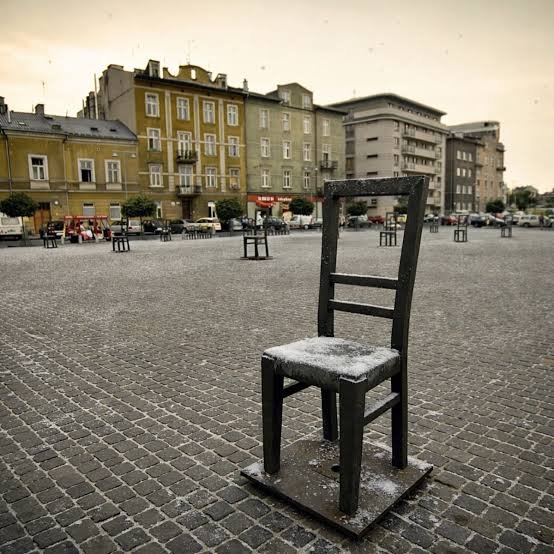
Then there’s Kraków, Poland. In Ghetto Heroes Square, Jewish residents of the ghetto were gathered for deportation during the Second World War, and the ground was left littered with the furniture families had been forced to leave behind. Since 2005, oversized bronze chairs have stood across the square, as though people have just stood up and walked away.
What gets me most is that some of the chairs sit right at the tram stops. I visited Kraków over a decade ago, and I must have walked right past them. That’s the part that stays with me: how many things do we walk past without noticing? Thinking about it makes me feel uncomfortable, maybe a little sad, but also strangely hopeful that they’re still there, waiting to be seen. It’s a reminder that the past isn’t fenced off somewhere. It’s often sitting right next to us, in plain sight, forgotten in the shroud of history.
At the Oklahoma City National Memorial, a field of 168 empty chairs honours each person killed in the 1995 bombing. They’re arranged in nine rows, one for each floor of the building, so every chair sits roughly where that person was when it happened. The most heartbreaking part is that the smaller chairs are for the children.
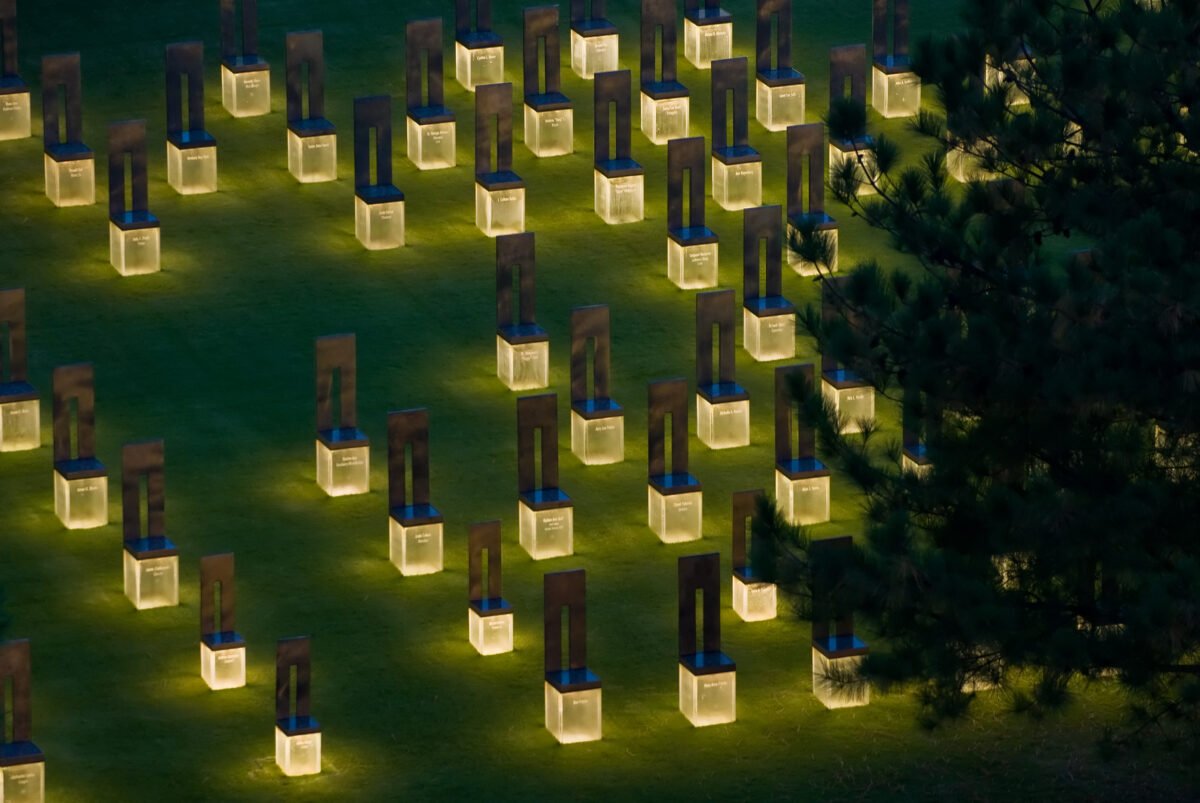
It’s a symbol you’d understand almost anywhere in the world: small furniture belongs to the innocent, to the parts of humanity that are still growing. The detail that haunts me most is the glass base of each chair, which glows from below at night like a flickering flame of memory, a reminder that warmth exists in everyone. When I look around my own space, I notice how rarely the chairs move. That’s why this piece makes me question whether I’d notice if one of them were suddenly empty.
And then there’s the Colombian artist Doris Salcedo, who has used chairs throughout her work to speak about violence and the people it erases. In Noviembre 6 y 7, she slowly lowered around 280 wooden chairs down the walls of Bogotá’s Palace of Justice over 53 hours, the length of the deadly siege there in 1985. I can only imagine watching them come down, one by one.
What all of these works understand is that we don’t need to see a face to feel a loss. We just need to know someone was there. Sometimes the furniture says it for us. An empty chair isn’t really empty; it’s full of everyone who ever sat in it.