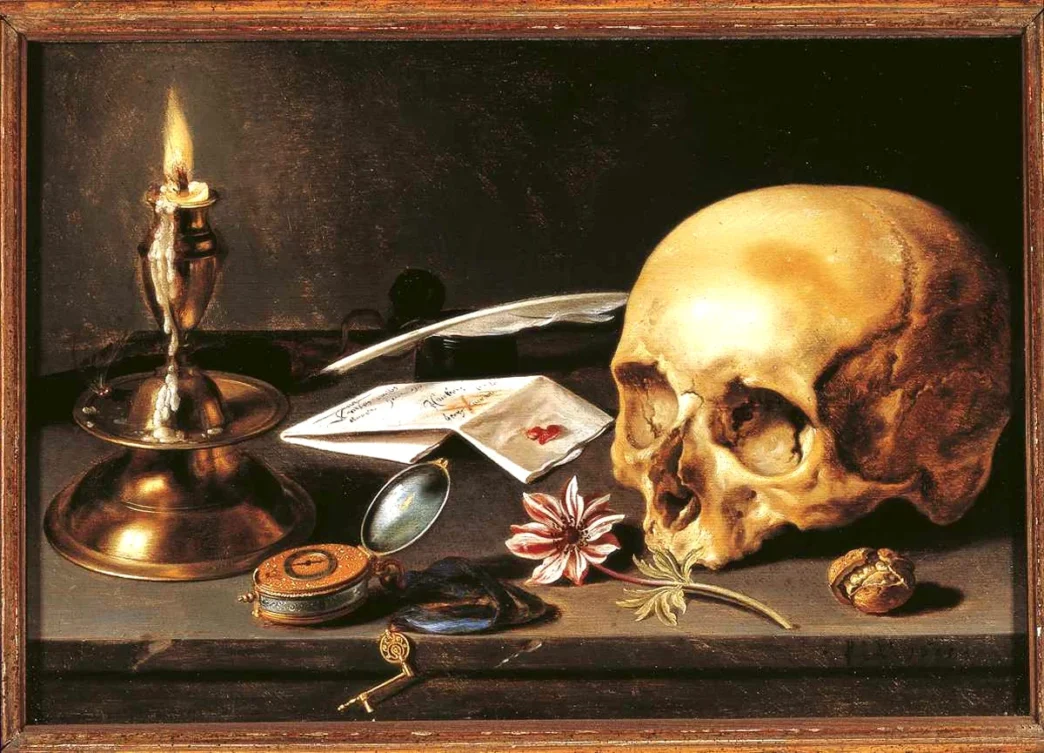
Symbols in art have long served as powerful tools for conveying complex ideas, emotions, and narratives. From ancient civilisations to contemporary movements, artists have employed symbolism to communicate beyond the literal, inviting viewers into deeper layers of meaning.
In this guide, we’ll explore the fascinating world of symbols in art, their evolution, and how they continue to inspire artists and audiences today.
Jump to a symbol
A skull on a desk, a raven at the window, a lily in an angel's hand: artists have used symbols for centuries to say what they couldn't paint directly. This guide explains 50 of the most common symbols in art, what they usually mean, and where to see them in famous paintings.
Symbols rarely have just one meaning. A snake can stand for temptation in one painting and healing in another, so always read a symbol alongside the title, the story and everything else in the picture. For more on the artists who used symbols most powerfully, see 17 Symbolist Artists You Should Know.
- Death & Mortality
- Animals
- Myth & the Sacred
- Ancient Signs
- Nature
- Objects & the Body
- Emotions & the Mind
Symbols of Death & Mortality
The memento mori ("remember you will die") tradition filled paintings with reminders that life is short.
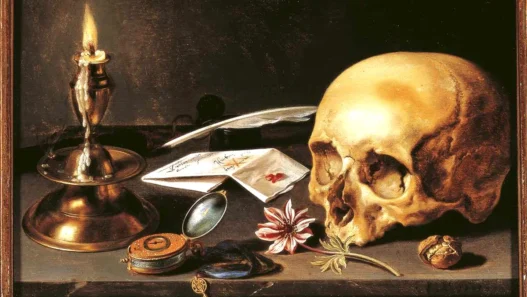
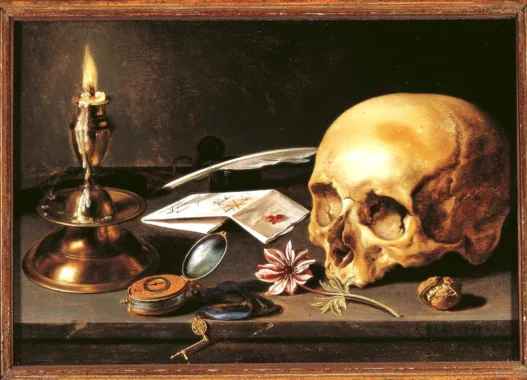
Skull
The most direct reminder of death. In still lifes and portraits, a skull warns that wealth, beauty and learning all end in the grave.
See it inHans Holbein, The Ambassadors (1533)
Full guide coming soonSkeleton
Death as a character. In the medieval Dance of Death, skeletons lead kings and beggars away alike: death treats everyone the same.
See it inPieter Bruegel the Elder, The Triumph of Death (c. 1562)
Full guide coming soonHourglass
Time running out. The falling sand shows a life draining away grain by grain, and the hourglass often appears in the hands of Death himself.
See it inAlbrecht Dürer, Melencolia I (1514)
Full guide coming soonCandle
A burning candle is a life; a guttering or snuffed one is a life ending. Candlelight also suggests spiritual light and reflection.
See it inGeorges de La Tour, Magdalene with the Smoking Flame (c. 1640)
Full guide coming soonPoppy
Sleep, dreams and death, because opium comes from the poppy. Since the First World War it has also become a symbol of remembrance.
See it inDante Gabriel Rossetti, Beata Beatrix (c. 1864–70)
Full guide coming soonMoth
Drawn to the flame that destroys it, the moth stands for desire, the fragile soul and the pull towards death.
Read the full guide →Melting Clock
Time losing its grip. Soft, drooping clocks suggest memory and dreams, where time no longer runs in a straight line.
See it inSalvador Dalí, The Persistence of Memory (1931)
Read the full guide →Animal Symbols in Art
Animals often carry the qualities people saw in them: loyalty, wisdom, danger, rebirth.
Raven
An omen of death and bad news, but also of wisdom. In Norse myth, Odin's two ravens, Thought and Memory, fly out each day to bring him news of the world.
See it inPaul Gauguin, Nevermore (1897)
Full guide coming soonOwl
Wisdom, as the bird of the goddess Athena, but also darkness, night and ignorance. Which meaning applies depends on the painting.
See it inFrancisco Goya, The Sleep of Reason Produces Monsters (1799)
Full guide coming soonSnake
Temptation and sin through the serpent of Eden, but also healing (the staff of Asclepius) and renewal, because snakes shed their skin.
See it inMichelangelo, The Fall, Sistine Chapel ceiling (c. 1509–10)
Full guide coming soonButterfly
The soul and resurrection. The Greek word psyche means both "soul" and "butterfly", and its transformation from caterpillar suggests new life.
See it inDutch flower still lifes, such as those by Rachel Ruysch
Full guide coming soonDove
Peace, purity and, in Christian art, the Holy Spirit, usually shown descending in a beam of light.
See it inPiero della Francesca, The Baptism of Christ (c. 1450s)
Full guide coming soonPeacock
Immortality, because people once believed its flesh never decayed, and also pride and vanity, thanks to its spectacular display.
See it inJames McNeill Whistler, The Peacock Room (1876–77)
Full guide coming soonDog
Loyalty and faithfulness. A small dog in a marriage portrait often stands for fidelity between husband and wife.
See it inJan van Eyck, The Arnolfini Portrait (1434)
Full guide coming soonLion
Strength, courage and royalty. In Christian art it also accompanies St Mark and St Jerome, who was said to have healed a lion's paw.
See it inAlbrecht Dürer, St Jerome in His Study (1514)
Full guide coming soonSymbols of Myth & the Sacred
Monsters, gods and holy signs that artists have returned to for thousands of years.
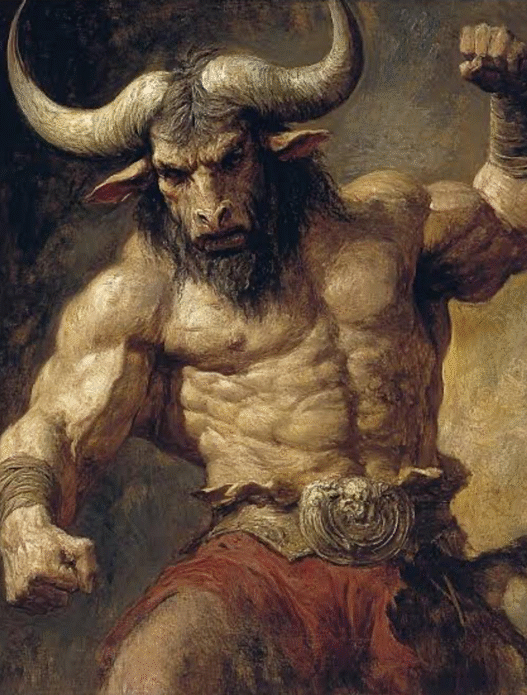
Minotaur
Half man, half bull, trapped in the labyrinth: the beast within us, our hidden instincts and shame.
See it inGeorge Frederic Watts, The Minotaur (1885)
Read the full guide →Medusa
The gaze that turns people to stone: danger, female rage and, on shields and doorways, protection against evil.
See it inCaravaggio, Medusa (1597)
Read the full guide →Sphinx
Mystery and the unanswerable question. In Greek myth she kills anyone who cannot solve her riddle.
See it inJean-Auguste-Dominique Ingres, Oedipus and the Sphinx (1808)
Read the full guide →Devil
Temptation, rebellion and the darker side of human nature, painted in endlessly changing forms for 1,500 years.
See it inWilliam Blake, Satan Exulting over Eve (1795)
Read the full guide →Phoenix
Rebirth through fire. The mythical bird burns and rises again from its own ashes, a symbol of resurrection and renewal.
See it inThe Phoenix Portrait of Elizabeth I (c. 1575)
Full guide coming soonHalo
A ring or disc of light around the head, marking holiness and divine presence.
See it inGiotto, frescoes of the Scrovegni Chapel, Padua (c. 1305)
Full guide coming soonAncient Signs & Patterns
Shapes and signs far older than painting itself, still used by artists today.
Ouroboros
A snake eating its own tail: eternity, endless cycles, and the unity of beginning and end.
See it inGreek and medieval alchemical manuscripts
Read the full guide →Yin Yang
Balance between opposites, light and dark, each containing a seed of the other.
Read the full guide →Celtic Knot
Unbroken, interlacing lines with no beginning or end: eternity and the connection of all things.
See it inThe Book of Kells (c. 800)
Read the full guide →Sacred Geometry
Circles, squares and proportions believed to reflect the hidden order of the universe.
See it inLeonardo da Vinci, Vitruvian Man (c. 1490)
Read the full guide →Black Sun
In alchemy, the dark first stage of transformation: melancholy and the light hidden within darkness.
Read the full guide →Labyrinth
The winding journey to the centre, whether to a monster, to God or to the self.
See it inThe floor labyrinth of Chartres Cathedral (c. 1200)
Read the full guide →Spiral
Energy, growth and the turning of the cosmos, and in some paintings, a restless mind.
See it inVincent van Gogh, The Starry Night (1889)
Read the full guide →Symbols from Nature
Flowers, trees, fruit and the heavens, each with meanings built up over centuries.
Tree of Life
The link between heaven, earth and the underworld: growth, family and the connection of all living things.
See it inGustav Klimt, The Tree of Life, Stoclet Frieze (1905–11)
Read the full guide →Forest
The unknown and the unconscious: the dark wood where heroes get lost before they find their way.
See it inPaul Nash, We Are Making a New World (1918)
Read the full guide →Lily
Purity and the Virgin Mary. The angel Gabriel often holds lilies in scenes of the Annunciation. Lilies can also mean death.
See it inLeonardo da Vinci, The Annunciation (c. 1472–76)
Full guide coming soonRose
Love and passion in red, purity in white, and secrecy: something said sub rosa, "under the rose", was to be kept private.
See it inJohn Singer Sargent, Carnation, Lily, Lily, Rose (1885–86)
Read the full guide →Apple
Temptation, knowledge and the Fall of Adam and Eve, and in later art, desire and hidden identity.
See it inLucas Cranach the Elder, Adam and Eve (1526)
Full guide coming soonPlum Blossom
Endurance and renewal. Plum trees flower in late winter, blooming before the snow has gone.
See it inOgata Kōrin, Red and White Plum Blossoms (18th century)
Read the full guide →Water
Life, cleansing and rebirth, but also the passage to death, as in the rivers the dead must cross.
See it inJohn Everett Millais, Ophelia (1851–52)
Full guide coming soonMoon
Mystery, cycles, the feminine and, in older belief, madness: the word "lunatic" comes from luna.
See it inCaspar David Friedrich, Two Men Contemplating the Moon (c. 1819–20)
Read the full guide →Sun
Life, power and the divine. Almost every ancient civilisation worshipped a sun god.
Read the full guide →Objects & the Body
Everyday things and parts of the body that carry surprising meanings.
Mirror
Vanity, truth and self-knowledge. A mirror can show a sitter's pride, or a reflection of what lies hidden.
See it inGeorges de La Tour, The Penitent Magdalen (c. 1640)
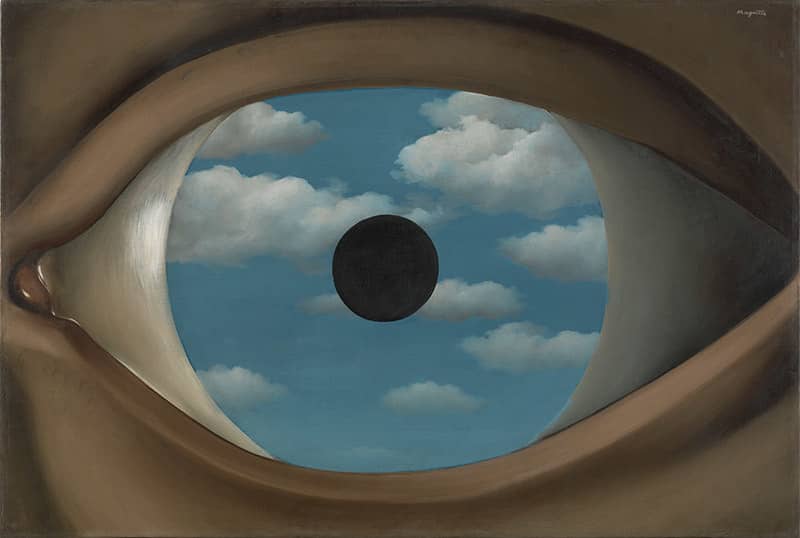
Full guide coming soonEye
Divine watchfulness and inner vision, from the Eye of Horus to the all-seeing eye on the Great Seal of the United States.
See it inOdilon Redon, The Eye, Like a Strange Balloon, Mounts Toward Infinity (1882)
Full guide coming soonVeil
Mystery, modesty, mourning and the thin boundary between the visible world and the hidden one.
See it inGiuseppe Sanmartino, The Veiled Christ (1753)
Read the full guide →Key
Power, access and secret knowledge. In Christian art, St Peter holds the keys to the kingdom of heaven.
See it inPietro Perugino, Delivery of the Keys (1481–82)
Full guide coming soonHeart
Love, devotion and courage. A flaming or glowing heart represents burning religious love.
See it inDevotional images of the Sacred Heart
Full guide coming soonHand
Creation, power and blessing: a hand can give life, judge, bless or reach for connection.
See it inMichelangelo, The Creation of Adam (c. 1512)
Read the full guide →Symbols of Emotion & the Mind
How artists paint feelings that have no shape of their own.
Loneliness
Empty streets, single figures, harsh light and windows that separate people from each other.
See it inEdward Hopper, Nighthawks (1942)
Read the full guide →Empty Chair
Absence and loss: the place of someone who has gone and is not coming back.
See it inVincent van Gogh, Van Gogh's Chair (1888)
Read the full guide →Empty Room
Silence, memory and the presence of absence, painted as quiet rooms with closed doors.
See it inThe interiors of Vilhelm Hammershøi
Read the full guide →Grief
Tears, black clothing, bowed heads and the dead body held by mourners, as in the Pietà.
See it inRogier van der Weyden, The Descent from the Cross (c. 1435)
Full guide coming soonHope
An anchor, a single star, a lyre with one string: symbols of what remains when almost everything has gone.
See it inGeorge Frederic Watts, Hope (1886)
Full guide coming soonDeath & Rebirth
The butterfly, the shedding snake and the phoenix: symbols of transformation through endings.
Read the full guide →The Shadow Self
Carl Jung's name for the hidden side of our personality, often painted as a monster or a dark double.
Read the full guide →Myth: the stories behind the symbols
Myths gave symbols their stories. The Minotaur in his labyrinth, the riddle of the Sphinx and the head of Medusa were painted again and again because each one holds a human truth: our hidden instincts, the questions we can't answer, the danger of looking too closely. Start with The Symbolism of the Minotaur or Greek Mythology in Art.
Myth, folklore and storytelling
Mythology and folklore are deeply intertwined with symbolism, and animals often represent different sides of life. In Greek mythology, every god had an attribute that identified them at a glance: Zeus's thunderbolt, Poseidon's trident, Athena's owl. In ancient Egypt, the scarab beetle stood for rebirth and the ankh for life itself. And in many Native American traditions, animals such as the bear and the eagle carry meanings of strength, healing and vision.
Storytelling through symbols was universal. In the Epic of Gilgamesh, one of the oldest surviving stories in the world, images like the plant of eternal youth, stolen by a snake, carry its themes of mortality and the search for immortality.
From sacred rituals to everyday charms, these ancient traditions still shape art today. They show that the desire to hide meaning in images, and to say through pictures what words cannot, is truly timeless.
Symbols in Art Across Civilisations
Symbols in art existed long before the Symbolist movement. The first civilisations used them as a visual language, conveying meanings that went far beyond decoration and were tied to religion, power, trade and ritual.
Mesopotamia
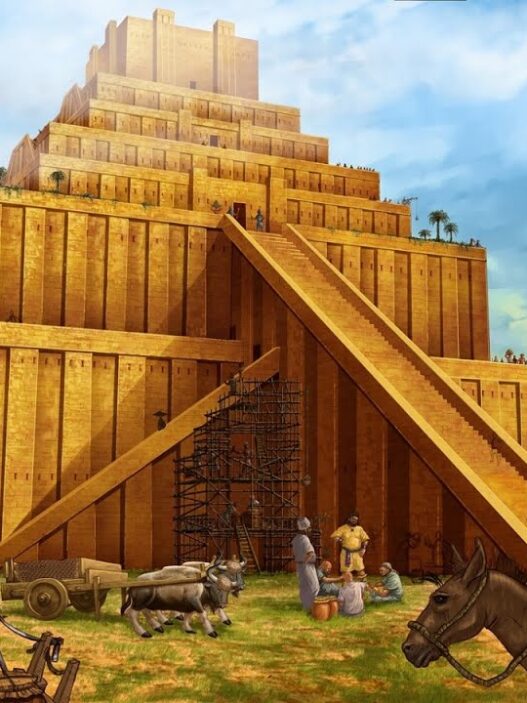
In Mesopotamia, symbols played a central role in both art and writing. Gods were often shown through their emblems rather than their faces. The winged sun disc signalled divine protection over kings, and the sun god Shamash appears as a disc with wavy rays. Another powerful image, the lion-headed eagle known as Anzû, was linked to the god Ningirsu and stood for the forces of storm and power. These images did more than depict gods: they communicated the beliefs and order of an entire society.
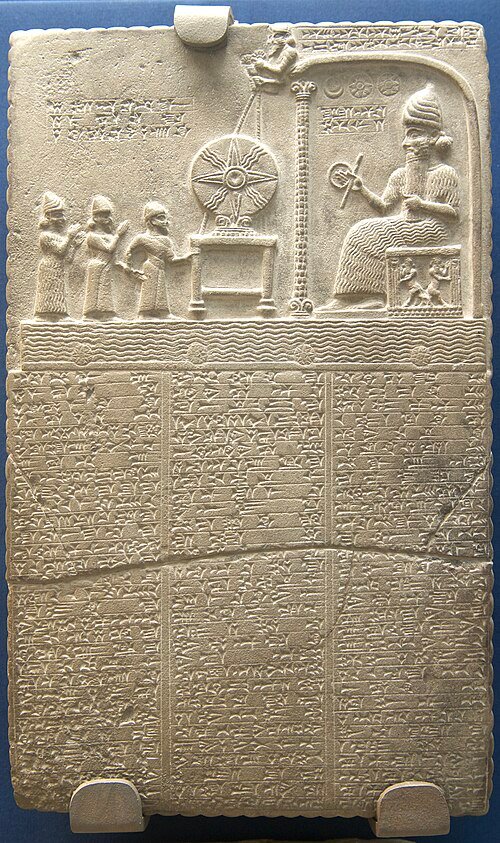
Discover how ancient artists embedded meaning into monumental sculpture and sacred architecture in Mesopotamia: The Dawn of Civilisation and the Birth of Visual Symbolism.
The Indus Valley
The Indus Valley civilisation also used symbols extensively, particularly on small stone seals and tablets. Motifs like the famous "unicorn" seal and the Pashupati seal, with its seated figure surrounded by animals, combined human, animal and possibly divine forms, linking everyday objects to spiritual belief. Scholars still can't read the Indus script that appears alongside them, which makes these seals some of the most mysterious symbols in the ancient world.
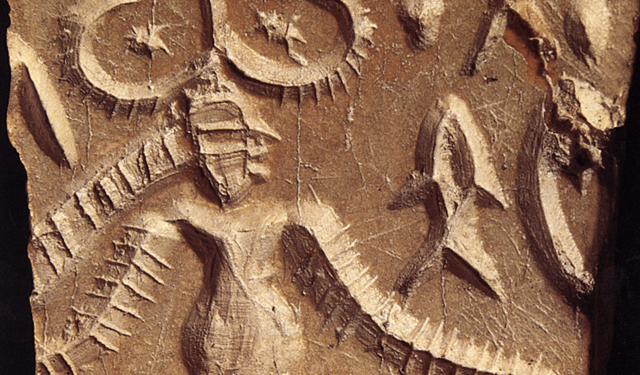
Explore how these seals communicated authority, religion and cosmic ideas in Portal to Ancient Mysteries and Symbols of the Indus Valley Civilisation.
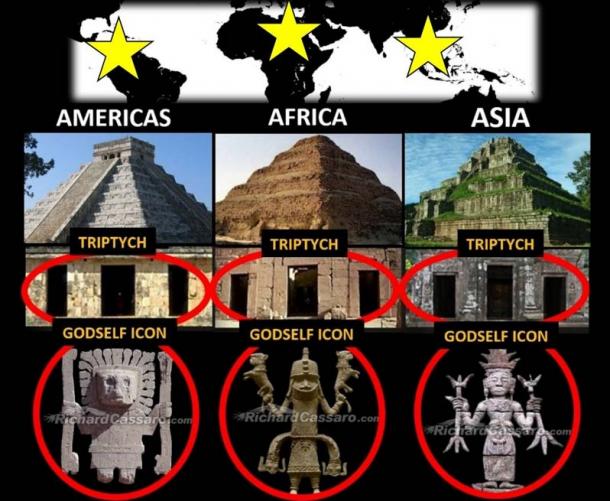
For a wider, more speculative take on ancient symbols that appear across many cultures, see Mysterious God Self Icon Found Worldwide on Ancient Origins.
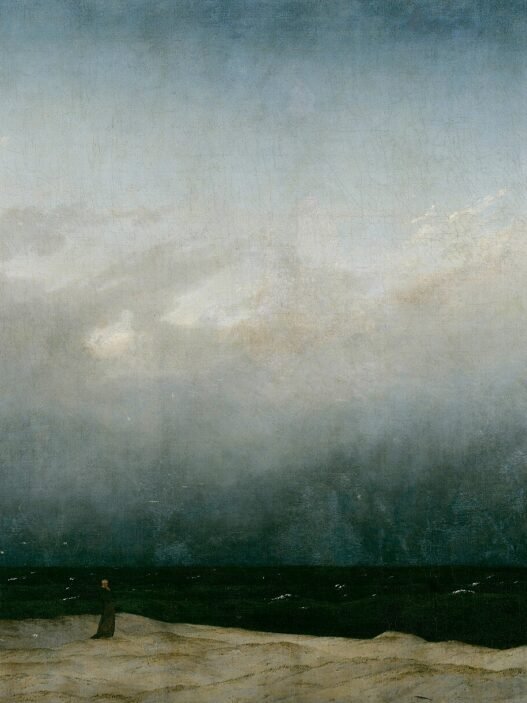
The Symbolist movement: making meaning the point
For most of history, symbols added meaning to a painting. In the late 19th century, a group of French writers and painters went further and made meaning the whole point. Tired of Realism and Impressionism, which recorded the world as it looked, they wanted art to suggest what can't be seen: dreams, desire, death and the soul.
- 1857Charles Baudelaire publishes Les Fleurs du mal. In his poem "Correspondances", he imagines nature as a forest full of signs that speak to the soul, an idea the Symbolists would build on.
- 1884Paul Verlaine's Les Poètes maudits champions Stéphane Mallarmé and Arthur Rimbaud, and Joris-Karl Huysmans' novel À rebours celebrates the strange paintings of Gustave Moreau and Odilon Redon.
- 1886Jean Moréas publishes the Symbolist Manifesto in Le Figaro, naming Baudelaire as the movement's true forerunner and arguing that art should suggest rather than describe.
- 1890sSymbolism spreads across Europe, from Brussels and Vienna to Munich and Moscow, and into theatre and music. Painters such as Moreau, Redon and Puvis de Chavannes, already at work for years, are celebrated as its masters.
- 1900s and afterThe movement fades before the First World War, but its ideas live on in the poetry of W.B. Yeats and T.S. Eliot and in the dream worlds of Surrealism.
You can see the approach in Gustave Moreau's Orpheus (1865). Rather than painting the myth's violent ending, Moreau shows a young woman gazing at the poet's severed head, which rests on his lyre. The scene is silent and dreamlike, and it turns a story of death into one about art outliving the artist. Read more in Symbolism and Myth in Gustave Moreau's Work, or meet the movement's key painters in 17 Symbolist Artists You Should Know.
Darker and dreamlike worlds
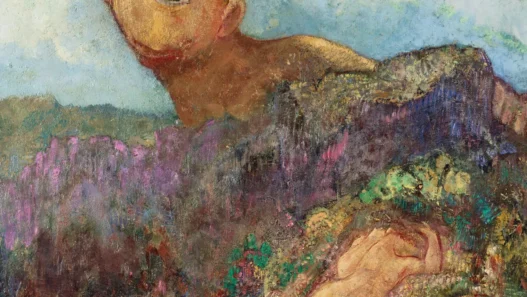
Some of the most powerful symbolic art goes to unsettling places. Jean Delville painted angels and demons fighting for the soul. Arnold Böcklin's Isle of the Dead turned mortality into a silent journey across dark water. And Odilon Redon filled his charcoal drawings with weeping spiders and floating eyes that seem to come straight from the subconscious.
Symbols today
Artists still use symbols, often mixing old meanings with personal ones. Some of the most interesting work, like that of Jacek Malczewski, uses traditional imagery to explore freedom and suffering. And if you're an artist yourself, you can use the same language in your own work: see The Meaning Behind Your Art and Symbols.
Keep exploring
- The Godfather of Symbolism in Art
- Jean Delville: The Forgotten Pioneer
- Arnold Böcklin's Dark Symbolism
- Odilon Redon: The Crying Spider
- Odilon Redon's Dark Symbolism
- Breaking the Chains: Jacek Malczewski
- The Sphinx in Greek Mythology
- Why Art With Symbols Matters
- 5 Best Books for Artists Who Love Symbolism
- The Best Art Symbolism Books for Beginners
- The Book of Symbols: Review
Frequently Asked Questions
What are the most common symbols in art?
Some of the most common are the skull (death), the lily (purity), the dove (peace and the Holy Spirit), the apple (temptation), the snake (sin or healing), the dog (loyalty) and the mirror (vanity or truth).
What symbols represent death in art?
Skulls, skeletons, hourglasses, snuffed candles, poppies, cypress trees and wilting flowers are all common symbols of death and the passing of time.
What symbol represents hope in art?
The anchor is the oldest Christian symbol of hope. Artists have also used a single star, the dove and the rainbow. One of the most famous paintings on the subject is George Frederic Watts' Hope (1886).
What does a skull mean in a painting?
A skull is usually a memento mori, a reminder that everyone dies. It appears in still lifes and portraits to warn that wealth, beauty and knowledge are temporary.
Do symbols always mean the same thing in art?
No. Meanings change across cultures and centuries. The owl means wisdom in ancient Greek art but darkness and folly in some later European art, so always read a symbol in the context of the whole painting.