
Why Artists Have Painted the Devil for 1,500 Years
Forest Symbolism in Art: What the Dark Wood Really Means

Forest Symbolism in Art: What the Dark Wood Really Means

The forest in art is never just trees. From Dante’s dark wood to Friedrich, Ernst and Kiefer, it has stood for the unconscious, moral crisis, death and the weight of history. Here is what artists have always known about the space between who we are and who we fear we might be.
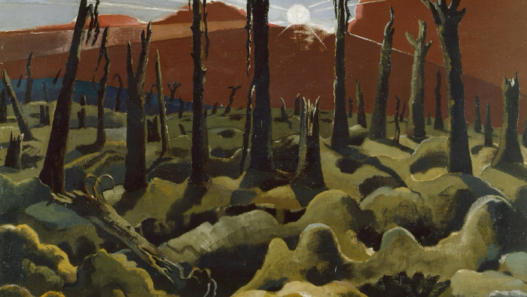
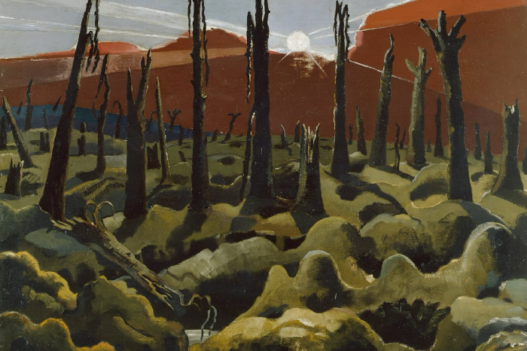
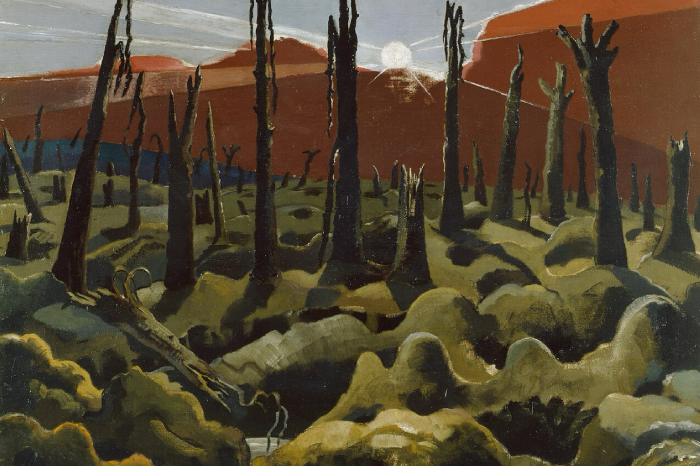
Paul Nash, We Are Making a New World, 1918, shattered blasted trees on a First World War battlefield Paul Nash, We Are Making a New World, 1918, shattered blasted trees on a First World War battlefield
Paul Nash, We Are Making a New World (1918). The forest reduced to blasted stumps, woodland carrying the trauma of war.

There is a reason so many stories begin at the edge of a forest.

The forest is home to so many of our myths and so much of our folklore that I would go as far as to call it the birthplace of our oldest spirits, and the place we go to find ourselves. Siddhartha sat beneath the trees for years. In Berserk, Guts is pulled deep into a haunted wood ruled by the apostle Rosine in the Lost Children arc. And the most beautiful example I can point to is the Shishigami’s forest in Princess Mononoke. The kodama, the spirit trees, the Forest God himself: it is the fullest realisation of forest symbolism in all of Ghibli.

The forest is that thin, uncertain line where the known world ends and something older, darker and far less forgiving begins. Artists have understood this threshold for centuries. The forest in art is never just trees. It is a mirror held up to the part of ourselves we would rather not see.

The Oldest Symbol of Being Lost

There is one point I trace everything back to, one body of work I keep returning to whenever I think about the journey into the unknown. Dante.

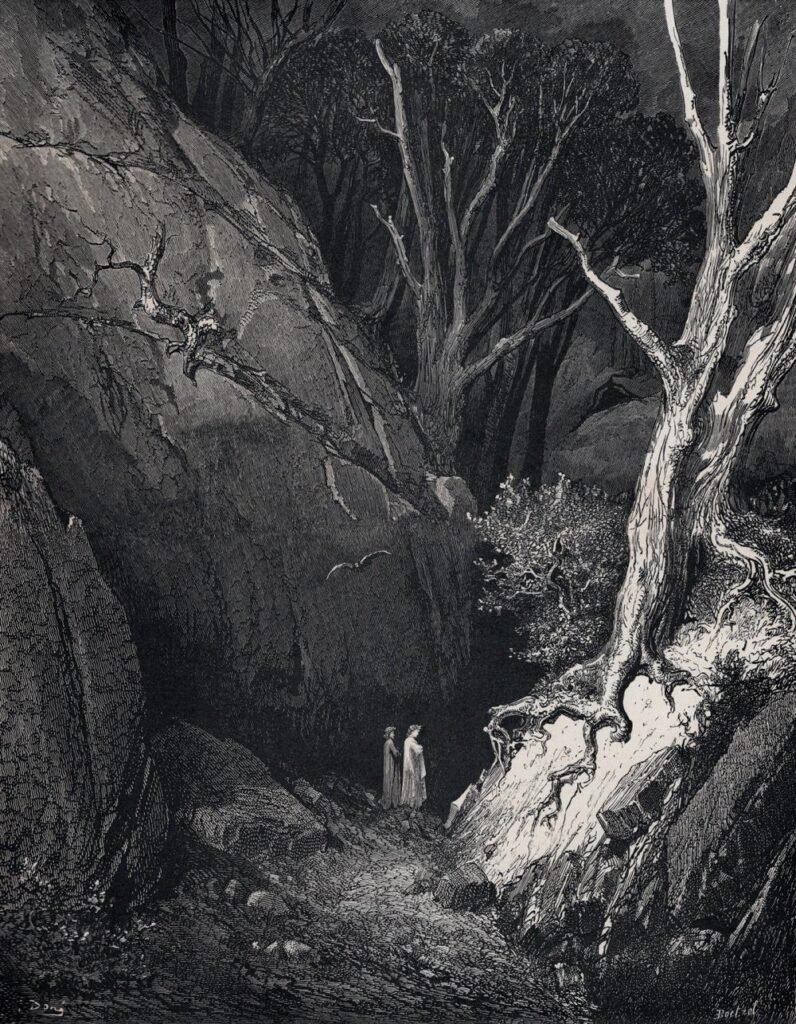
The Divine Comedy opens with a man lost in a wood, “a forest dark, for the straightforward pathway had been lost.” The Italian phrase is selva oscura, the dark wood. Scholars have argued over its precise meaning for centuries, but on a symbolic level it is unmistakable. The forest stands for a moral and spiritual crisis, a life that has wandered off its path. What lurks in those shadows is the distance between who you were and who you might still become.

This is what nightmares are made of. A figure swallowed by trees, directionless, with no clear way back. And if you go down the rabbit hole, you find it did not begin with Dante. Long before him, the Epic of Gilgamesh described a sacred Cedar Forest guarded by the monstrous Humbaba, where the boundary between the human world and the divine was enforced by terror.

In the epic, the forest is a boundary and Humbaba is appointed by the gods to protect it. To enter was to transgress. To cut down those trees, as Gilgamesh did, was to invite a curse. The forest, in other words, has always been where the rules of ordinary life stop applying.

You will not find major Western oil paintings of Gilgamesh in the Cedar Forest the way you find them for the Greek myths. What you will find are Assyrian reliefs and Babylonian cylinder seals, some possibly as early as 1500 BCE, showing Gilgamesh and Enkidu battling Humbaba. And there is one modern connection worth flagging: Anselm Kiefer made a book about it. More on him shortly.

Gustave Doré engraving of Dante lost in the dark wood from the Divine Comedy
Gustave Doré, illustration for Dante's Inferno (1861). The selva oscura, or dark wood, made visible.

Why did artists paint the forest?

The most intimate link to the forest is solitude. No painter understood the symbolism of dark woods and solitude more profoundly than Caspar David Friedrich. He believed there was no separation between self and nature. He wrote, “The artist should not only paint what he sees before him, but also what he sees within him.”

In his 1814 painting The Chasseur in the Woods, a lone French soldier stands at the mouth of a dense pine forest, his back turned to us. He looks like a man wondering how he ended up on foreign soil. There is no visible path. That is exactly where the forest begins and where it ends.

Look a little closer. Can you spot the symbol of death perched on a nearby stump? A raven sits there, waiting. Friedrich gives us no heroism, no romantic wilderness adventure. Only the terrible stillness of a man who has run out of road.

Friedrich’s forests are never neutral. His barren winter trees, their branches interlaced like bony fingers, his writhing gothic trunks that seem poised to move — all of it is Romanticism’s great project made visible: the idea that nature is not backdrop but inner life. That what we see outside us is always a portrait of what we carry within.

For Friedrich, the darkened forest stood for humanity’s longing for transcendence, the unbridgeable distance between the mortal and the eternal, and the particular loneliness of consciousness itself. His figures, always small against the landscape, always turned away from us, are not conquering nature. They are being absorbed by it.
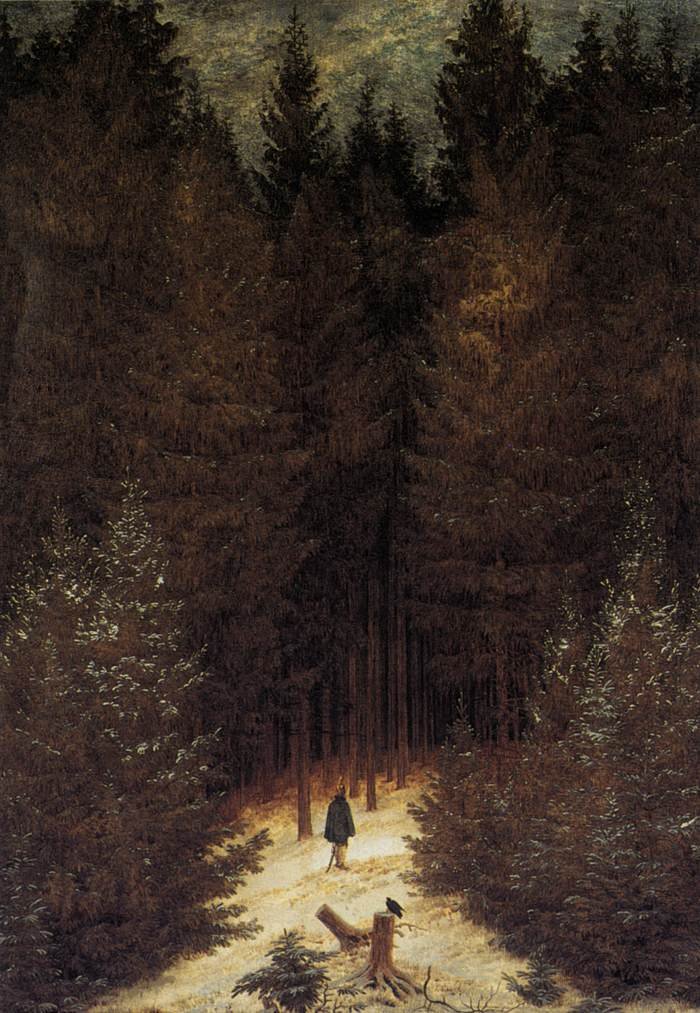
Caspar David Friedrich, The Chasseur in the Woods, 1814, a lone soldier facing a dark pine forest
Caspar David Friedrich, The Chasseur in the Woods (1814). A lone French soldier stands before the pine forest, with a raven perched on a stump, a quiet omen of death.

The Forest as the Unconscious Myth

The dark wood as a near-universal symbol of the unconscious. It’s governed interior territory that civilisation tries to ignore and the psyche cannot. To enter the forest in myth, in art, in dream, is to leave the structured ego behind and descend into something older and stranger. This is why fairy tales send their children into the woods.

Why Shakespeare’s comedies and tragedies both pivot in forests where identity dissolves and reforms. Why Luke Skywalker’s most terrifying moment is not in battle but alone among the trees of Dagobah, confronting a vision of his own face inside Darth Vader’s mask.

In visual art, this psychological depth found its fullest expression in the Neo-Romantic painters of the twentieth century Graham Sutherland, Paul Nash, John Piper. They all explored the dark, brooding, psychic qualities of ancient woodland. Their forests were not beautiful. They were strange. Gnarled, primordial, dreamlike. Painted in the shadow of two world wars, their twisted tree forms carried a weight of collective trauma that straightforward representation could not hold.

Some painters went further and made the forest almost entirely a thing of the mind. Max Ernst is the clearest case. His F*orest* paintings of the 1920s and 30s, all scraped and rubbed textures built into walls of trees, feel less like a landscape and more like something surfacing from a dream.

Max Ernst, for me, is one of the most important artists on this topic, and for different reasons. His ability to transform the common into a journey into the unknown is a slow and subtle one. The Forest paintings take something we are all familiar with and work it until it turns strange, the surface scraped and textured so that buried things seem to push their way up through it, like memories surfacing one on top of another. He traced them back to a childhood memory of a forest that both frightened and enchanted him, which is about as close to painting the unconscious directly as you can get.

Emily Carr did something similar an ocean away, in the rainforests of British Columbia. Her woods do not sit still. They heave and breathe like a single living organism, charged with a spiritual presence she learned from, and some would argue borrowed from, the Indigenous art of the Pacific Northwest. And if you want to bring all of this up to the present, look at Peter Doig, whose hazy, memory-soaked forests and lakes sit right on the line between a real place and the residue of one left behind in someone’s head. In all three, the forest is not somewhere you walk. It is somewhere you already are.
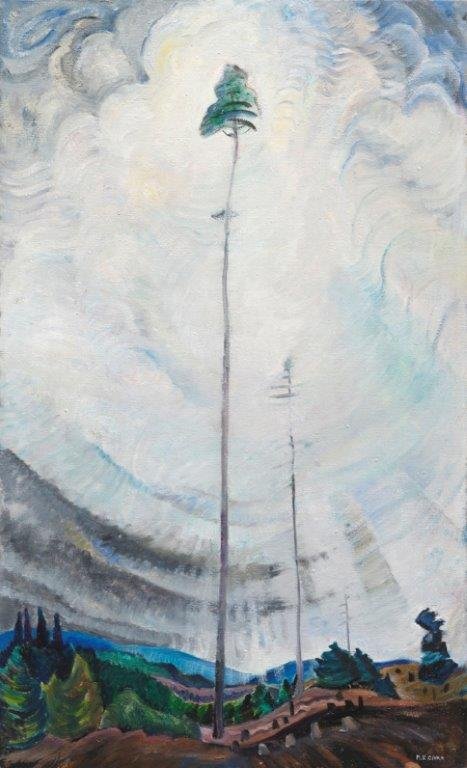
Emily Carr, Scorned as Timber Beloved of the Sky, 1935, a lone tree reaching into a swirling sky
Emily Carr, Scorned as Timber, Beloved of the Sky (1935). The forest as a living, breathing presence.

Anselm Kiefer: When the Forest Becomes History

We can’t talk about forests without Anselm Kiefer.

Kiefer’s vast forest paintings, encrusted with ash, lead, straw and resin carry the full unbearable weight of German history. The German forest has deep cultural significance: it was the landscape of national myth, of romantic longing, and eventually of nationalist ideology.

He was painting in the long shadow of the Nazi years, at a time when much of Germany preferred to look away from them, and he refused to.

Postwar German painting had largely retreated into abstraction, in part because abstraction let you avoid saying anything at all about the recent past. Kiefers teacher Joseph Beuys was one of the few working through that history openly, and figures like Baselitz and Richter circled it more obliquely, but a young artist staring straight into it was not the norm. It was controversial then, and it is exactly why the work still holds its charge now.

Why do I find myself unable to look away? His forests are scorched. Heavy with things that cannot be said plainly. The trees do not offer shelter or transcendence. There is a deeper memory etched into the wood. The forest becomes the place where a culture stored its darkest ideas, and where the reckoning must eventually happen. That is why these forests are worth looking at through a historical and social lens. They stand for something that was felt during that period, not just a simple plein air observation.
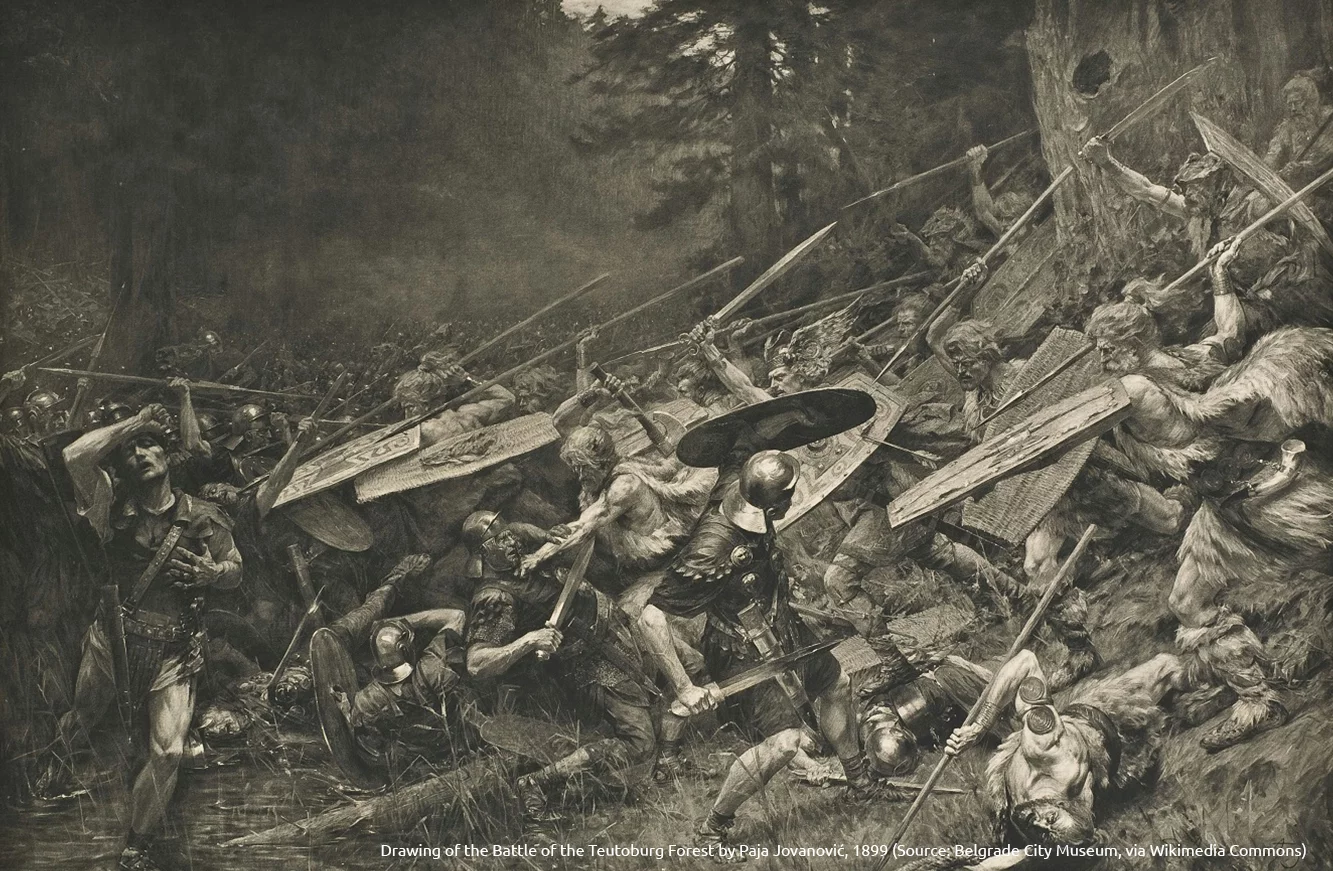
Paja Jovanović, Battle of the Teutoburg Forest, 1899, depicting the German forest of national myth
The Battle of the Teutoburg Forest (Paja Jovanović, 1899). The Wald as the cradle of German national myth, the same mythology Kiefer would later confront and complicate.

What the Dark Wood Still Means

The symbolism of the forest in art is one of the most universal conversations we can have with ourselves.

It can be the unconscious mind, the place where the self dissolves and something deeper surfaces. It can be moral crisis, the *selva oscura* of a life that has lost its direction.

I like to think of it as death and transformation, perhaps the unknown, or the divine dialogue we mutter in silence. Which rules exist inside a forest? We know things grow, strange creatures exist, but what does this mean to you? There are two distinct sides of the forest worth thinking about. The light and the shadow. Where what you thought you were gets tested against something that was here long before you, and will remain long after.

Artists return to the dark wood again and again because the deeper you go between the trees, the further you are from the beginning. Then you reach a point where turning back stops making sense, and you have to find a way out. That is the appeal of the journey, and why you are forced to make sense of it all. Giving up is not an option.

Most of us, at some point in our lives, have found ourselves standing at its edge, just like the figure in a Friedrich painting, wondering how we got there, and whether there is a way through.

The forest has always been where the hidden things live. In art, it is the space between who we are and who we fear we might be. Next time you see trees in a painting, do not look at the trees. Look at the light they are keeping out.

Previous Post
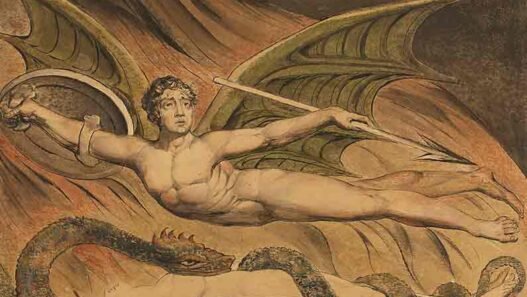
Satan Exulting over Eve, watercolor by William Blake.

Why Artists Have Painted the Devil for 1,500 Years