




Vilhelm Hammershøi: The Poet of Silence
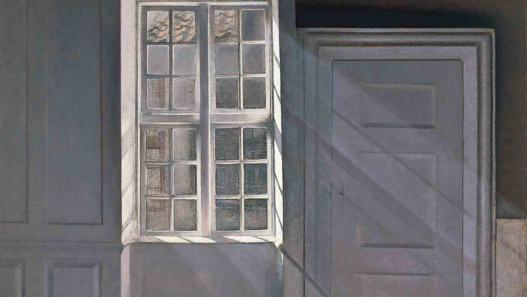
Imagine painting the same place over and over again. Vilhelm Hammershøi did exactly that in his home at Strandgade 30, an old apartment in Copenhagen where he lived with his wife for around a decade. He painted its grey walls, its white-panelled doors, its bare floorboards, and the pale Northern light falling through tall windows.
The man was as quiet as his paintings. In 1904 the poet Rainer Maria Rilke travelled to Copenhagen to meet him, hoping to write about his work, and found an artist who barely spoke. Hammershøi, it seemed, had already said everything he wanted to say in paint.
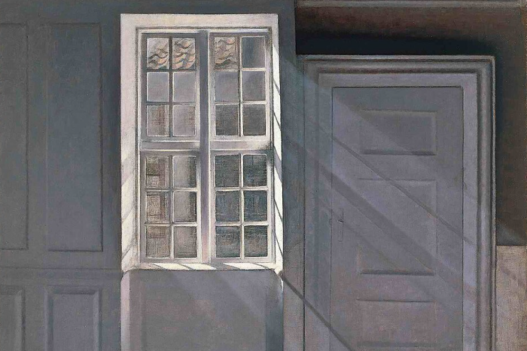
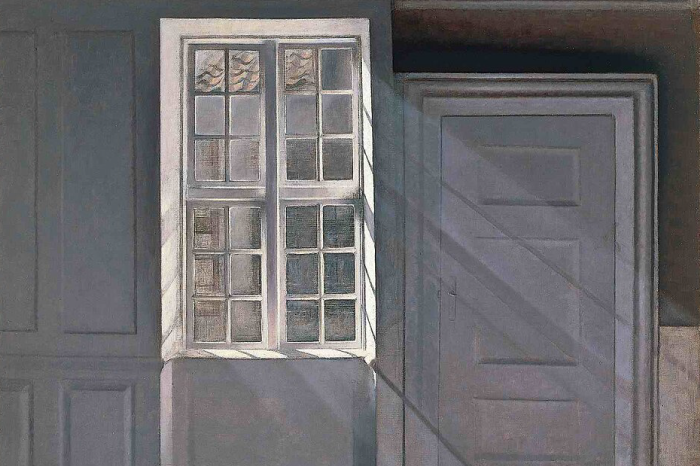
Early in his career, Hammershøi often included a figure, usually his wife Ida, shown from behind, head bowed, absorbed in something we cannot see. Even then, she feels less like a subject than another piece of furniture in the stillness, someone so reluctant to move that she has simply become part of the room. Over time, he began removing people altogether. In works like Dust Motes Dancing in the Sunbeams (1900) and White Doors (1905), the room is all that remains.
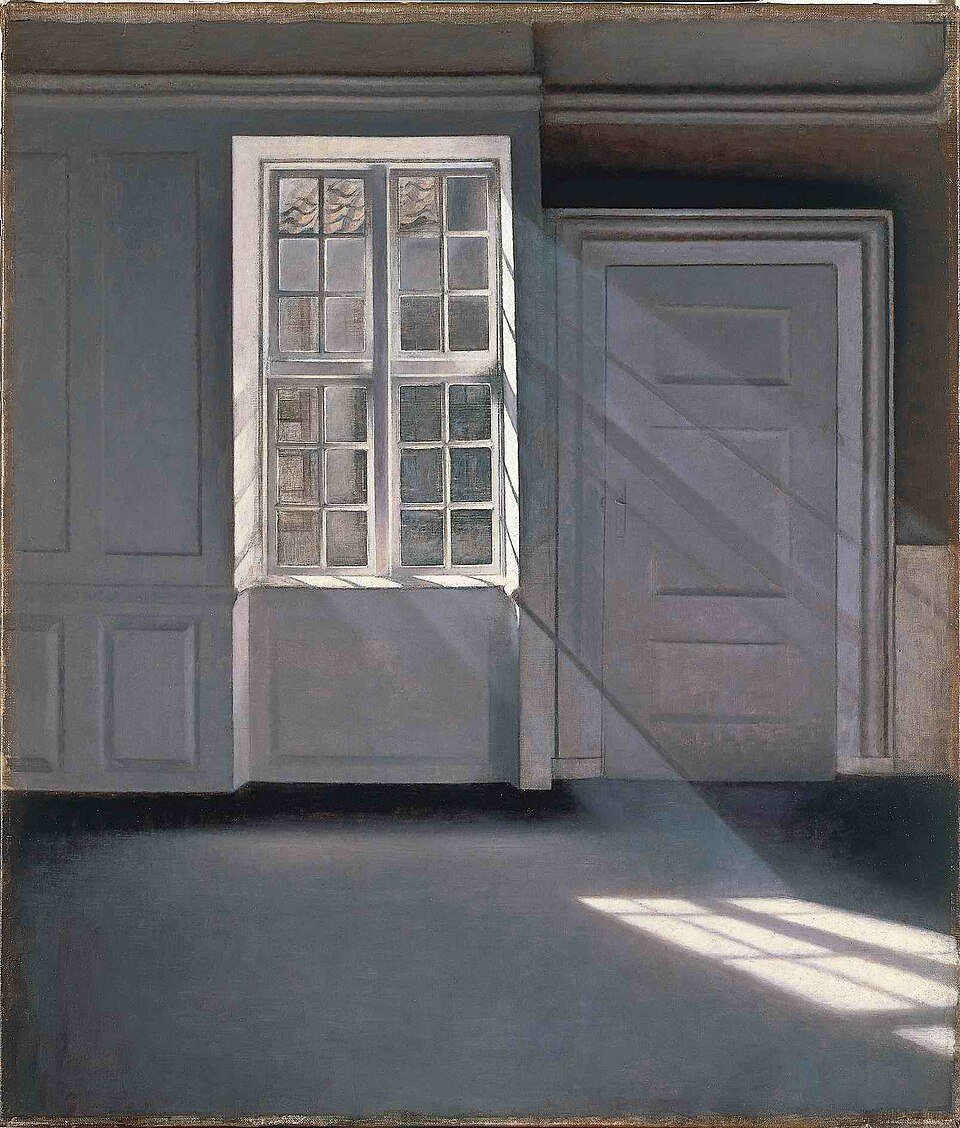
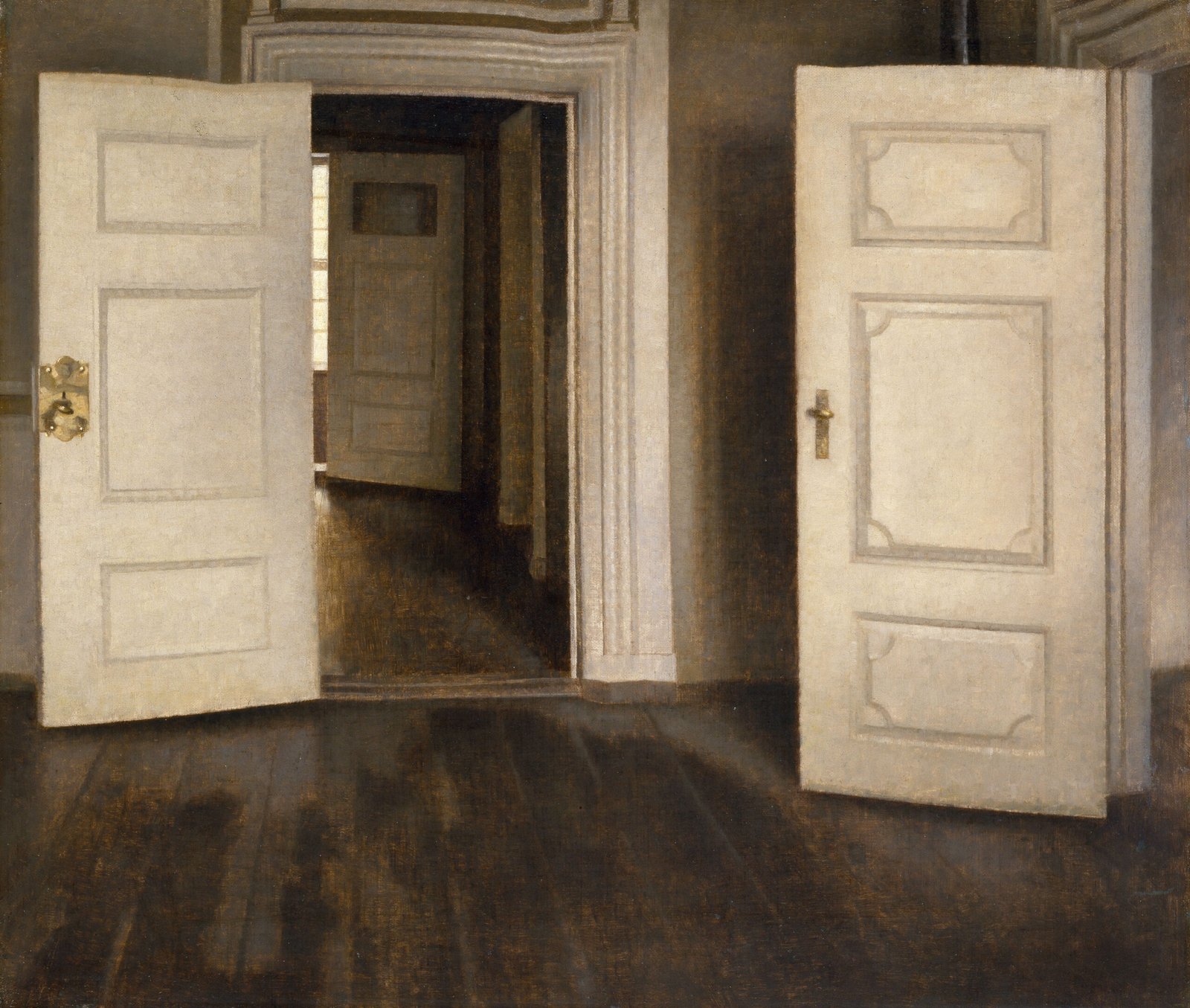
What makes these paintings so unsettling to me is their quiet, almost colourless substance. The greys, whites and muted browns dissolve into one another, and beyond the paint you’ll see doors opening onto further doors, leading the eye through a sequence of rooms that seem to go nowhere. Look closely and some of those doors don’t even seem to have handles.
I’m starting to think that was the point. The same places ask the same questions. Who was just here? Who is about to walk in? Is anyone listening from the next room? Hammershøi never answers. He simply paints the question again, in a slightly different light.
Light enters, but it does not warm. In Dust Motes, the only movement is sunlight itself, slanting across the floor and illuminating nothing but air.
Hammershøi himself said he was drawn to rooms for their lines and architectural character rather than any story. Yet people looking at his work have always sensed something more. I’m leaning towards thinking it’s all deliberate. These are rooms where someone has just left, or where someone is listening from the next room. The walls feel strangely transparent. They capture the particular hush of a house after something important has happened, when every object seems to be waiting and collecting pieces of the human condition.
After his death in 1916, Hammershøi was largely forgotten for decades. Then, in 2020, as the world went into lockdown, his paintings began circulating online again. Suddenly millions of people were living inside a Hammershøi: the same four walls, the same light moving across the same floor, day after day. His empty rooms no longer looked strange. They looked like home.
Van Gogh’s Bedroom: Longing Disguised as Rest
Van Gogh was trying to find peace, and so many of his paintings capture the fractured impression it left on his mind. The Bedroom, painted in October 1888, was meant to be different. In letters to his brother Theo, he explained that simply looking at it should rest the mind. He wanted the colours to suggest sleep and calm, borrowing the flat, bold tones of the Japanese prints he admired. For a man whose thoughts were so often in turmoil, this simple bedroom was an image of peace.
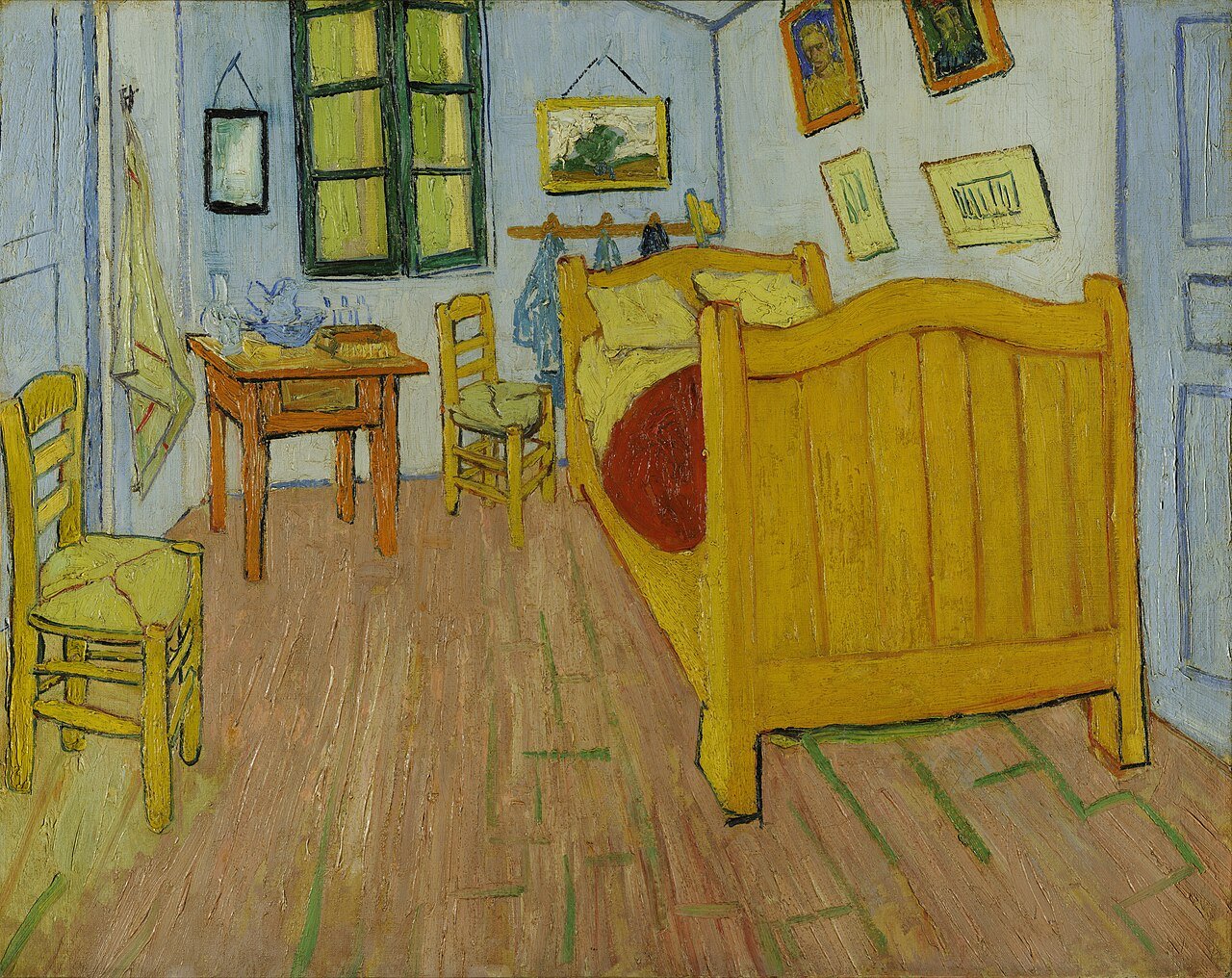
It is the opposite of Hammershøi’s grey silences. The painting is bursting with colour: a red blanket, yellow chairs and bed frame, blue-violet walls, a green window. Van Gogh painted it in the Yellow House, the home he rented in Arles, and he loved it so much he made three versions. There is something about painting the same place again. It becomes a collection of past memory and present moment, a sense of familiarity you can return to when everything else feels uncertain.
And yet the painting has come to feel deeply lonely.
Look closely and you will notice that almost everything comes in pairs: two chairs, two pillows on the bed, two doors, pictures hung in pairs on the walls. Van Gogh was preparing the Yellow House for Paul Gauguin, who was coming to join him in what Van Gogh dreamed would become an artists’ community in the south. The room is set for company that is not yet there.
Gauguin arrived, and for a short while the dream seemed real. That winter Van Gogh painted two more empty rooms in miniature, in the form of two chairs. Van Gogh’s Chair* is a plain wooden seat in daylight, with his pipe and tobacco resting on it. Gauguin’s Chair is grander, an armchair at night, with a lit candle and two novels left behind. No one sits in either. Van Gogh later described trying to paint his friend’s empty place, and that is exactly what it feels like: two portraits of men who aren’t there.
We also know how the story ended. Gauguin stayed barely two months. The two men quarrelled bitterly, and in December came the breakdown in which Van Gogh cut off part of his ear. While he was in hospital, the original Bedroom was damaged by damp, and so the second and third versions were painted in 1889 at the asylum in Saint-Rémy, recreating from memory a room he could no longer live in.
The room itself no longer exists. The Yellow House was damaged by bombing in 1944 and later torn down, so these paintings are all that remain of it. In a strange twist, the Art Institute of Chicago rebuilt the bedroom in 2016 and rented it out on Airbnb for about ten dollars a night. People queued to sleep in a room that Van Gogh himself lost.
Seen this way, the painting becomes an empty room twice over. It is empty of people, and it is also a room of hope that has already been lost. The tilted floor and slightly off-kilter perspective, which Van Gogh chose deliberately, make the space feel less stable than its cheerful colours suggest. This is loneliness hiding in plain sight, the kind we carry into places that are supposed to comfort us.
Edward Hopper: Sun in an Empty Room
Edward Hopper is famous for his lonely figures: the diners at Nighthawks, the women sitting on beds in hotel rooms, the usherette leaning against a cinema wall. But the thing about his work is that the shapes feel isolated and lonely as well. The flat light and hard shadows lift each form away from the next, like separate thoughts that never quite meet.
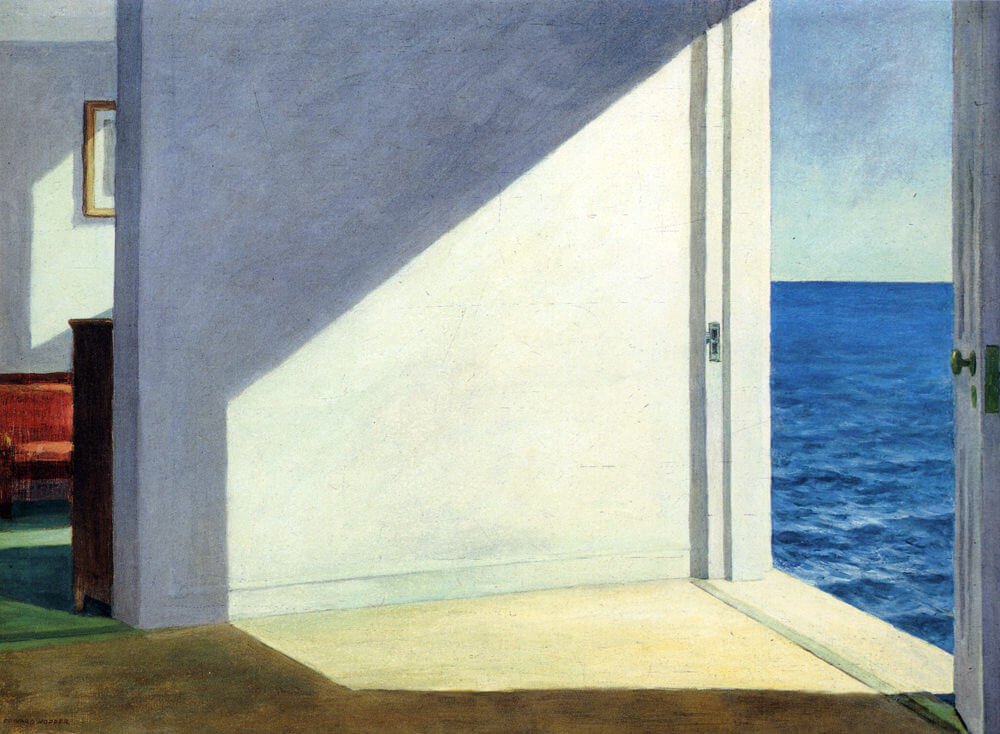
Near the end of his life, he took that loneliness further than ever and removed the people altogether.
He had been edging towards it for years. In Rooms by the Sea (1951), a door opens straight onto the ocean, with nothing between the room and the water, and sunlight falling across an empty wall. There is no one there to step out. It feels like a rehearsal for what came next.
Sun in an Empty Room (1963) is exactly what its title promises. Bare walls and a window, with the green of a tree just visible outside. Blocks of sunlight fall across the walls and floor at sharp angles, leaving nothing for us to linger on. No presence of life, not even in the simplest form of a houseplant or a pile of books.
Hopper had been fascinated by light on walls since his youth. He once remarked that all he had really wanted to do was paint sunlight on the side of a house. In this late painting, he stripped everything else away until only that obsession remained. You’ll find this is a common theme when artists reach a certain point in their lives. Monet spent his final decades painting the water lilies in his garden pond. Matisse, too ill to stand at an easel, cut shapes from painted paper. They strip everything away and focus on the one thing they loved the most.
When someone asked Hopper what he was after in this painting, his answer was simple: “I’m after ME.”
That thought hits me deeply.
It changes how the painting reads. The empty room becomes a kind of self-portrait: an artist in his early eighties, looking at a bare space with light moving through it, perhaps contemplating his own absence. How many walls have you walked past, leaving your shadow, an imprint of what once existed?
Hopper painted only a handful of pictures after this. His last, Two Comedians (1966), shows two performers in white costumes taking a final bow on an empty stage. Most people read them as Hopper and his wife Jo, his lifelong companion and the model for almost every woman in his paintings. After a lifetime of empty rooms and solitary figures, he ended with the two of them together, saying goodbye.
Hopper died in 1967, and Jo followed less than a year later. Sun in an Empty Room feels symbolic on a deeper level now. The sun must always set, and then we ask ourselves, what remains when a person is gone? For Hopper it was some light, a window, and time passing.
As much sadness as there is in that thought, the painting strangely does not make me feel sad. The light is warm and the tree outside is alive. There is a calm acceptance in it, as if emptiness might be a kind of peace rather than only a loss.