Monet’s Water Lilies: Meaning, Symbolism, and Legacy

Monet once said, “I want to paint the way a bird sings.” This captures his desire to express emotion and spontaneity rather than simple representation. For him, the act of painting was a pure, instinctive response to the beauty and movement of nature Monet himself described the paintings as “an extension of my life,” emphasising their deep personal significance
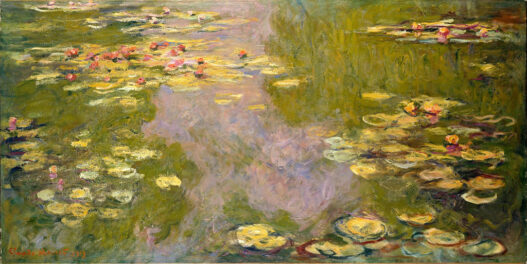
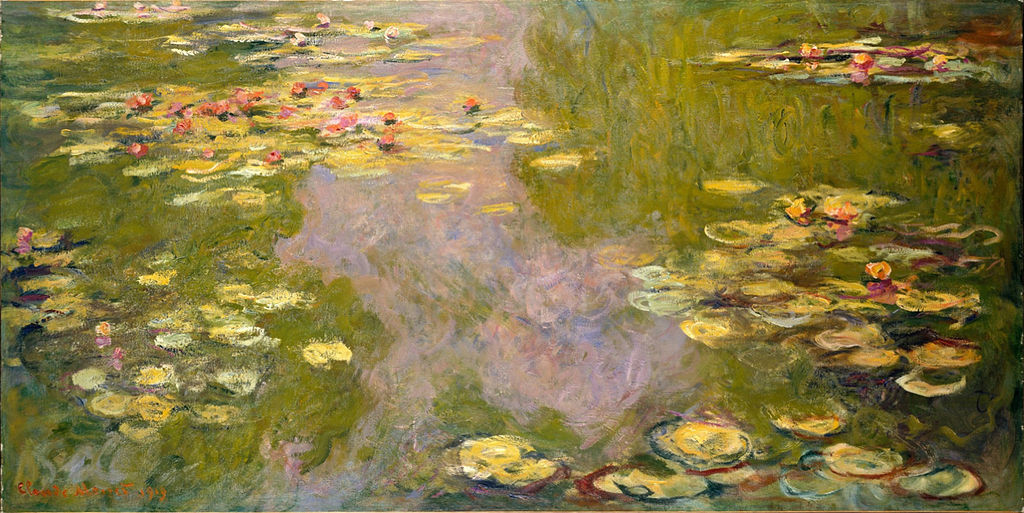
The Water Lilies is a 1919 painting by impressionist Claude Monet The Water Lilies is a 1919 painting by impressionist Claude Monet
The Water Lilies is a 1919 painting by impressionist Claude Monet

What do Monet’s Water Lilies symbolise?

Monet was losing his sight. He knew it. And he kept painting anyway. This is something we need to recognise when we stand in front of these paintings, with the same eyes, but different intentions.
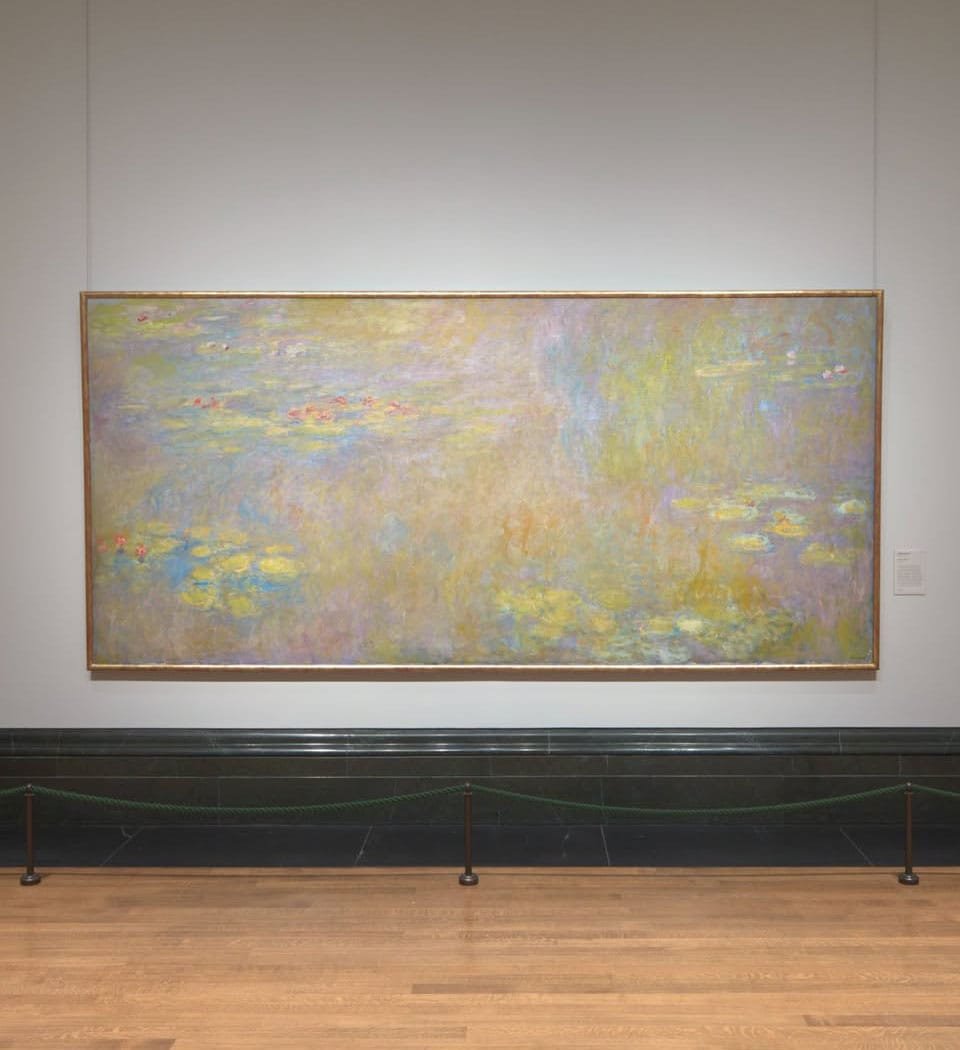
Monet Water Lillies National Gallery

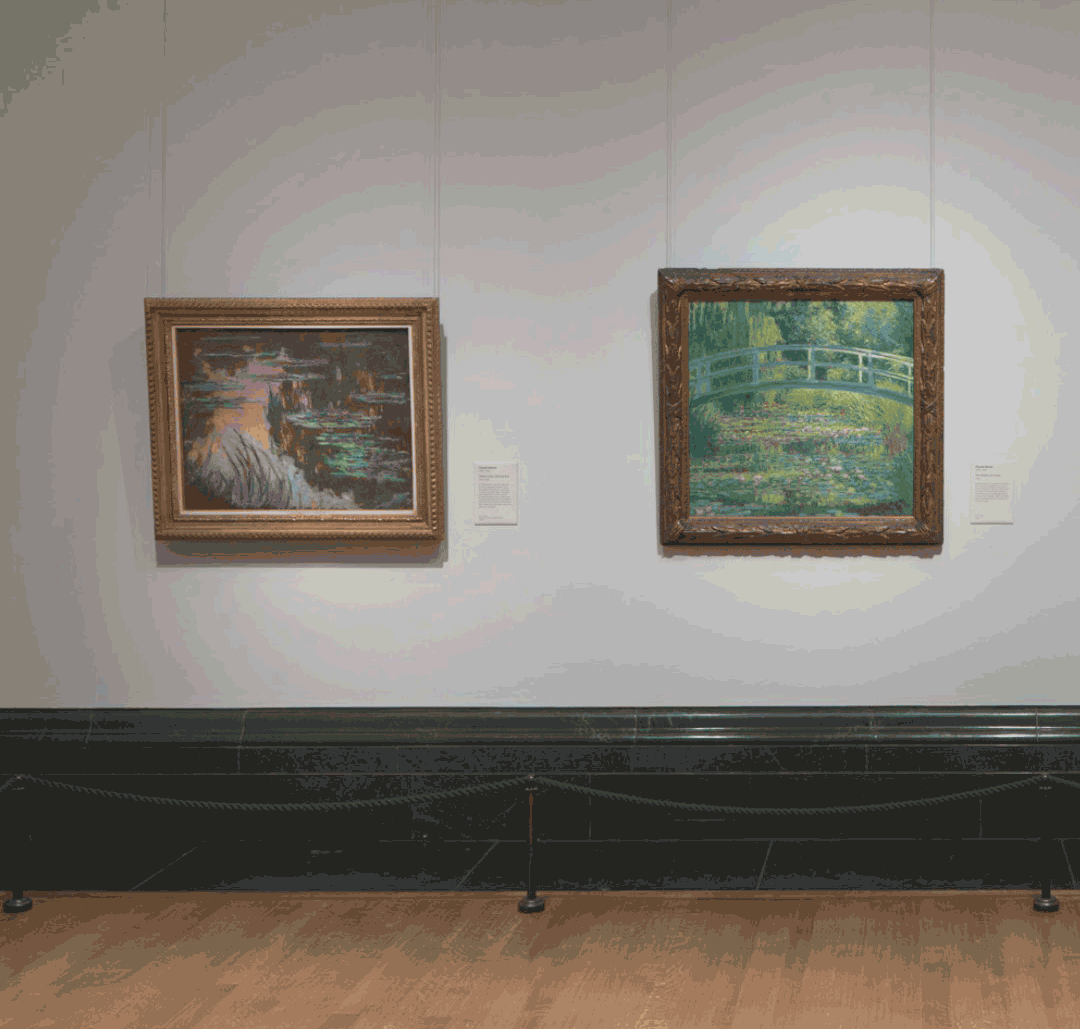
When I swiftly make my way to room 46, level two in the National Gallery, turn left and find that pocket that many people avoid, I stand directly in front of the Water Lilies and ask myself: what time of day was this painted, and how much of this light did Monet truly see? The fleshy undertones that ripple across the surface make my eyes feel uncomfortable. It’s the thought of losing something that has existed your entire life, something so fundamental you never once considered it might leave.

Most of the Orangerie canvases give you something to hold onto. Trees, foliage, a horizon line. Details that anchor you in the scene and remind you where you are. This painting refuses all of that. Distance and perspective are abolished. A limitless expanse of water occupies your entire field of vision and there is nothing to grab onto. Jung wrote that water in dreams represents the unconscious — the part of the self that exists beneath the surface, that reflects without revealing. 

Monet, whether he knew it or not, spent thirty years painting exactly that threshold. The water surface here works the way a veil works in art — it both reveals and conceals, sitting between what is real and what is only reflected. 

That refusal is at the core of what Impressionism was trying to do. Monet wanted you to approach the painting and feel like you’re seeing everything, without actually being shown everything.

For me, this is what makes the Water Lilies different from almost everything else in Western art. It’s not given to you on a plate. It’s as if you’re peeling back layers of paint until you see the artist for who he truly was.
Monet-Bridge-Painting-National-Gallery

Continue around the room and you’ll arrive at a different painting entirely. A bridge spans the full width of the canvas, and something about it feels complete in a way the others don’t. You can see the start and the end. I’ve seen bridges in my dreams, and they’re always the image that comes just before something changes. A transition. A crossing over. I don’t think that’s a coincidence here. If you’re drawn to that kind of threshold symbolism, it runs through a lot of the art I write about — the symbols of solitude and passage that artists return to when language stops being enough.

The bridge also looks, and I mean this sincerely, like a scene from a European indie film. All stillness and green light and quiet melancholy. What makes it significant is when it was painted: 1899, before any meaningful vision loss had set in. This is Monet seeing clearly, choosing to paint a threshold anyway.

Here is how the rest of his years unfolded. Around 1905 the first signs of cataracts appeared, colours beginning to shift at the edges. By 1912 his palette had turned muddier, reds and yellows crowding out the blues he could no longer distinguish. By 1918 he was painting the large-scale Nymphéas panels largely from memory and feeling, reaching for colours he could barely see. In 1923 he had surgery on his right eye and recovered some of what he had lost. He died in 1926, before the Orangerie installation was complete.

He never saw it finished. But he built it anyway.

The Room I Haven’t Been To Yet

I have never stood inside the Orangerie. I have read about it, looked at photographs, watched other people describe it, and I still don’t fully know what it will feel like when I do. But I know what Monet intended.

Eight panels. Two oval rooms. A combined length of 100 metres. Monet spent years working on the architectural design alongside architect Camille Lefèvre, and every decision was deliberate. The oval shape was chosen to eliminate corners, removing any visual interruption, so the paintings flow without pause from one wall to the next. The skylights were positioned so the light would change throughout the day, the way it does on a real pond. Morning light, afternoon light, the heavy gold of late afternoon. The same paintings, different every hour.

This is not a gallery. It was never meant to be a gallery. It was meant to be an experience you return to, because it is never the same twice.

The two rooms together form the shape of an infinity sign. I don’t think that was accidental. There is something of the Ouroboros about all of this — Monet’s own body consuming itself and producing masterpieces right until the very end, the symbol of eternal renewal built into the floor plan of the building that would house his life’s work. He is far from the only artist to have done this. Van Gogh was doing something similar in the asylum at Saint-Rémy, painting the end of the world from a window he could barely reach.

The cruelest part is that he was almost blind by the time he designed it. While the walls were being carved to eliminate corners and the skylights were being angled to catch the perfect northern light, the light from his own eyes was becoming a murky void of shadows that would haunt him in the conscious and unconscious. He was building a room to be experienced through sight, and sight was the one thing that was leaving him.

He never saw it finished. But he knew exactly what it would feel like.

Source: Monet Water Lillies National Gallery

What He Was Trying to Leave Behind

Monet was painting his endgame. The Water Lilies are not paintings about a pond. Depending on how you count, he made almost 300 of them.

If you have ever done anything over 100 times, you know it stops being about the act itself. It becomes something else. A deep need to understand what it means to truly inhabit a subject, to live inside it until you and the thing you are making are no longer separate. Frida Kahlo understood this — she returned to her own face and body for decades, not out of vanity but because it was the only subject she could fully own.

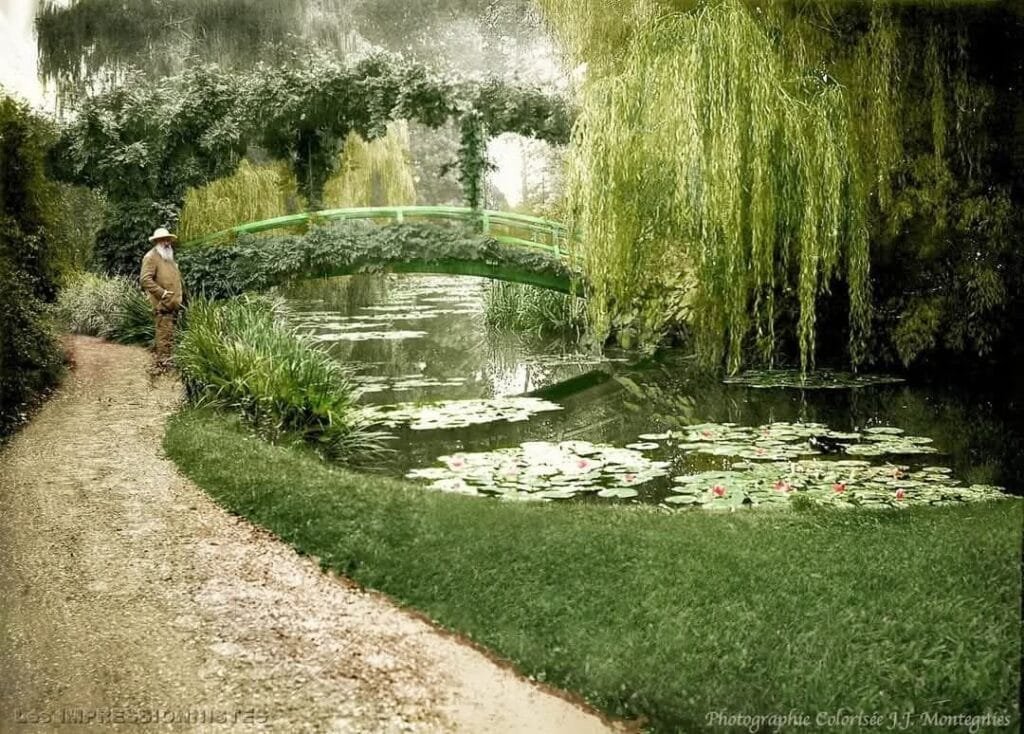
He built the conditions for that obsession himself. In 1892 he bought a boggy piece of land next to his house at Giverny and turned it into a Japanese water garden. He didn’t find his subject. He constructed it. Then he spent the next three decades painting it, in every light, every season, every hour of the day, until the pond stopped being a pond and started being everything he had left to say.

What he was trying to leave behind was a resting place. His own words described it as somewhere exhausted people could find peaceful meditation in the middle of a flowering aquarium. The large-scale panels were also his personal response to the First World War. The Orangerie was not just a gift to France. It was an act of defiance against destruction, made by a man who could hear gunfire from his garden and chose to answer it with water and light.

He was never satisfied. He kept reworking the panels, destroying some, starting again. His friend Clemenceau eventually wrote to him: “You are well aware that you have reached the limit of what can be achieved with power of the brush and of the mind.” Monet ignored him and kept the paintings until his death.

When the murals were first unveiled, people hated them. They called them dull, self-indulgent wallpaper, the work of an old man who should have stopped. Now they are considered among the greatest works in Western art. That reversal tells you everything about what Monet was doing. He was not painting for his moment. He was painting for ours. It is the same reversal you find throughout art history, the artists most dismissed in their time are often the ones who were simply operating in a language nobody had learned yet.

He once said he wanted to paint the way a bird sings. Instinctively, without calculation, without self-consciousness. By the end, with his sight almost gone and his hands working from memory and feeling alone, he had finally become exactly that. He had run out of reasons to be careful.

He constructed his own obsession from scratch. He spent thirty years painting it. He built a room for it. And he died before seeing any of it finished.

That is what he was trying to leave behind. Not a painting. A place to feel something you cannot name.

If this kind of looking interests you, The Kiss and the Terror of Complete Surrender is worth reading next. 

Klimt was doing something similar — a different obsession, a different medium, the same refusal to stop.

Greek mythology in art, Bernini's Rape of Persephone, Hades gripping Persephone as he pulls her into the underworld, marble sculpture Borghese Gallery Rome Greek mythology in art, Bernini's Rape of Persephone, Hades gripping Persephone as he pulls her into the underworld, marble sculpture Borghese Gallery Rome
an empty room that looks lonely and solitude an empty room that looks lonely and solitude
Gustav Klimt The Kiss 1907-08 oil and gold leaf on canvas Belvedere Museum Vienna Gustav Klimt The Kiss 1907-08 oil and gold leaf on canvas Belvedere Museum Vienna
Previous Post
The Starry Night. Credit: Vincent van Gogh/Public domain

The Symbolism of Starry Night

Next Post
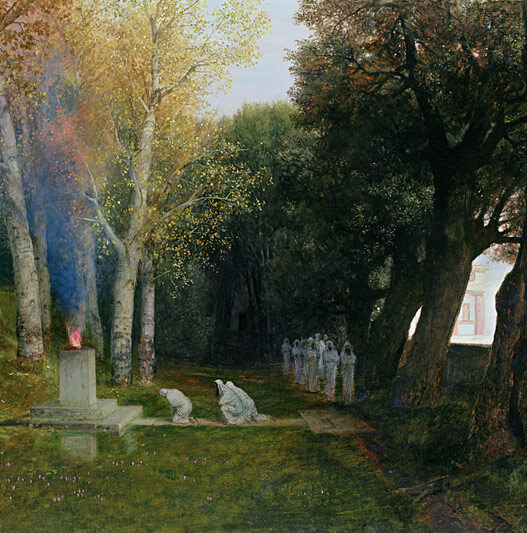
Painting "The Sacred Grove" by Arnold Böcklin, depicting a shadowy forest sanctuary framed by cypress trees and classical ruins an evocative fusion of Symbolism and mythology reflecting themes of death, nature, and the divine

The Sacred Grove by Arnold Böcklin: Grief, Symbolism and a Father's Silent Farewell