








The Yin Yang symbol is one of the most powerful and enduring icons in human history. What is our fascination with this simple black-and-white shape that carries centuries of meaning?
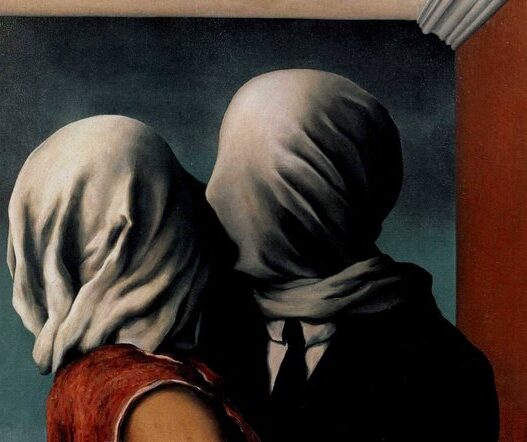
Whenever I look at the yin yang symbol, I see a visual poem about opposites being inseparable, about balance being dynamic, and about how art can express what words sometimes can’t.
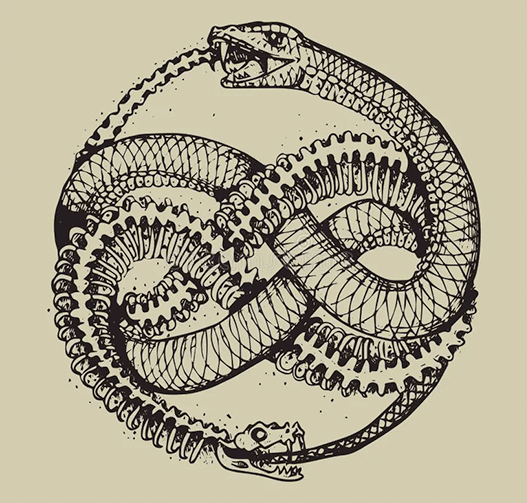
There is no rigid boundary separating them, no straight line declaring where one ends and the other begins. Instead, the curves create a sense of movement, as though each half is constantly transforming into the other. The symbol feels alive rather than static.
As an artist, contrast is probably the best tool to use when making a point. Light against shadow, warm colours against cool ones, chaos against order. However, you will find contrast doesn’t always have to mean conflict. It can, at times directly speak to the relationship between opposing elements that gives an artwork its power.
When looking at the Yin and Yang symbol, the small circle within each half adds another layer to the design. Even within what appears to be one dominant force, there is a trace of its opposite. I can’t help but thing that is a core idea of life because it challenges the notion that anything can be understood in isolation.
Perhaps this is why the yin yang symbol has remained so recognisable across generations. This remarkably simple symbol, leaves room for reflection, and you can look at it as a representation of nature, a philosophical idea, or simply an example of how shape and contrast can communicate something complex.
For me, its real beauty lies not in the idea that everything must always be perfectly balanced, but in the suggestion that opposing forces can exist together, influence one another, and create something greater than either could achieve alone.
Yin Yang Origin
The terms Yin and Yang go back thousands of years. The earliest versions of these characters were found carved into oracle bones, animal bones used for divination as far back as the 14th century B.C.E. In those early inscriptions, yin and yang weren’t yet big philosophical ideas; they were simple observations about nature, especially sunlight. Yang referred to daylight and the presence of the sun, while Yin described nighttime and the absence of sunlight.
Ancient Chinese dictionaries, like Shuowen Jiezi (around 100 C.E.), give us more clues: Yin was linked to closed spaces, darkness, the north side of mountains, and the south bank of rivers.
Yang, in contrast, was tied to brightness, height, and the sunlit southern slopes. These meanings grew out of everyday life. Farming communities lived by the rhythm of the sun, working in the fields when it rose, resting at home when it set. Over time, this daily pattern shaped a symbolic idea:
Yang represents movement, while Yin represents rest.
Interestingly, Yin and Yang were originally separate concepts. The first known time they were written together comes from the Shijing (Book of Songs), where they describe the sunny and shaded sides of a hill. This simple image, light on one slope, shadow on the other, laid the foundation for one of the most enduring symbols of balance and duality in human history.
From observations of sunlight and shadow to a philosophy of continual change, explore the development of Yin and Yang in Chinese thought.
-
2nd millennium BCE
Early Chinese Divination
Oracle-bone inscriptions preserve some of the earliest evidence of Chinese writing. They provide historical context for early Chinese thought, but are not evidence of the complete Yin Yang symbol.
-
1st millennium BCE
Sunlight and Shadow
Yin and Yang became associated with contrasting conditions in nature, including shade and sunshine. These observations provided a language for describing relationships in the natural world.
-
1st millennium BCE
A Philosophy of Change
Chinese thinkers developed Yin and Yang into a broader framework for understanding natural processes, relationships and transformation.
Yin and Yang describe complementary relationships, not a simple division between good and evil. -
Han dynasty
206 BCE–220 CEAn Interconnected World
Yin-Yang thought became influential in Chinese cosmology and interpretations of natural processes, seasonal cycles and the relationship between humanity and the cosmos.
-
Medieval China
The Taiji Diagram Tradition
Chinese cosmological diagrams developed over time. The familiar circular black-and-white design belongs to a longer history of visual representations.
-
Modern era
A Global Symbol
Today, the Yin Yang symbol appears in art, architecture, fashion and graphic design. Its visual simplicity has made it widely recognisable, although its philosophical meaning is often simplified to balance alone.
These dates indicate broad historical periods rather than definitive dates for the invention of the symbol.

What Is Yin Yang, Really
The yin yang (often called yinyang, yin-yang, or taijitu) comes from ancient Chinese philosophy and cosmology. It describes two complementary forces or principles:
Yin is associated with darkness, the moon, the earth, passivity, receptivity.
Yang is tied to light, the sun, activity, heat, masculinity, and outward movement.
They aren’t in conflict; they are interdependent. Each contains a seed of the other (represented by the small dot in each half) because nothing is purely one thing. Even in extremes, there is always a trace of its opposite.

Origins & Symbolic Depth
The concept of yin yang first appeared in early Chinese texts that explored natural phenomena such as sunlight and shadow, the sunny and shady sides of hills, and the cycles of night and day. Over time, it evolved to become a central idea in Taoist philosophy and influenced many aspects of life, including medicine, art, and politics, shaping how people understood harmony, change, and balance. Importantly, yin yang isn’t about good versus evil, it’s not a moral judgment but a reflection of cosmic rhythm, tension, and the continuous interplay of opposing yet complementary forces.
My Perspective: Looking Beyond Balance
What I find most interesting about the Yin Yang symbol is that its two halves never feel completely separate. The curved line draws the eye around the circle, creating a sense of movement rather than division.
To me, this is what makes the design so effective. Black and white are often treated as opposites, yet here neither exists without the other. Each occupies its own space while remaining part of a greater whole.
As a piece of visual design, the symbol achieves something remarkable with very little. There are no elaborate details or decorative flourishes. Instead, its meaning emerges through shape, contrast and the relationship between its parts.
I think this is one reason the symbol continues to resonate today. It invites us to look beyond the obvious contrast and consider how seemingly opposing things might be connected.
Why It Matters in Art
For me, artists use yin yang symbolism because it embodies contrast and unity simultaneously. It’s perfect for exploring:
Light vs dark (literally: chiaroscuro, contrast in painting or photography)
Activity vs rest (motion vs stillness in sculpture or performance)
Internal vs external (emotion vs environment, the seen vs the unseen)
Oppositional balance in composition, colour, form
In art, the yin yang is both motif and method: not just what is shown, but how balance / duality is structured.
Yin Yang Symbolic Artwork
The Yin Yang symbol is one of the most recognisable images in Chinese philosophy, but its visual meaning goes deeper than the familiar black-and-white circle. Its flowing shapes express a worldview in which opposites are not separate or permanently fixed, but connected parts of a constantly changing whole.
In traditional Chinese thought, Yin and Yang can represent darkness and light, stillness and movement, or the qualities associated with earth and heaven. These are not simply opposing sides competing for dominance. Each depends on the other, and their relationship helps explain the changes we observe in nature.
Two related concepts help place this symbolism in a wider philosophical context: Wuji and Taiji.
Wuji (無極) is often understood as the state of the undifferentiated or limitless, before the distinction between Yin and Yang emerges. Taiji (太極), commonly translated as the Supreme Ultimate, expresses the principle from which Yin and Yang arise. In the familiar Taiji diagram, the curved black-and-white halves represent these complementary forces within a unified whole.
The relationship between the two ideas is important. Wuji points towards what is undivided, while Taiji expresses the emergence of polarity and the dynamic relationship of Yin and Yang. In this sense, Taiji is not simply a final point reached by the two forces, but a principle through which their relationship and transformation can be understood.
As a piece of symbolic artwork, the Taiji diagram communicates these ideas with remarkable economy. A circle, two contrasting shapes and two small dots convey unity, difference and interdependence without the need for words. Its beauty lies in how a simple visual form can suggest an entire philosophy of change.