




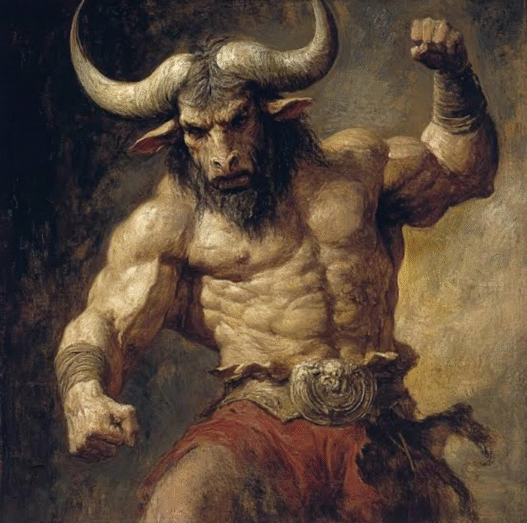

What happens when a society becomes too ashamed of its own desires to look at them directly? It builds a labyrinth. It creates a monster. And then it sends its children in to be consumed by it. The Minotaur is one of mythology’s most enduring symbols because it is not really about a creature at all.
Beneath the palace of Crete, where shadows coil and echoes whisper, a monster waits.
Half man, half beast, born of divine punishment and human pride. Each year, the innocent descend into darkness, never to return…until one dares to challenge fate.
The Myth in Brief
The Minotaur was born from a curse. King Minos of Crete refused to sacrifice a sacred bull to Poseidon, so the god punished him by making his wife Pasiphae fall in love with the animal. Their offspring was the Minotaur, half man and half bull, a creature so shameful that Minos commissioned the architect Daedalus to build the Labyrinth, an inescapable maze beneath the palace of Knossos, to hide it from the world.
Every nine years, Athens was forced to send seven young men and seven young women into the Labyrinth as tribute, food for the beast. This continued until the Athenian hero Theseus volunteered to go, armed with a sword and a ball of thread given to him by Ariadne, the daughter of Minos. He killed the Minotaur and followed the thread back to daylight.
And that is the story Greece told. But here is the thing: the story is not the symbol. And the symbol is far more interesting.
The monster was made monstrous by the people who feared it.
The Minotaur has fascinated artists for centuries, and it is not difficult to understand why. It is a chaotic symbol, yes, but it is also a deeply human one. It represents the tension between instinct and reason, the destructive weight of unchecked desire, and the ancient, unresolved clash between civilisation and the primal forces it tries to contain. In this post we will explore how artists from Picasso to Dalí used the Minotaur to decode the darkest corners of the human psyche. George Frederick Watts, in particular, saw something in the creature that most artists missed entirely.
Did It All Start With Theseus?
Not exactly.
Before Theseus ever picked up his sword, the Minotaur already existed as a symbol. And that distinction matters.
While the story of Theseus and the Minotaur is one of the most famous myths featuring the creature, the Minotaur as a symbol predates this specific narrative. Its origins lie in ancient Minoan culture, where bulls were central to religious rituals and iconography, representing strength, fertility, and primal energy.
The later Greek myth of Theseus venturing into the Labyrinth to confront the Minotaur gave the creature a concrete story, transforming it from a symbolic figure into a dramatic character that embodies chaos, human instinct, and the enduring tension between heroism and monstrosity.
The bull was not always a monster. It was once a god.
Who was the real monster?
Reveal Image (contains mature content)
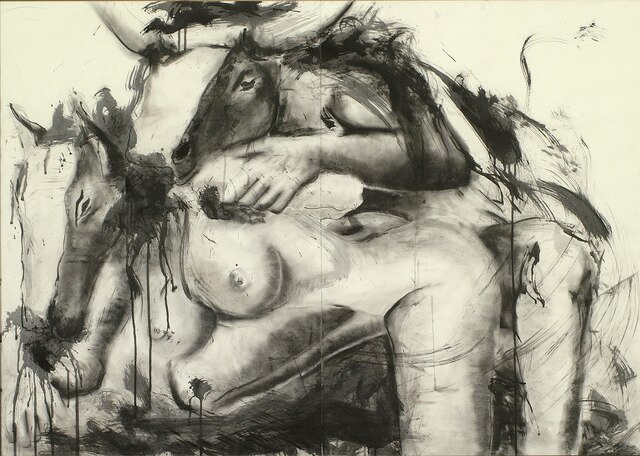
The Minotaur’s Spiritual Meaning: Shadow, Labyrinth, and Integration
When we talk about minotaur spiritual meaning in a modern context, we’re talking about shadow work, the unconscious mind, and the raw instinctual power that civilised society trains us to suppress. This all sounds very deep and complex…it is.
What Does the Minotaur Symbolise Spiritually?
The minotaur spiritual meaning centers on the concept of the shadow self, a Jungian psychology term describing the parts of ourselves we’ve hidden away, denied, or been taught to fear.
The creature itself was born from divine punishment: Queen Pasiphae’s curse resulted in a being that was neither fully human nor fully animal, but a living contradiction.
This contradiction is the heart of minotaur spiritual meaning. We are all contradictions. We contain both the rational mind and the primal body, both civilisation and instinct, both the socially acceptable self and the raw, uncensored desires we’ve learned to lock away.
The minotaur embodies this duality perfectly.
Carl Jung called this the Shadow, the parts of ourselves we exile to the basement of consciousness. The Minotaur is perhaps mythology’s most perfect visual expression of that idea. It was not born evil. It was made monstrous by the people who feared it and locked it away. Sound familiar?
The Labyrinth as Spiritual Path
The labyrinth is inseparable from minotaur spiritual meaning.
Where the maze has multiple dead ends and false routes, the classical labyrinth has a single path that winds toward the center. This distinction matters for understanding minotaur spiritual meaning.
It contains a journey. The minotaur spiritual meaning of the labyrinth is that there is a path, even when it feels impossible to find. The spiral nature of the labyrinth reflects the spiral nature of spiritual growth: you don’t move forward in a straight line; you circle back, you deepen, you return to the same places but at different levels of understanding.
The minotaur spiritual meaning of walking the labyrinth deliberately is profoundly different from trying to escape it with a thread.
One path says: I will descend consciously. I will face what dwells at the center. I will understand rather than flee.
The other path, Theseus’ path is the one we usually take. We enter the labyrinth armed, we slay what we find there, and we follow the thread back to safety. But Jungian psychology asks an uncomfortable question: what if slaying the shadow doesn’t liberate us? What if integration does?
The Duality of Nature
The Minotaur represents the duality of human nature. With the head of a bull and the body of a man, it embodies the contrast between animal instincts and rational thought.
On one side, the bull reflects raw, untamed energetic aggression and urges that drive dominance, survival, and power.
This contrast highlights the internal struggle within each of us.
In the myth, the Minotaur’s existence results from unchecked passion which is the union between Pasiphae, queen of Crete, and a sacred bull.
This story shows the dangers of indulging base desires without regard for moral or social boundaries.
The creature’s confinement in the labyrinth also reflects how society attempts to contain these chaotic impulses which in turn force them into a symbolic prison.
However, the Minotaur’s continued presence suggests that such instincts cannot be fully suppressed. Eventually, they surface again, often in unpredictable and dangerous ways.
This is as true today as it was in ancient Crete. Every era builds its own labyrinth. Every society names its own Minotaur. The creature changes. The impulse to hide it does not.
In Recent News
A fascinating archaeological discovery has emerged during construction work for a new airport in Crete.
A 4,000-year-old structure, possibly linked be the legendary labyrinth of Minoan King Minos, was uncovered near the town of Kastelli, approximately 51 kilometres southeast of Heraklion, Crete’s capital, LiveScience reported in a recent report.
The ancient site sits atop a hill and features architectural traits typical of the Minoan civilisation. It dates back to around 2000–1700 B.C. Measuring 48 metres in diameter, the structure includes a central circular building and an outer area with walls arranged like spokes on a wheel.
Could the labyrinth of legend be real?
This fascinating documentary explores new archaeological evidence that may connect myth with history.
The layout consists of eight stone rings, interspersed with smaller walls to create a labyrinth-like pattern.
According to a statement from the Greek Culture Ministry, the recently uncovered structure near Kastelli is believed to have served as a venue for communal ritual feasts rather than as a residential space.
The discovery of animal bones and various other artefacts in the area supports the theory that it was a site for ceremonies involving food, wine, and offerings, shedding new light on the ceremonial practices of the Minoan civilisation.
What makes this discovery so symbolically charged is not just its age, it is the timing. At a moment when the Minotaur myth is experiencing a cultural renaissance through video games, manga, and Jungian psychology, archaeology is quietly suggesting that the labyrinth was not pure invention. Something was built. Something was hidden inside it. Whether that something was a monster, a ritual, or a truth about human nature, we may never fully know.
The Minotaur in Literature
The encounter between Theseus and the Minotaur is more than a heroic battle. It symbolises a confrontation between two sides of the self.
If you’re looking for a literary take, Jorge Luis Borges wrote a powerful short prose poem titled The House of Asterion.
Here’s a brief excerpt:
“I know they accuse me of arrogance, and perhaps of misanthropy, and perhaps of madness. Such accusations (for which I shall exact punishment in due time) are laughable.”
The poem retells the Minotaur myth from the creature’s perspective. Borges portrays him not as a monster, but as a tragic, misunderstood figure seeking redemption.
The piece is philosophical, haunting, and deeply human.
It doesn’t follow a traditional poem format, but the poetic language and rhythm give it lyrical depth.
In this sense, the Minotaur is not just a beast to be slain but a reflection of the darker aspects of humanity that we must acknowledge and confront in order to achieve balance and self-mastery.
Borges understood something that the original myth only implied.
That the Minotaur’s tragedy is not that he exists, but that no one ever tried to understand him. The House of Asterion is one of the most quietly devastating pieces of short fiction in the Western canon, and it takes less than ten minutes to read. If this post has made you curious about the Minotaur’s inner life, that story is where to go next.
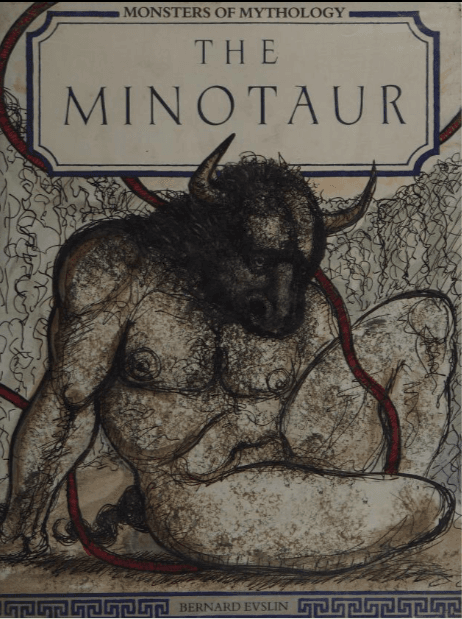
Bernard Evslin’s retelling takes a similar moral position but goes further. Rather than a mindless beast, Evslin’s Minotaur is a victim that is shaped not by inherent evil but by the cruelty of those who feared and abandoned him.
Hidden in the labyrinth out of royal shame, the creature grows up deprived of human contact. His violence, when it comes, reads less like savagery and more like the inevitable result of neglect. The Athenians sending sacrificial youths and King Minos perpetuating the cycle are no less brutal than the creature they condemn. The Minotaur becomes a mirror anchored in humanity’s own capacity for cruelty dressed up as necessity.
The Man Behind the Monster: King Minos
While the Minotaur often steals the spotlight in Greek mythology, the story cannot be fully understood without exploring the king who set it all in motion. King Minos of Crete was no ordinary ruler, he was a son of Zeus, a lawgiver who consulted the gods, and a father whose pride and ambition sparked tragedy.
From the death of his son Androgeos to the construction of the labyrinth, Minos’ choices shaped the fate of Athens and the creation of the Minotaur itself.
You can learn all about the in King Minos and his obsession with power,punishment, and divine wrath. If you dare.
Labyrinth of The Mind
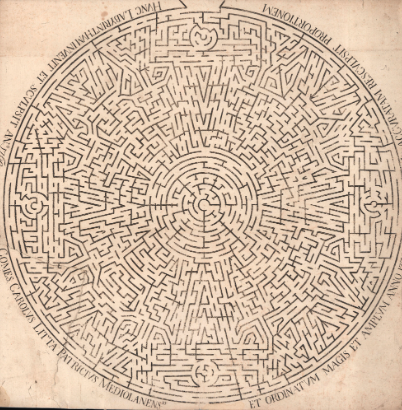
The Labyrinth was a masterfully designed maze, commissioned by King Minos and created by the architect Daedalus.
Minos was the legendary king of Crete, the son of Zeus and Europa. Every nine years, he demanded that King Aegeus send seven boys and seven girls to the Labyrinth.
The legend of Minos and the Labyrinth has inspired several films. Minotaur (2006) reimagines the myth as a horror story, with youths sacrificed to a monstrous creature in the Cretan king’s labyrinth, while Minotaur, the Wild Beast of Crete (1960) sticks closer to the classic tale of tribute and terror under King Minos.
After his death, Minos took on a new role as a judge of the dead in the underworld, alongside Rhadamanthus and Aeacus.
In Greek mythology, the Minotaur was imprisoned within this complex structure. To escape after slaying the creature, Theseus relied on a ball of thread, given to him by Princess Ariadne. While this is the most widely accepted version, deeper exploration reveals numerous variations and contradictions.
Myths are constantly reinterpreted and retold, and the tale of the Labyrinth is no exception.
The labyrinth serves as a metaphor for the human mind—intricate, confusing, and filled with emotional and psychological complexity. It reflects the maze of our thoughts, desires, fears, and inner conflicts.
More than a physical space, it symbolises the journey of self-discovery. Navigating its twists and turns mirrors the process of confronting inner challenges and transforming into a more integrated self.
Symbolic Isolation and Alienation
The Minotaur’s existence within the labyrinth also symbolises isolation and alienation. It represents individuals trapped by their inner struggles—cut off from others and unable to find belonging.
The Minotaur’s confinement in the labyrinth reflects the sense of being an outsider or an outcast.
George Frederick Watts, a prominent artist of the 19th century, explored these symbolic themes in his paintings featuring the Minotaur.
His depictions often portrayed the creature in a contemplative and introspective manner, emphasising the psychological and emotional dimensions of the Minotaur’s symbolism.
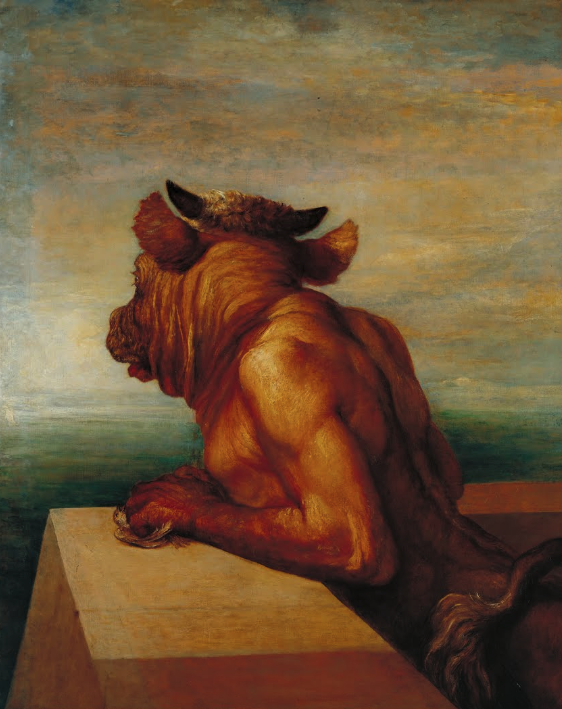
By utilising the Minotaur as a symbol, Watts delved into the complexities of human nature, the struggle between light and darkness within ourselves, and the transformative power of self-awareness and acceptance.
His art invites viewers to confront their own inner Minotaurs, embracing the journey of self-discovery and seeking harmony between their conflicting aspects.
Look closely at Watts’ Minotaur and you will notice something that most viewers miss entirely. He is not posed as a predator. He is gazing outward toward the sea, toward a horizon he can never reach.
This is fascinating because it humanises the creature for a moment. This paints a different narrative that the bird crushed beneath his hand was not hunted. It simply wandered too close. This is not a painting about longing. Watts understood that the most devastating form of imprisonment is not the one imposed from outside, it is the one you carry inside yourself, the awareness of what you could have been.
The symbolism surrounding the Minotaur in George Frederick Watts’ works resonates with universal themes of human existence, making it a subject of enduring fascination and contemplation.
“The Minotaur’s confinement in the labyrinth reflects the sense of being an outsider or an outcast.”
Symbolism of The Minotaur Dalí Picasso
The Minotaur has captivated modern artists, particularly Pablo Picasso and Salvador Dalí, who used this mythological creature to explore profound themes in their work.
These two pioneers of modern art reinterpreted the Minotaur to convey deeply personal and universal struggles, blending mythology, art, and symbols into powerful expressions.
What is striking about both Picasso and Dalí is that neither of them used the Minotaur as a villain. For both men, the creature was a self-portrait. That tells you everything about what the Minotaur really symbolises when it comes to the internal struggle one faces, especially as an artist.
Picasso and the Minotaur
Picasso’s recurring use of the Minotaur motif reflects his fascination with the duality of human nature and the beast within. For Picasso, the Minotaur symbolised masculinity, power, and inner turmoil.
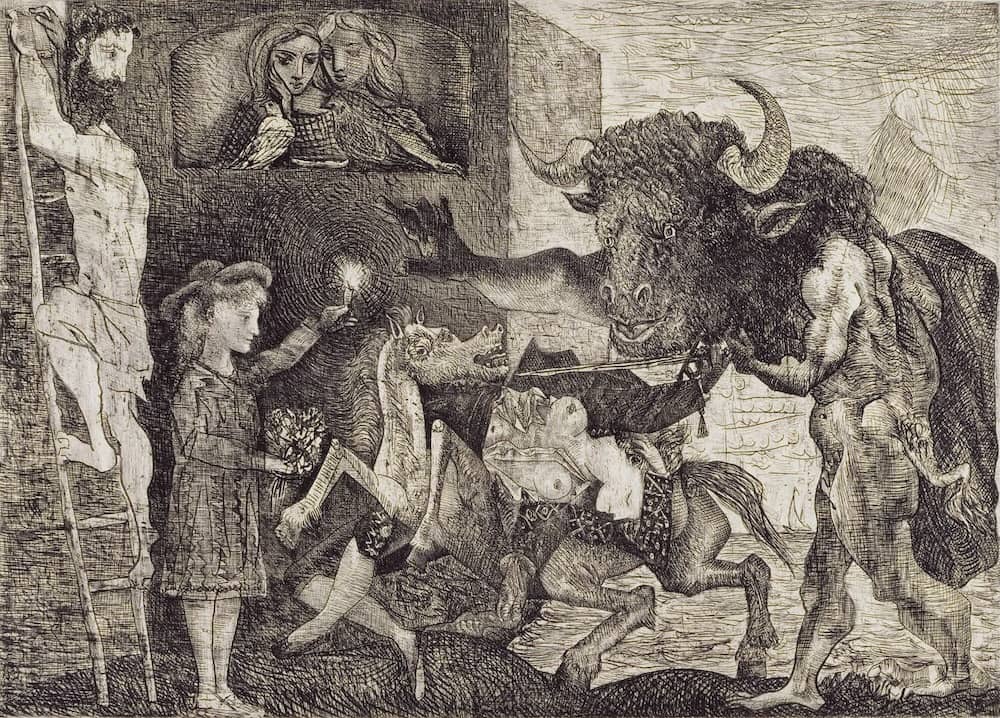
In his etching Minotauromachia (1935), he presents the creature as both violent and vulnerable, blending scenes of brutality with moments of introspection.
Minotauromachy (1935) by Pablo Picasso
These work explores the Minotaur as a representation of Picasso himself, torn between his animalistic instincts and creative intellect.
The combination of mythology and symbolism in his art illustrates the tension between civilisation and primal desire, making the Minotaur a powerful allegory for the human condition.
Minotauromachia is worth studying slowly. On the left, a young girl holds a candle, and notice the only source of light in the composition. On the right, the Minotaur advances. Between them stands a wounded horse and a female matador. The girl does not flinch. She faces the beast directly, candle raised.
Picasso never fully explained the image, but the symbolic reading is hard to avoid. This is tale about innocence and instinct, face to face, with nothing between them but a small flame.
The Minotaur is hesitating, but ask yourself, for what?
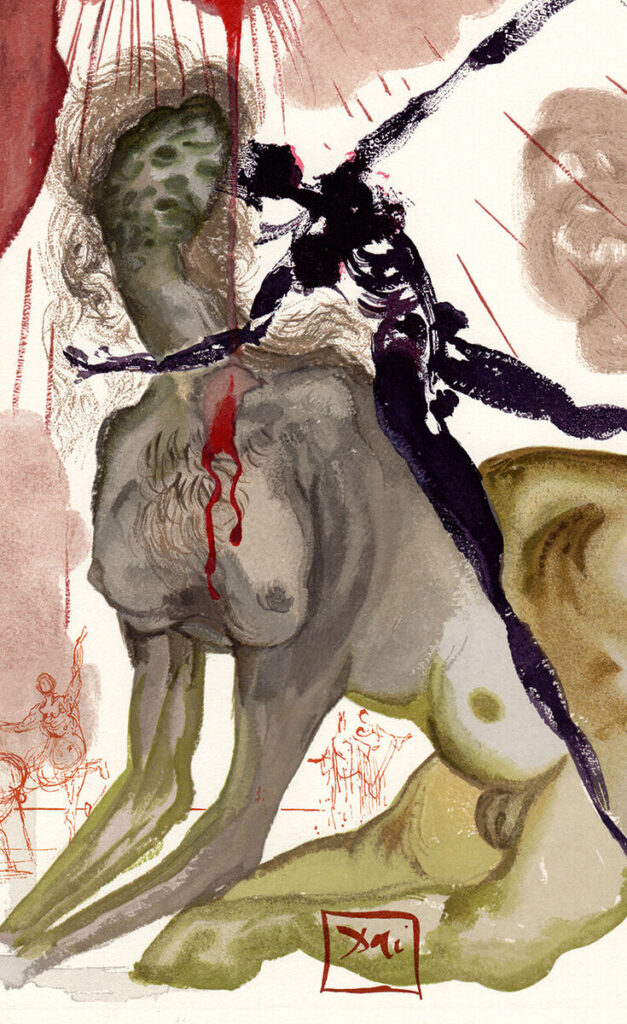
The Minotaur in Salvador Dalí’s Subconscious
Dalí approached the Minotaur from a surrealist perspective, using it as a symbol of subconscious fears and desires.
In The Minotaur (1936), Dalí portrays the creature in dreamlike settings that evoke existential dread and vulnerability.
For Dalí, the Minotaur was not just a beast, it was a mirror of human vulnerability, a figure trapped within its own labyrinth of psychological complexities. Note the delicate lines folding across the face and obscure direction of the figure.
The mass of shapes convulsing at the base of the painting, weighted on the bottom left.