




Many times in my life I have wanted to feel the fire before getting burned by the flame. Playing with fire. Catching fire for a moment. Knowing it will hurt and going toward it anyway.
The moth understands this better than any other creature alive.
We talk endlessly about butterflies. Their colour, their transformation, their cheerful symbolism of change and new beginnings. But the moth? The moth does everything the butterfly does, only in darkness, through the night when the world is sleeping, trying to move silently only to be consumed by the very thing it desires most.
That is not a footnote in the story of symbolism, for me it’s the entire story.

What Does the Moth Symbolise?
Here’s what nobody tells you about moths. They are not the inferior version of the butterfly. They are actually the opposite. They are the shadow following the butterfly around. So the next time you see a butterfly, look for the shadow it casts. That shadow has a soul. It belongs to the moth, seared by the sun, floating softly, supporting the gentle fractal lights it will never be credited for.
Here’s what matters. Where the butterfly transforms in daylight and emerges to applause, the moth transforms in darkness with nobody watching.
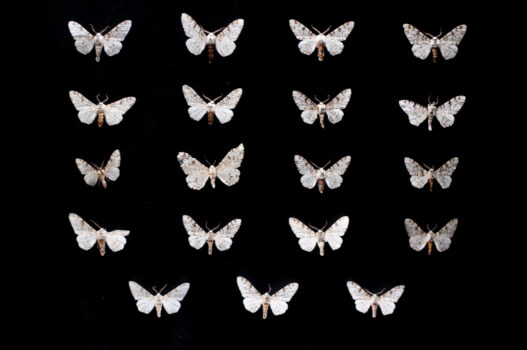
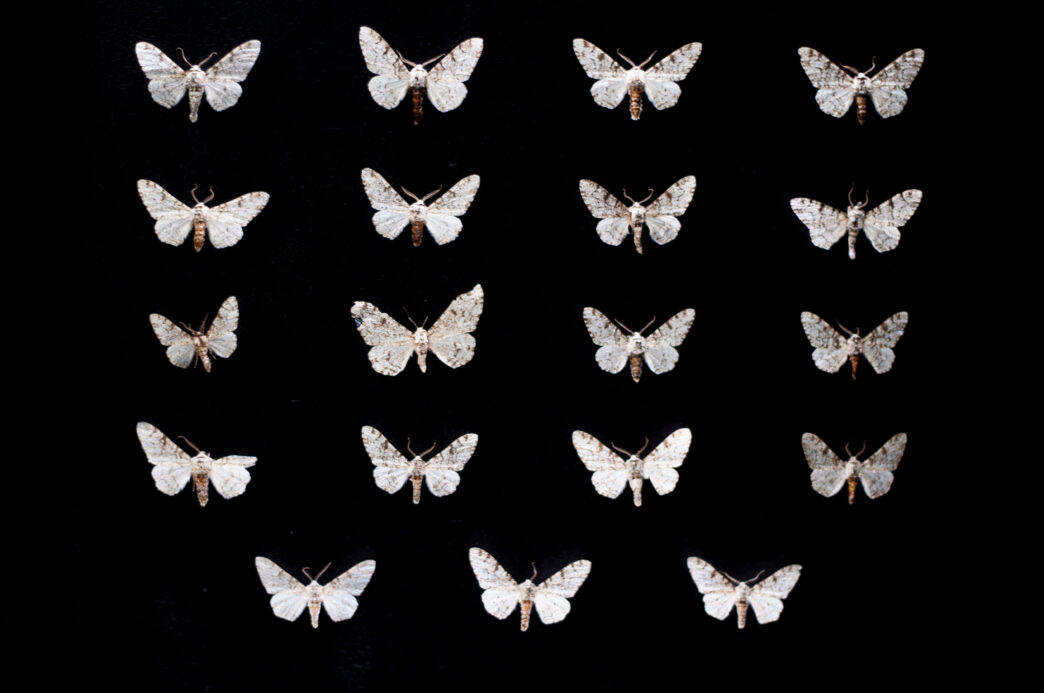
Where the butterfly is celebrated, displayed, pinned behind glass in natural history museums with entire exhibitions dedicated to its summer beauty, the moth gets none of that. Instead it presses itself against the window pane and tries quietly, desperately, to reach the light on the other side.
That image stopped me when I first encountered it. The moth at the window. Not flying freely, but stuck in limbo between the world that will lead to its timely demise, and the prison that might be truly protecting it from reaching the tunnel of light.
We have all been that moth at some point. Wanting something on the other side of a barrier we cannot break through. Close enough to see it. Unable to reach it, frustrated that we can’t get a taste before it disappears behind the horizon.
Moth Symbolism in Literature: Virginia Woolf and the Window Pane
When Virginia Woolf wrote about the moth she understood this completely.
Her essay The Death of the Moth is one of the most quietly devastating pieces of prose in the English language. She watches a moth moving against a windowpane, full of energy, full of the pure stubborn will to live, pressing against the glass toward a world it will never reach. And then, slowly, it stops.
In the essay’s most devastating moment, Woolf describes watching the moth’s final struggle with a tenderness that feels almost unbearable. She doesn’t look away. She stays with it until the very end.
What moved me reading it as a young person was not the death. It was how completely unaware the moth was that it could never get through. It simply kept going because the light was there and the light was everything. This observation of such a tiny, easily overlooked creature boldly confronts the absolute power of death. Woolf teaches us about the true nature of life through its smallest details, giving the moth a soul, a will, a presence that forces you to pay attention to things you would normally walk past without a second glance.
When I learned that Virginia Woolf wrote this essay in 1941, during one of the most difficult and final periods of her life, battling a severe return of her mental illness and depression, it left me sitting with something I couldn’t immediately name. She ultimately took her own life in March of that same year. Perhaps this was pure awareness on her part. An understanding that life is full of small moments that might break us in the end if not nurtured in a positive light.
The blind insistent reach toward something brighter than the darkness we came from. She understood, as only the best writers do, that this reach is both the most beautiful and the most heartbreaking thing about being alive.
What if the moth at the window is all of us. The sun appears after a long winter and we press against whatever is in the way, not because we are certain we will get through, but because we cannot imagine stopping.
The Moth and the Flame: Desire and Destruction
In mythology, flying toward a destructive light has a name. Icarus flew toward the sun on wings of wax and feathers while Prometheus stole fire from the gods and paid for it with eternal suffering. The moth flies toward the flame knowing, on some instinctive level, what waits there, especially if it has already felt the heat of the sun brush past its wings in the frenzy of touching the unknown.
This reminds me of all the moments in life when we go right up to the edge, accidentally crossing the threshold, feeling the fear for just a moment, followed immediately by the need to go there again. Think about sitting on a swing as a child, asking to be pushed higher and higher. You hit the limit of fear. But once you return to the ground, you want to be pushed back to that height. The fear was never the deterrent. It was the point.
And yet it goes on and on.
Think about the flower reaching toward the sun. That dance we witness through the years, that slow daily turning toward light, is called phototropism. It is not a choice. It is simply what living things do to survive. They reach for what sustains them even when the final destination is dangerous.
The moth is the nocturnal version of that impulse. Think about the desires that operate in darkness. The pull toward something bright and warm and consuming that you know might destroy you but that you cannot resist because the alternative is staying in the dark forever.
This is why the moth has become such a powerful symbol for desire, obsession, and the pursuits that both define and endanger us. It doesn’t represent reckless stupidity. It represents the very human experience of wanting something so completely that the risk becomes irrelevant. Even if we could switch the light on in another room to guide the moth out, to our astonishment, it no longer exists in the morning.
I have felt that. Most people have. The moth just has the honesty to show it plainly.
Moth Symbolism in Jungian Psychology
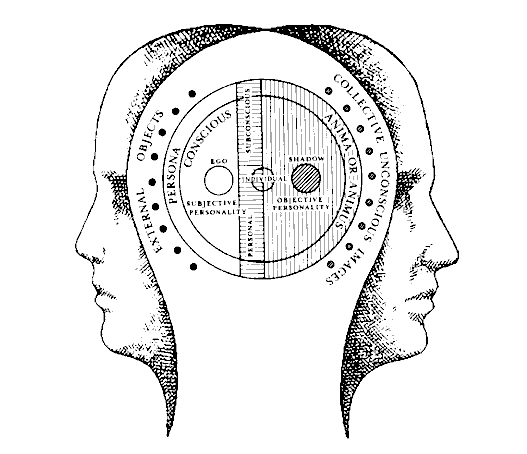
It is impossible to write about the moth on this blog without seeing it through a Jungian lens.
When we contemplate the darker side of the human condition, what we push underground becomes impossible to ignore. Jung described the shadow as the part of the psyche we refuse to acknowledge. The impulses we were taught to be ashamed of. The parts of ourselves that only come out in darkness, when nobody is watching.
The moth lives there. Entirely and without apology.
While the butterfly represents the conscious self, the transformed and celebrated version of who we have become, the moth represents everything that transforms softly in the dark, without sound, only when you witness the flicker of light in the room and know it’s a moth trying to reach salvation.
Here’s something worth knowing about the moth’s relationship with light. Moths are highly sensitive to ultraviolet light, which they use to find nectar-rich flowers at night. Many artificial lights, such as bug zappers and fluorescent bulbs, emit high levels of UV light, acting as an intense attractant. This is called transverse orientation, evolved over millions of years to use the moon and stars as fixed, distant navigational guides.
In Jungian terms, the moth’s flight becomes an analogy for humanity’s struggle with its own self-generated existential crises. Ancient hardwired instinct clashing with new artificial realities, often leading to self-destruction. But for me personally it goes somewhere different. It goes toward metamorphosis. A black moth, or the moth generally in dreams, may represent the death of an old way of being, a toxic cycle, or the necessary ego-death needed for transformation and new life.
The change that happens not in the triumphant emergence into sunlight but in the long private struggle inside the cocoon, in the middle of the night, with no audience.
Jung believed that integrating the shadow, acknowledging what lives in the darkness rather than suppressing it, was one of the most important things a human being could do. The moth, in this reading, is not a symbol of weakness or failure. It is a symbol of the courage it takes to transform in private, to carry your desires honestly, and to keep moving toward the light even knowing what it might cost you.
If this resonates, my post on Carl Jung and the hidden language of symbols goes deeper into the shadow self and what it means for how we read art.
Moth Symbolism Across Cultures and Folklore
Moth Symbolism in Death, Rebirth and the Soul
When was the last time you wanted to reinvent yourself completely? Not improve. Not adjust. Burn everything down and start again. Every culture that has ever grappled with that impulse has found the moth waiting there.
The moth has been closely associated with the soul and with the boundary between the living and the dead for thousands of years across cultures so different they should have nothing in common. And yet here it is, the same small nocturnal creature, carrying the same meaning everywhere it appears.
I’ve seen photographs of the black witch moth online. It looks like something that fell from the sky, carrying otherworldly particles of the universe collected from dreams and memories.
So it’s no surprise that in Mexican and Caribbean folklore, the black witch moth is seen as a harbinger of death or a messenger from those who have already passed. Its silent nocturnal arrival is interpreted as a sign, an omen, or a visit from someone no longer living.
Moths are seen as guides between worlds, fluttering psychopomps leading souls through the threshold between life and whatever comes after. They are the forgotten spiritual seekers, willing to sacrifice themselves for the light of divine knowledge. Whether that knowledge is worthwhile, I’ll leave you to figure out when you get there.
In the Bible, moths appear repeatedly as symbols of decay, impermanence, and the fragility of earthly things. In the book of Job and in the gospel of Matthew, moth and rust are used to represent the inevitable dissolution of everything we accumulate and cling to. The moth does not destroy out of malice. It simply reminds us that nothing physical lasts.
In Hindu tradition, the soul’s journey toward divine light carries the same beautiful danger as the moth toward the flame, compelled, willing, surrendered to something larger than itself.
The point of rebirth is triggered by the tragedy of death. For me that is represented most acutely in the mind’s tendency to get hooked on worldly beauty and sensory pleasures, drawn toward the flame until the destruction becomes inevitable.
Across all of these traditions, for centuries, this message is remarkably consistent. The moth stands at the threshold. Between darkness and light. Between life and death. Between who we are and who we are becoming. It does not promise safety on the other side. It simply shows us the way.
What the Moth Means if You Find One in Your House
If a moth finds its way into your home, different traditions read it differently.
In many cultures it is seen as a message from a loved one who has passed, drawn by the warmth and light of your living space. In others it is an omen of change approaching, a sign that transformation is already underway whether you are ready for it or not.
Messages have forever been a beautiful way of communicating, long before the digital age demolished the unannounced reminder that you’ve being thought of.
From a purely symbolic perspective, a moth in your house is the unconscious entering your conscious space, that feels more meaningful when we’ve forgotten about the moths existence The night world pressing through into the day world. Whatever you have been avoiding in the dark is asking to be seen.
Whether you believe in omens or not, there is something worth sitting with in that image. A fragile nocturnal creature drawn through the darkness to the warmth of where you live. Pressing against your windows. Finding its way in.
What light in your life is drawing something toward it right now?

Moth Symbolism in Art and Tattoo
The moth has been making its way onto skin and canvas for centuries. And in recent years something has shifted. What was once considered an overlooked, even unsettling image has become one of the most requested tattoo designs in the world.
That shift says something interesting about where we are collectively.
Maybe we are finally ready to wear our shadow on our skin.
Before we get into the importance of the moth in art, there is one piece that springs instantly to mind. One to dwell on for a moment. Vincent Van Gogh’s Peacock Moth is an abstract, direct impression of the true nature of a moth, devouring its own existence in nature. It is hard to draw a line where the moth starts and where it ends, since every shape lends itself to capturing the entire essence of the moth as a floating fragment amidst the trees and leaves.
Van Gogh initially identified it as a death’s-head moth in letters to his brother Theo, named for the skull-like marking on its body. He later realised it was a giant peacock moth but painted the skull shape anyway. And here is the detail nobody mentions. The death’s-head hawk moth lays its eggs on potato plants. Van Gogh painted potato farmers his entire life. Whether that connection was conscious or not, something knew.
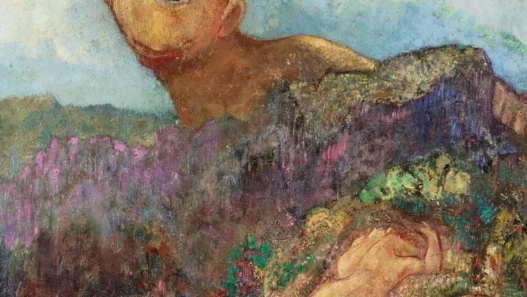
Before the modern impressionists, moths and butterflies were important symbolic features of painting across centuries. If you are looking for art that captures the moth’s symbolic depth, Odilon Redon is where I would send you first. His dreamlike noir imagery carries exactly the same quality of darkness reaching toward light that makes the moth so compelling.
Then there is Custard Apple with Sphinx Moth by Maria Sibylla Merian, entirely different in intent, more decorative and illustrative, but worth your time. And finally, Portrait of a Child with Moth, probably depicting Kate Bennitt, which has to be among the most quietly devastating examples of this symbolism ever painted.
When I learned that Kate died young, just before her eighth birthday, the painting changed completely. The moth held gingerly between her fingertips became something else entirely. A fleeting passage of borrowed time. The clouds moving in the background, the fragility of the grip, the softness of the light. It struck me as one of the purest expressions of what the moth has always represented. Perhaps moths are just angels trying to reach heaven.
As a tattoo, the moth carries layered meaning that shifts depending on how it is rendered.
A moth with a skull pattern on its wings, most famously the death’s-head hawk moth from Silence of the Lambs, represents mortality, mystery, and the thin line between beauty and terror. A moth drawn toward a flame represents desire, obsession, and the willingness to risk everything for what you want. A moth caught mid transformation, wings still unfurling, represents private growth, resilience, and the beauty of becoming with no audience watching.
That last one resonates because it is honest. Most growth happens in private. The moth does not perform its becoming.
The natural symmetry of the moth’s wings is no accident in art or tattoo either. Symmetry suggests balance. The equal weight of darkness and light on either side. What could be more fitting for a creature that lives permanently between two worlds.
What makes the moth such a powerful symbol in both art and tattoo is precisely this. It holds contradictions comfortably. Fragile and resilient. Beautiful and unsettling. Drawn toward light and belonging entirely to darkness.
If you meet someone who has chosen the moth, just know they are tapping into the deeper reality of life.
They are comfortable in their own shadow.
Why the Moth Still Matters
In a world that celebrates the butterfly, the moth asks a different question: Why am I tied to the shadows, while my counterpart can shine in the light?
Let’s be honest about one thing. The moth, although strange and ambiguous, does not carry the same vibrant, glorified beauty of the butterfly. When the sun appears, the moth aimlessly floats to its demise, while the butterfly softly lands on a flower and sits there waiting for you to notice, take a picture, and signal to the world that you are witnessing nature at its peak.
The difference with the moth is that it is not about beauty.
It has never been that way because the moth simply shows you what desire looks like when it is completely honest. It shows what happens when you strip away the performance, the pretense, and the careful management of appearances, reducing yourself to one pure movement toward one burning thing. These are essentially two sides of the same coin, coexisting in our universe as equal forces.
When I think about the moth at the window sometimes, it makes me question life. Are we all pressing against the glass, wanting what is on the other side? Full of wanting. The light so close.
And I think there are worse ways to live than that.
Newsletter
Most Taboo and Forbidden Symbolism Delivered Straight to Your Inbox
Thank you!
You have successfully joined our subscriber list.