




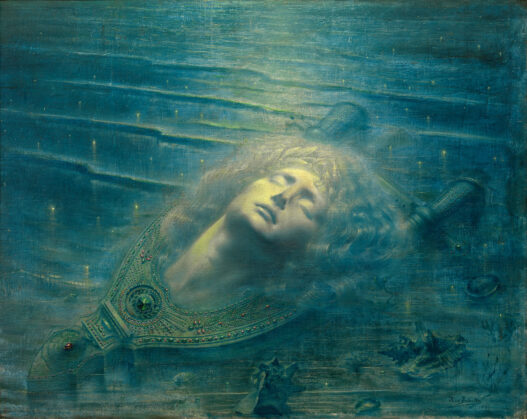
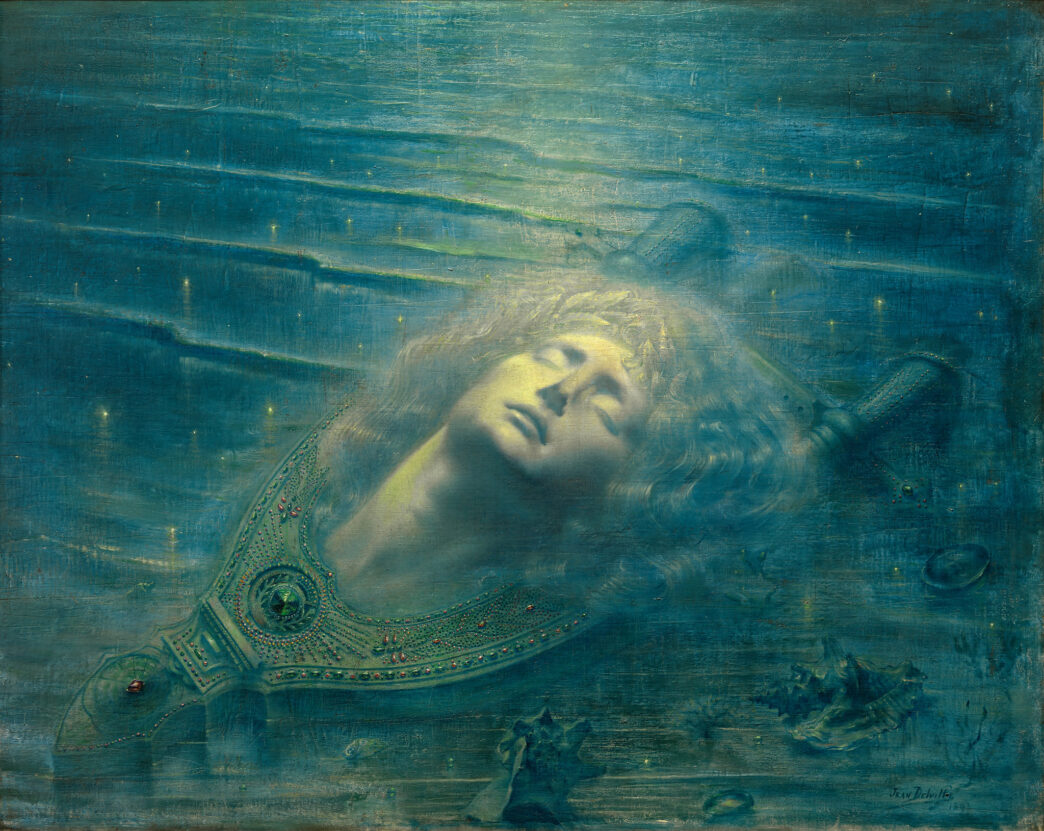
This painting, “The Death of Orpheus” (1893) by Jean Delville, is a masterclass in Symbolist art. Who is this haunting figure drowning in opaque opulence?
Delville’s Orpheus asks the viewer an uncomfortable question: What happens when integrity, creativity, or emotional honesty no longer align with social approval? The painting’s luxuriant beauty masks a violent truth
Beneath its ethereal glow lies a haunting, controversial narrative that modern audiences might find disturbingly relevant.
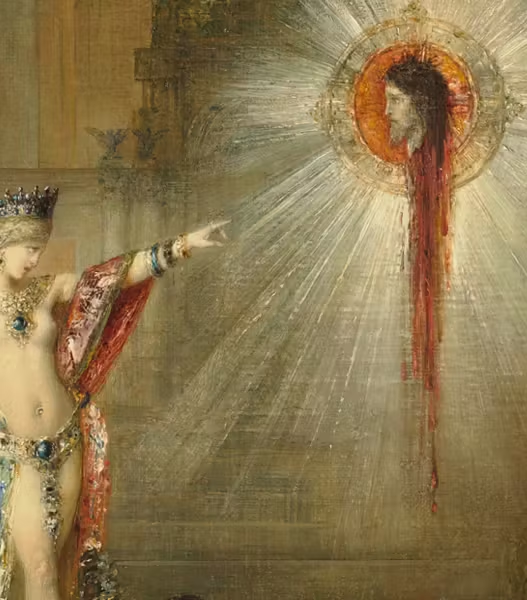
The image at first seduces you with its serenity. Golden-haired youth drifts in dreamy repose, haloed by celestial light. But linger longer, and serenity curdles into something eerie. This is Orpheus, the mythic poet whose severed head sings as it floats downriver. Delville renders not a moment of horror, but of transcendent detachment.
As though beauty itself has been decapitated and cast adrift.
Art as Sacrifice?
Why is Orpheus so beautiful in death? Delville does not paint the scream, the agony, the final terror. Instead, he paints a post-mortem glorification. We often see a corpse as an object of reverence, now we face a deeply uncomfortable question:
Must the artist suffer, even die, to be celebrated?
In the age of social media where creators often burn out or vanish before being valued, Orpheus’s fate is eerily prophetic. His artistry was divine, but his audience, the Maenads, tore him to pieces. Sound familiar?
The Necklace or the Noose?
That elaborate, bejewelled collar around Orpheus’s neck could be read in two ways:
As a sacred ornament, symbolising divine favour.
Or as a collar of control, a decadent leash from a culture that feeds on genius until it’s lifeless.
Is Orpheus being honoured, or shackled in death?
The sea is not turbulent. It’s glassy, star-speckled, cosmic, as if the universe simply doesn’t care. This isn’t just the river Hebrus. This is the artist adrift in a cold, aestheticised world. His art survives. His body doesn’t.
What Would You Sacrifice for Beauty?
Orpheus’s decapitated beauty echoes across time:
Do we romanticise the suffering artist?
Are we complicit in consuming art without compassion for its creators?
And in a culture obsessed with legacy, do we truly see the human before the myth?
How Artists Visualise the Symbolism
Different artists bring distinct symbolic readings to this myth:
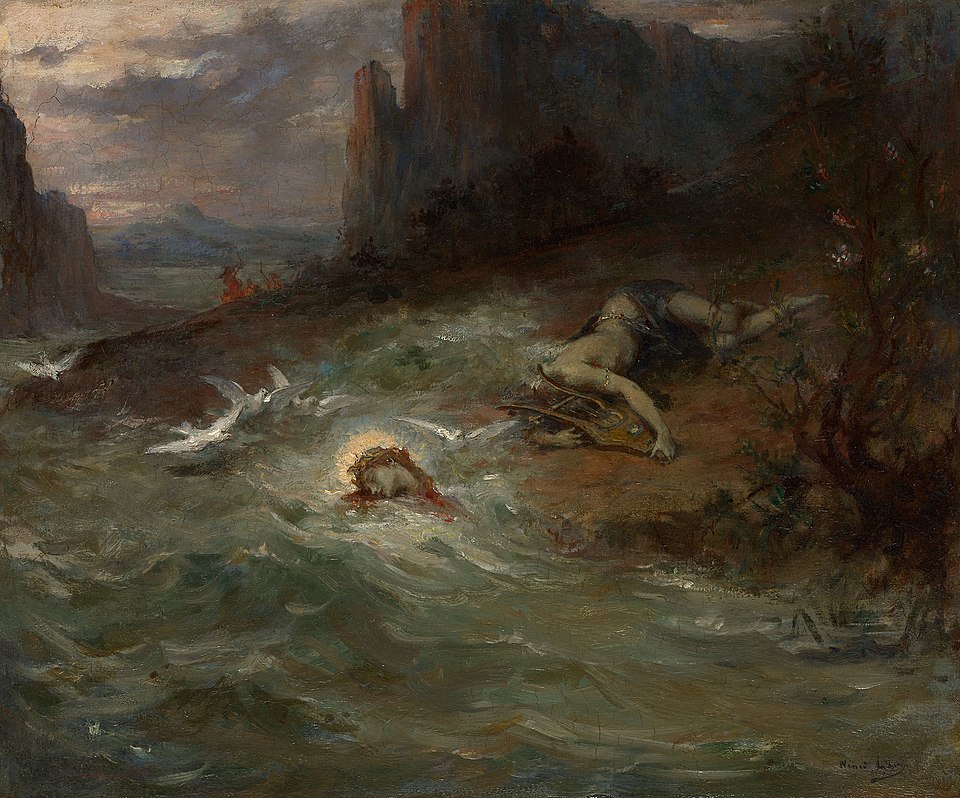
Henri Lévy’s The Death of Orpheus (late 19th century) captures the quiet dignity of the fallen poet, with his lyre, an emblem of divine artistry, lying still beside him. The palette’s earthy browns and muted reds focus attention on the threshold between life and death, suggesting that beauty can persist even in destruction.
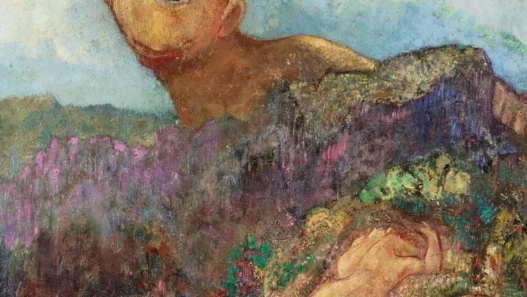
Odilon Redon’s version isn’t literal but evocative: fiery reds and ochres swirl around a central form that suggests a boat or cradle. Here, colour and form replace narrative details, turning Orpheus’s end into a dreamlike meditation on transition, mysticism, and the boundary between life and afterlife.
Jean Delville’s Symbolist painting places Orpheus in a surreal, many view Delville as the godfather of symbolism, as it paints an almost androgynous repose, between the earthly and the divine.
Many viewers and commentators online also note how depictions of Orpheus’s severed head often become a focal symbol, representing the mind or song that survives the body. In some interpretations, the floating head becomes an oracle or echoes in the nightingales singing above his tomb, suggesting an immortality of art that outlives physical destruction.
Other artist’s who paintings Orpheus
What remains unsaid
Interpretations that continue beyond what’s written
Thank you!
You have successfully joined our subscriber list.