










Every February, the same symbols return.
Red hearts. Roses. Cards. Soft promises wrapped in cellophane.
They arrive quietly at first, then all at once, until it becomes difficult to tell whether love is something we feel, or something we are expected to perform.
Valentine’s Day survives not because of romance, but because of what the same symbolises to everyone across the world. When emotions become difficult to name, we reach for shapes, colours, rituals and objects to speak on our behalf. This day is less about couples and more about a symbolic language we have inherited, repeated, and slowly flattened. When you look around during this time of year, it’s impossible to not see the symbol reflected everywhere.
This is not a rejection of love, it’s a moment to ask “what is the meaning behind Valentines day and why should one participate?”
The Heart: A Container for Vulnerability
The heart we recognise today is not anatomical. It is not precise, nor logical. It is a symbolic container. The metaphorical heart speaks to us through the language of love.
In medieval art and religious iconography, the heart represented devotion, sacrifice, and moral truth. The Sacred Heart of Christ, surrounded by thorns and flame, was not romantic, it was painful, exposed, and sincere. Love, in this context, was inseparable from suffering.
Over time, the heart was simplified. Rounded. Smoothed. Repeated until it became decorative rather than dangerous.
But symbols do not lose their power so easily.
Even now, the heart still asks the same question: What are you willing to risk? When we offer a heart, even in its simplest form, we are offering something fragile. The symbol endures because vulnerability endures.
Fertility, Flesh, and Ritual
Long before Valentine’s Day became associated with cards and courtship, it was rooted in something far older.
Its origins are often traced back to Lupercalia, a pagan fertility festival celebrated in ancient Rome between the 13th and 15th of February. This was not a festival of romance as we understand it today.
It was physical, chaotic, and deeply ritualistic. Men ran through the streets, often naked, striking young women with strips of leather made from sacrificed animals, an act believed to promote fertility and ease childbirth.
By modern standards, the ritual feels uncomfortable, even violent.
And that discomfort is important.
Lupercalia was not about affection or emotional intimacy. It was about survival, reproduction, and the body’s role in continuity. Love, if it existed at all, was secondary to function. The ritual did not ask whether desire was mutual or tender, it assumed participation was necessary.
What this reveals is something we often forget: Valentine’s Day did not emerge from softness. It emerged from urgency. From the fear of extinction, from the need to control chance, from the belief that ritual could influence fate.
As the centuries passed and pagan traditions were absorbed into Christian calendars, Lupercalia was stripped of its physical extremity and recast into something more acceptable, more symbolic.
Flesh gave way to metaphor. Whips became words. Fertility became romance.
Yet traces of that origin still linger.
The pressure to participate.
The sense that love must be demonstrated on a schedule.
The feeling that absence or refusal somehow marks failure.
Understanding this origin definetely raises questions to our participation in this cultural phenomenon. It reminds us that this celebration has always been shaped by power structures and inherited rituals. What we now call romance was once something raw, imposed, and communal rather than personal.
Seen this way, Valentine’s Day is a constructed ritual. One that has changed form, but never entirely lost its sense of expectation.
And perhaps that knowledge gives us permission to question it, ignore is, reshape it, or step format the meaning entirely.
Valentine Day Origins
The earliest surviving Valentine is not extravagant.
It is not adorned with hearts, colour, or ceremony.
It is a poem.
In 1415, Charles, Duke of Orléans, imprisoned in the Tower of London after the Battle of Agincourt, wrote a Valentine to his wife. Separated by war, stone walls, and uncertainty, he turned to words, the only thing that could cross the distance between them. That letter still exists, preserved in the British Library, fragile and enduring.
This matters more than we often admit.
The origin of Valentine’s correspondence is far different from what you would think. It’s a clear example of love under constraint. Love without proximity. Love without proof. Love that could not be performed publicly, displayed, or validated. It was private, vulnerable, and unrepeatable.
The Duke’s poem was a personal expression or saying I still exist to you, even here.
In this moment, Valentine’s symbolism was not propaganda, it was survival.
A far cry from what it’s become today.
There were no expected gestures, reminders or obligation to respond in kind. Just the quiet risk of putting feeling into language and hoping it would endure the journey.
When we place this origin beside modern Valentine’s Day, the contrast is striking. What began as a fragile act of human connection has now become a vapid ritual of visibility and proof. The letter has become a product. The vulnerability has become performance.
And yet, that original impulse still lingers beneath the noise.
Every Valentine’s card, however commercial, traces back to a man alone, writing not because he was told to, but because he needed to be remembered.
That is the part of the tradition worth holding onto.

Famous Artworks
Western art is filled with images that shaped how we imagine love.
Let’s take The Kiss by Gustav Klimt. This golden, intimate, metaphysical painting appears frozen in perfection. It is beautiful, yet timeless and unreachable. Love becomes a concept we no longer grasp in our lives, but an obsession that lingers in our dreams.
Another painting created during a time when expression became impression, is The Lovers by René Magritte. Two faces are covered, intimacy obstructed. Here, love is closeness without clarity, it feels suffocating but remains a reminder that even in union, we remain separate.
One thing you will notice is that Pre-Raphaelite paintings often depicted tragic lovers where devotion leads not to fulfilment, but to loss. This can be observed through the symbolism and storytelling in Ophelia, Tristan and Isolde.
Historically, love in art was rarely simple. It was obsessive, doomed, sacred, or forbidden. The mere idea that we can reduce this ‘moment’ to materialistic gifts giving and competing for love, takes the simple message The Duke left, running it through the chainsaw mill of narcisistic obsession.
One thing Valentine’s Day did achieve, is taking these cultural visual languages and distilling them into something cleaner, safer, easier to sell.

The Propaganda of Romance
Modern Valentine’s Day does not teach us how to love.
It teaches us how love should look. Our senses are rushed with the what truly represents love, offering a gift for every tier of affection.
We have learned throughout centuries that propaganda does not always arrive loudly. Sometimes it arrives wrapped in tradition.
Repetition. The slow and painful expectation to buy, to post, to prove.
The symbols remain, but their meanings are narrowed:
The heart becomes decoration
Red becomes romance
Love becomes a product
This creates a quiet anxiety, especially for those who feel out of step with the narrative. Those who are single. Grieving. Healing. Or loving in ways that do not fit the template are pushed aside, while the fabric of romance is distorted through social media and fickle ad campaigns.
Symbols that once helped us express complexity now risk erasing it.

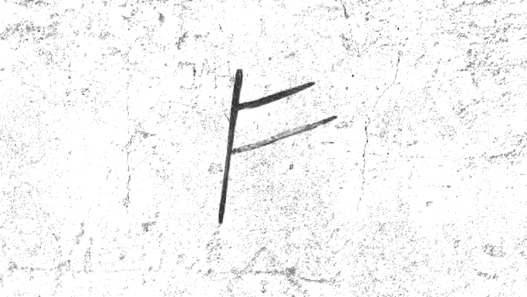
Check out my blog Viking Runes and Mythology
Valentine’s Day is Not The Enemy
What drains them of meaning is repetition without reflection.
A symbol only becomes hollow when it is repeated without intention, when it is used because it is expected rather than because it still speaks. Throughout the years, what was once an act of kindness and compassion has simply become overused without being listened to.
The heart can still mean vulnerability, if we allow it to. Not decoration, not perfection, but exposure. Red can still mean risk, as long as it’s in the right place and with good intention.
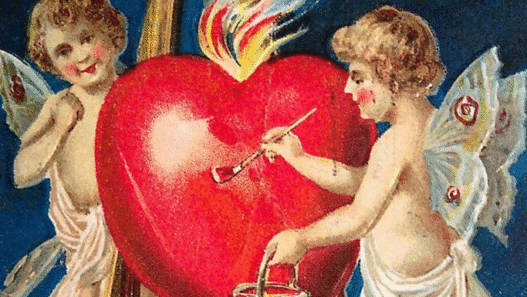
The willingness to feel deeply knowing there is no guarantee of safety. Even Cupid, stripped of his innocence, can still remind us that love is disruptive, untidy, and rarely arrives on our own terms.
Valentine’s Day, then, does not need to be an obligation or a performance. It does not need to prove anything to anyone. It can be a pause rather than a demand. A moment to step back from the noise and ask a quieter, more uncomfortable question:
What does love actually require of me, be honest
And perhaps that is all they were ever meant to do.