











Carnation, Lily, Lily, Rose is one of John Singer Sargent’s most symbolically rich
paintings and one of the most quietly haunting works in British art.
Painted entirely outdoors at dusk between 1885 and 1886, the meaning of Carnation, Lily, Lily, Rose goes far beyond two girls lighting lanterns in a garden. Every element — the flowers, the fading light, the ritual-like stillness — carries a philosophy and a story behind why this moment mattered so much to capture.
There is a specific quality of light that exists for only a few minutes each
evening in late summer. Sargent spent two years chasing it. What he caught
was something far deeper and visceral, it was the last moment before childhood
ends.
Fact: Carnation, Lily, Lily, Rose was painted entirely en plein air at dusk, with Sargent working for only a short window each evening to capture the delicate glow of lantern light against fading daylight. As summer ended, he even used artificial flowers to continue the painting.
According to Tate Britain, this careful attention to fleeting light is what gives the painting its signature luminous and magical quality.
What Does Carnation, Lily, Lily, Rose Depict?
This enchanting work depicts two young girls lighting Chinese lanterns in a lush English garden at twilight. On the surface, it is a delicate scene of innocence and play, suffused with the soft glow of lantern light reflecting on flowers.
Yet beneath this idyllic image lies a rich tapestry of symbolism. The lanterns themselves suggest transience and the fleeting nature of childhood, while the lilies and roses are traditional symbols of purity, beauty, and the cycle of life. The interplay of light and shadow evokes a sense of mystery, capturing the fragile boundary between day and night, reality and imagination.

The Moment That Inspired Carnation, Lily, Lily, Rose
One of the most direct inspirations came from a real event: in September 1885, Sargent went on a boating trip on the River Thames at Pangbourne with his friend, the artist Edwin Austin Abbey. During that trip, Sargent saw Chinese lanterns hanging in trees among lilies. This was the moment that sparked the image of glowing lanterns in a garden at dusk, a visual motif he later translated into Carnation, Lily, Lily, Rose.
After the boat trip, Sargent spent time in Broadway, a village in the Cotswolds, staying with his friend Francis Davis Millet. He worked in Millet’s garden (or nearby) to bring his vision to life. Because he was painting “en plein air” (outside) and trying to catch a very particular light (dusk), he would only paint for a few minutes each evening, when the lantern glow and twilight matched what he saw on the Thames.
The Musical Inspiration and Meaning Behind the Title
The more I search for paintings with a musical inspiration, the harder they become to find. But when I discovered this detail about Carnation, Lily, Lily, Rose, something shifted. I started hearing a melodic rhythm in the brushstrokes. Each section of the canvas flows into the next, and the glowing edges of the lanterns feel less like light and more like a refrain — something repeating, something felt rather than seen.
The title Carnation, Lily, Lily, Rose doesn’t describe the painting. It comes from a song. Specifically, it’s drawn from the refrain of an 18th-century pastoral song called The Wreath (sometimes known as Ye Shepherds Tell Me) by the composer Joseph Mazzinghi.
The lyric references a garland of flowers worn around a woman’s head, carnation, lily, lily, rose, and carries a tone of gentle, idealised beauty. Sargent reportedly heard the song being sung on the Thames boat trip that first sparked the painting’s concept, which means the title and the inspiration arrived together, in the same moment.
This matters symbolically. The song is about beauty that is arranged, constructed, worn, flowers as adornment rather than nature. Set against a painting about flowers in their natural state, surrounding children who are unaware of being observed, there is a quiet tension between the cultivated and the innocent that runs through the whole work.
The repetition of lily, lily in both the song and the title is also worth noting. It isn’t a mistake or a quirk. The doubling creates a rhythm, almost a chant, that gives the title an incantatory quality. It sounds like something remembered from childhood rather than read from a label.
The Girls in the Painting: Who Were Dolly and Polly Barnard?
The two girls in the painting are Dorothy and Polly Barnard, known as Dolly and Polly, daughters of Sargent’s close friend, the illustrator Frederick Barnard. But it turns out they were not his first choice.
Sargent had originally planned to use Katharine, the young daughter of his host Francis Davis Millet, as his model. But as the painting developed, he made the decision to replace her with the Barnard sisters. The reason was practical but telling , their blonde hair caught the lantern light in exactly the way his vision required.
This is what you might some call an “artistic choice”, do you think it adds to the overall effect of the painting?
But for me it reveals something more considered. Sargent understood that the right subject transforms the feeling of a painting entirely. The blonde hair was the difference between a painting that glows and one that simply depicts.
It’s a small detail that reveals something important about how Sargent worked. He was willing to change the painting if he could change the feeling, and the children were vessels for it. The blonde hair wasn’t a preference, it was a compositional necessity. The light needed somewhere to land and disperse, this accentuates the lanterns quality further.
That said, Dolly and Polly were not strangers. They were part of the tight circle of artists and friends gathered in Broadway that summer, children who grew up around painters and were comfortable being watched. You can see this in how calm and composed they appear, totally absorbed in their task, that only comes from genuine familiarity.
The Symbolic Meaning of Carnation, Lily, Lily, Rose
Scholars have long argued that Carnation, Lily, Lily, Rose operates on two levels simultaneously, as a luminous outdoor scene and as a carefully constructed web of Victorian symbolism. When you start pulling at the threads, the painting becomes considerably stranger and more layered than it first appears.
The Lanterns
The paper lanterns are the painting’s emotional centre. Fragile, temporary, burning from within — they are one of the most direct symbols of transience in Victorian art. A lantern gives light but cannot last. It is childhood made visible.The Twilight
Sargent didn’t choose dusk arbitrarily. In many cultures, twilight is a threshold that connects two separate identities. Such as Ancient Egyptian mythology, where twilight served as a vital threshold where the sun god Ra passed through the akhet—a gateway to the Duat. Neither day nor night, neither one thing nor another. The girls exist in that in-between space, old enough to perform this quiet ritual, young enough not to understand what it means. The light is fading and they are trying to hold it.The Flowers
Each flower carries specific Victorian meaning. Lilies for purity and the soul. Roses for love and beauty that will fade. Carnations for fascination and distinction. Together they build what some scholars call a flower-maiden allegory, childhood adorned with the symbols of everything it is about to become.The Darker Reading
Some interpretations go further. The act of lighting a lantern, kindling a flame, coaxing light from darkness has been read metaphorically as an awakening. This is speculative and debated, and Sargent left no written record confirming it. But the longer I look at this painting, the more convinced I am that something is being marked here.
The short film below captures the story behind the painting better than most written accounts manage.
How Monet Shaped Carnation, Lily, Lily, Rose
Of all the influences on Carnation, Lily, Lily, Rose, Claude Monet is the most direct. Sargent and Monet had become close friends by the mid-1880s. Monet’s commitment to painting outdoors was one of the fundamental traits of the Impressionists, chasing light, working fast, accepting the impermanence of the moment as part of the process.
The evidence is not just stylistic. Sargent painted Claude Monet Painting by the Edge of a Wood around the same period, a sketch that shows him standing alongside his friend, watching how he worked. It is the portrait of an apprenticeship. What Sargent took from it was the understanding that some light cannot be recreated — it can only be caught.
That belief is what drove him to paint for only a few minutes each evening, returning to the same spot, waiting for the exact quality of dusk to return. It is a Monet impulse expressed in a distinctly Sargent painting.

The Lilies as Composition
The lilies do something unusual in this painting. Rather than receding into the background as garden scenery, they arc forward over the children, creating what British Art Studies describes as a decorative, almost flat spatial arrangement. It is a compositional choice that flattens depth deliberately, pulling the eye across the canvas rather than into it.
This is not accidental. The effect gives the scene a quality closer to a frieze than a window — something ceremonial and contained rather than observed from a distance. The lilies don’t frame the children. They shelter them.

5 Things to Look For When You Stand in Front of Carnation, Lily, Lily, Rose
The Lanterns: Fragile Light, Fleeting Childhood
The paper lanterns are the emotional heart of the painting. Their warm glow at the exact moment between day and night mirrors childhood itself — luminous, temporary, burning from within. Sargent spent two summers trying to paint this light. That effort alone tells you how much it mattered.
The Lilies: Purity That Cannot Hold
Lilies carry purity and the soul, but here they also mark the passing of summer. Their blooms are already fading at the edges. Sargent painted them at the end of the season deliberately. The beauty in this painting is not at its peak. It is just past it.
Dusk: The Threshold You Can Feel
Not fully day, not fully night. The girls exist in that same in-between space, old enough to perform this quiet ritual, young enough not to understand what they are marking. Sargent caught the symbolic and the literal in the same four minutes of light.
The Ritual: A World Adults Cannot Enter
The girls are entirely absorbed and unaware of being watched. That private ceremony creates a boundary around them that feels almost sacred. You are an observer here. The painting makes sure you know it.
The Garden: Protection or Enclosure
The flowers press in from every side. Whether that feels protective or suffocating likely depends on where you are in life when you stand in front of it. The garden is not background. It is an argument about childhood itself.
When I look at this painting, every element feels like it is telling a story about existence itself. The youthful awareness we carry into nature, and how we encounter the same quality of light and the same threshold moment over and over throughout our lives.

How John Singer Sargent Painted Carnation, Lily, Lily, Rose
Most paintings of this scale were made in a studio. Carnation, Lily, Lily, Rose was made outside, in a garden, in fading light, against a deadline set by the sun.
Sargent began the painting in Broadway, Worcestershire in September 1885, working in the garden of his friend F.D. Millet. He returned the following summer to complete it at Millet’s new home, Russell House, finishing around October 1886. Two summers. One painting. Four minutes of usable light each evening.
As autumn arrived and the natural lilies died back he replaced them with artificial flowers to keep the composition intact. The commitment borders on obsessive, and that obsession is visible in the finished work, Sargent was almost scientific with his composition and decision making and you will find there is nothing casual or accidental in any part of the canvas.
It was one of the very few figure compositions Sargent ever painted outdoors in the Impressionist manner. For an artist defined by his portraits, painted in controlled studio conditions, this was an unusual surrender to the unpredictable. The result was the painting most people consider his most emotionally affecting work.
The short film below captures the story behind the painting better than most written accounts manage.
Where to See Carnation, Lily, Lily, Rose Today
Sargent was particular about how this painting was displayed — and having seen it several times myself, I can confirm he was right.
He once noted that the warm, post-sunset light in which he painted didn’t always come through under gallery lights in London. Because of this, the painting is understood to “look best on a grey or foggy day” which, in my experience, won’t be hard find in London even if you visit in the summer!
The painting has been held in the permanent collection at Tate Britain since 1887, purchased directly from the Royal Academy Summer Exhibition the same year it was first shown. It was one of the first works acquired for the national collection under the terms of the Chantrey Bequest.
It hangs in Room 1840 among other Victorian works of the same era, which makes the visit worthwhile beyond a single painting.
I’ve been fortunate enough to see it in person a handful of times. My advice is simple, go on a grey day. Sargent himself said the painting looked best in overcast light, and he was right. The hues shift into something quieter and more alive than any reproduction suggests. The glow of the lanterns in particular is something no print comes close to capturing.
Related Works to Carnation, Lily, Lily, Rose
Sargent’s Garden Study of the Vickers Children shows him working through similar territory earlier, childhood, outdoor light, flowers. Seeing it alongside Carnation, Lily, Lily, Rose makes clear how much the later painting gained from two years of thinking.
Home Fields, painted around the same period, shows his growing confidence with open outdoor light and the particular quality of an English summer afternoon.
Beyond Sargent, Monet’s garden paintings at Giverny follow the same obsession with light, flowers and fleeting atmosphere. If the mood of Carnation, Lily, Lily, Rose stays with you, Monet is the natural next step.
Where to Go Next
If this painting has stayed with you, Sargent’s Fumée d’Ambre Gris and his twilight studies show how he continued pushing light and mood in different directions. For the techniques behind the painting, Monet’s late 19th century garden scenes are the most direct comparison.
For deeper research, Tate Britain’s collection notes, Sargent’s preparatory sketches, and contemporary letters between the Broadway circle give you the world behind the canvas in his own words and those of the people around him.
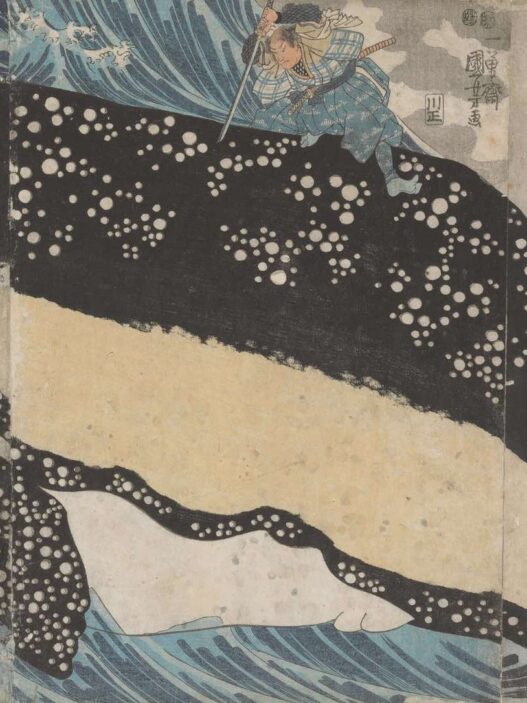
If symbolism in painting is what brought you here, start with the hidden symbolism in Guernica or the meaning behind The Great Wave.
Frequently Asked Questions
What does Carnation, Lily, Lily, Rose symbolise?
The painting symbolises the fleeting nature of childhood innocence. The lanterns represent transience, the lilies purity, the roses beauty that cannot last, and the twilight setting marks the threshold between childhood and awareness. Every element was chosen deliberately.
Who are the two girls in Carnation, Lily, Lily, Rose?
They are Dorothy and Polly Barnard, known as Dolly and Polly, daughters of the illustrator Frederick Barnard. Sargent originally used another child as his model but replaced her with the Barnard sisters because their blonde hair caught the lantern light in exactly the way his vision required.
Where can I see Carnation, Lily, Lily, Rose?
The original painting is in the permanent collection at Tate Britain in London, where it has been since 1887. It hangs in Room 1840 among other Victorian works and is free to view as part of the general collection. Go on a grey day
Why did Sargent only paint at dusk?
He was chasing a very specific quality of light — the brief window each evening when lantern glow and natural twilight meet. This window lasted only a few minutes, which is why the painting took two full summers to complete. When the natural lilies died in autumn he replaced them with artificial flowers to keep going.
Where does the title Carnation, Lily, Lily, Rose come from?
The title comes from the refrain of an 18th-century song called The Wreath by the composer Joseph Mazzinghi. Sargent reportedly heard it being sung during the Thames boat trip that first inspired the painting, which means the title and the concept arrived in the same moment.
Is Carnation, Lily, Lily, Rose an Impressionist painting?
It sits at the edge of Impressionism. Sargent was deeply influenced by Claude Monet and painted the work entirely outdoors in the Impressionist manner, chasing fleeting light and atmosphere. But the symbolic layering and careful compositional arrangement give it a depth that goes beyond pure Impressionism. It is one of the few figure compositions he ever painted this way.