




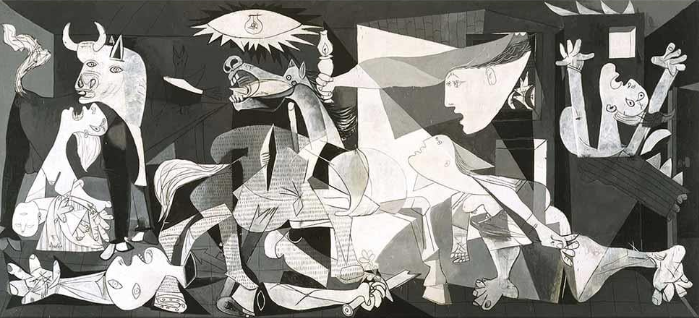
If you’ve seen this painting is might remind you of a newspaper collage stuck together by someone who was slept deprived and lost track of time. Guess what, you would be right in thinking so.
However, on closer inspection it’s clearly a masterclass in peeling back the sub-concious, Picasso tapped into this effortlessly and prompted something jungian theorists would study for decades to follow, and one that changed the course
A single newspaper report on a morning in May 1937, let to the 35 days of furious work that followed. What Picasso made in those five weeks became the most powerful anti-war image in the history of Western art.
Most writing about Guernica stops at the surface: the horse, the bull, the screaming women. Yet if we look closer, the symbolism runs deeper than that, and the story behind the painting is stranger and more interesting than most accounts let on.
So let’s go through it properly.
Fact: While many know Guernica as a symbol of anti-war protest, fewer realise that Picasso refused to allow the painting to return to Spain until the country had restored democracy.
Picasso Guernica Painting: A Response to Tragedy
The Guernica painting by Pablo Picasso was created in 1937 in response to the bombing of the Basque town of Guernica during the Spanish Civil War. Commissioned for the Spanish Pavilion at the Paris International Exposition, Picasso’s work transcends a mere historical account, instead capturing the anguish, chaos, and suffering that war inflicts on humanity.
While he had already achieved “star” status through the invention of Cubism decades earlier, Guernica transformed him from a successful avant-garde artist into a global political icon.
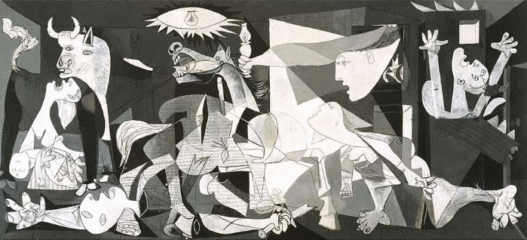
Every element in the Guernica painting is laden with symbolism. The fragmented forms and distorted figures reflect the shattering of life and order caused by violence. The speak to one another through shapes and curves, almost weaponising the people’s agony, in a primal frenzy of brutality and darkness.
Picasso’s choice of monochromatic gray, black, and white tones further emphasises the bleakness of destruction, but for me it’s a nod towards the propaganda that was considered a vital ‘weapon’ of the 1930’s, since there was high illiteracy rates in Spain at the time, visual media became the primary way to communicate political messages to the masses.
The Painting That Almost Never Existed
Picasso accepted, and for months he worked on it dispassionately. His sketches were of his favourite subject: an artist’s studio. Safe. Familiar. Uninspired. Then, on April 26, 1937, the German Luftwaffe bombed Guernica, a small Basque town in northern Spain with a population of around 5,000.
It doesn’t stop there. The attack lasted over two hours. Bombs and incendiary devices rained on the town during a busy market day. One third of the population was killed or wounded.
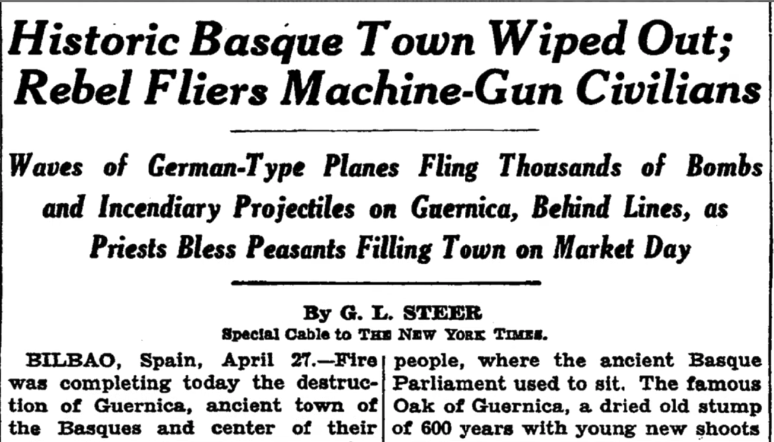
Days later, Picasso read the journalist George Steer’s eyewitness account in The Times and abandoned the studio painting entirely. From May 1 to June 4, he produced over fifty preparatory drawings and completed the enormous canvas in 35 days.
This passionate expression towards seeking the truth is a true testament to his profound devotion to the Spanish people and his refusal to let their suffering be silenced by history.
The painting that became the defining anti-war image of the 20th century was created in just over a month, from a standing start.
One more detail worth knowing: when Guernica debuted at the Paris Exhibition that summer, it received mixed reviews. Many viewers and critics found the monochromatic, Cubist style jarring or difficult to grasp, feeling ‘put off’ by the distorted figures and the lack of colour. However, this was a calculated choice; the grayscale palette was intentional, mimicking the stark, urgent feel of newspaper photography.
By doing so, Picasso effectively transformed the canvas into a monumental press clipping, framing the tragedy within the visceral, documentary-style gallery environment.
Some Spanish officials wanted it replaced. Marxist critics said it lacked political commitment. It only became iconic as it travelled the world in the years that followed. The painting nobody fully understood in 1937 became the most recognisable protest image in history.
The Symbolism of Guernica: What Each Element Means
Picasso said very little about the painting’s meaning, leaving interpretation to viewers and critics. That silence was deliberate. He wanted the symbols to work on their own, without a fixed key. But the imagery is not random, and decades of art historical analysis have given us a reliable reading of what each element is doing.
The Horse
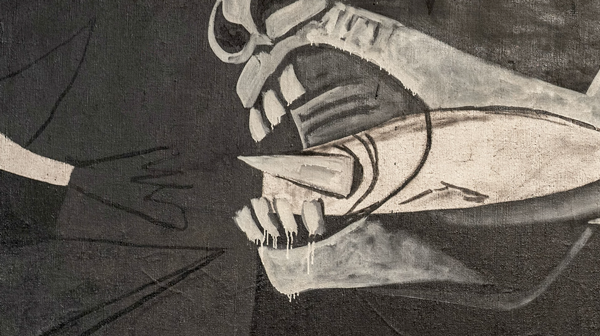
At the centre of the canvas, the horse is the most prominent figure. Its mouth is open, body contorted, impaled by a spear. Most scholars read it as the people of Spain, specifically the innocent civilian population caught in a conflict that was not theirs. The agony of the horse is the agony of those who had no part in starting the war and no means of escaping it and symbolically the horse. Horses were often psychopomps or messengers of the gods (like Sleipnir or the Sun Chariot), but that has changed in the modern ere.
The Bull
Standing on the left, calm and observant while everything around it is chaos, the bull has generated more debate than any other element. The bull is iconic in spanish culture, Picasso himself refused to explain it. The most common readings are that it represents fascism, brute political power, or Franco’s forces specifically. Its human-like eyes suggest observation, perhaps even complicity. That ambiguity is almost certainly intentional.
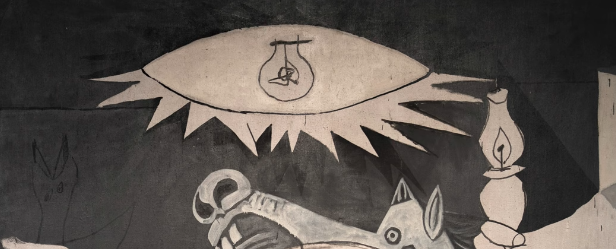
One of the painting’s many layered symbols is the fusion of the eye and lightbulb at the top, evoking interpretations that range from the watchful eye of God to the scrutinising, vengeful gaze of Franco witnessing the consequences of his actions.
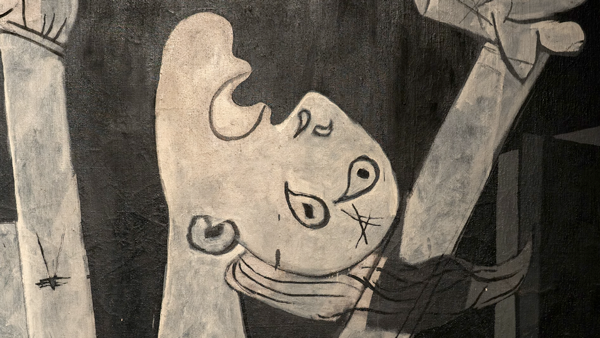
The screaming man in Guernica may represent the victims of the bombing, capturing the emotional and physical trauma suffered by ordinary people. His fragmented, twisted body mirrors the chaos of Cubist form, emphasising destruction and suffering. More broadly, he embodies a universal cry of protest and mourning, a powerful human expression against injustice, violence, and oppression.
Guernica Pablo Picasso: A Work That Defines a Generation
Is Guernica a political statement?
Spain was divided between leftist and rightist factions, with a fragile democratic government struggling to maintain power. Franco’s right-wing coalition, aided by Hitler’s Luftwaffe, sought to crush the left and used the bombing of Guernica as both a military experiment and a terrifying warning. Picasso was commissioned by the Republican government to create a painting for the 1937 Paris International Exposition, transforming this tragedy into a universal anti-war statement.
Meaning of Guernica
The meaning of Guernica is a meditation on the human cost of war, the fragility of life, and the endurance of the human spirit. Today, it serves as a universal anti-war symbol, reminding viewers of the consequences of violence and the power of art to provoke thought and empathy.
For anyone exploring pablo picasso paintings, Guernica stands out as a cornerstone of 20th-century art. Its symbolism, emotional depth, and political relevance make it essential for understanding both Picasso’s genius and the broader role of art in society.
Guernica, Picasso analysis
The composition of Guernica is chaotic, reflecting the violence and terror of the bombing. Picasso employs abstraction to convey emotion: distorted figures, fragmented forms, and stark contrasts between black, gray, and white communicate panic, grief, and destruction.
Open Door & Fleeing Figures: The painting begins with an open doorway, from which figures emerge in terror. One woman stretches her arms upward, her simplified, elongated body and teardrop-shaped eyes emphasizing despair and helplessness.
The Lantern-Bearing Woman: A figure above another doorway holds an oil lamp, symbolically shedding light on the tragedy. This gesture echoes the illumination in Francisco Goya’s 3rd of May, 1808, linking Picasso’s work to a history of depicting human suffering.
Central Horse: The anguished horse at the center of the canvas represents the suffering of civilians. Impaled by a spear and distorted in agony, the horse’s movements and open mouth convey both pain and the chaos of war. Picasso’s use of hash marks, reminiscent of newspaper print, reminds viewers that this tragedy was documented in the media.
The Bull: Positioned on the left, the bull stands calm yet ominous, its human-like eyes suggesting observation and perhaps complicity. As a recurring motif in Picasso’s work, the bull symbolizes both brutality and the human propensity for violence.
Mother and Child: A grieving woman cradles her lifeless child, her elongated neck and open-mouthed cry expressing profound grief. This figure conveys the human cost of war and the universal tragedy of civilian suffering.
Hidden Dove: Near the bull, a small, nearly invisible dove seems to scream in agony—a subtle but poignant symbol of peace lost amidst violence.
Is Guernica Cubism?
Yes, Guernica is heavily influenced by Cubism, though it isn’t a “pure” Cubist work.
Picasso breaks figures into geometric planes, fragments bodies, and distorts perspective, which are all hallmarks of Cubist technique. Unlike early Cubist still lifes, Guernica applies these techniques to a narrative, emotionally charged scene of suffering and war.
The Cubist fragmentation allows Picasso to compress time, space, and emotion into a single canvas, making the horrors of the bombing both immediate and universal.
To fully understand this, let’s define Cubism clearly. Cubism is a visual language that breaks objects into geometric shapes and multiple perspectives, not a style that aims for realistic representation.
It was formed in the early 20th century by Picasso and Georges Braque as a way to depict reality conceptually, and Picasso continued to evolve these techniques throughout his career, including in politically charged works like Guernica.
This helps explain why the fragmented forms, twisted limbs, and overlapping planes in Guernica feel both abstract and emotionally intense, they are the tools of Cubism applied to trauma.
Trauma is so prevalent in Guernica because Picasso created it in response to the bombing of the Basque town of Guernica on April 26, 1937, carried out by German and Italian forces during the Spanish Civil War.
The painting transforms this real-life horror into a universal symbol of civilian suffering, the chaos of war, and the fragility of human life.
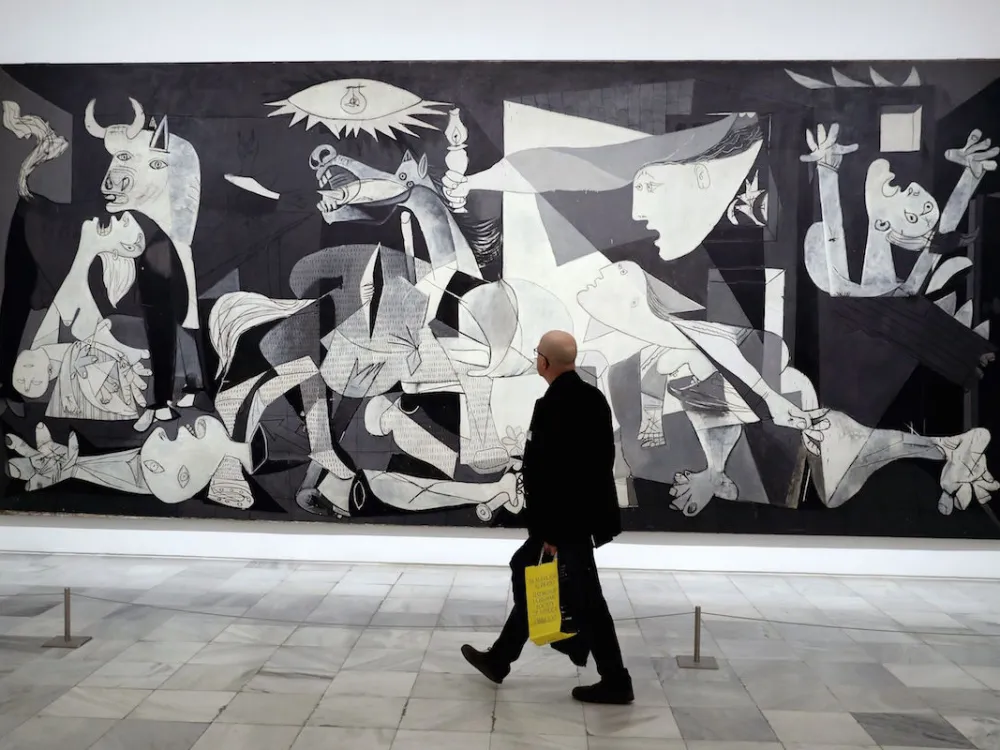
You can view Picasso’s painting Guernica at the Museo Nacional Centro de Arte Reina Sofía in Madrid, Spain. It has been in the museum’s permanent collection since 1992 and is housed in its own dedicated gallery.
Timeless Public Mural
Guernica is monumental not only in size but in impact. Its scale recalls the work of Mexican muralist Diego Rivera and positions it as a public statement about war, suffering, and human responsibility. Picasso completed the painting in just weeks, ensuring it could be displayed at the exposition, where it confronted a world increasingly shadowed by political extremism and militarism.
The painting has since become an enduring icon of anti-war art. A tapestry reproduction hangs at the United Nations in New York, serving as a constant reminder to world leaders of the human cost of conflict. Through Guernica, Picasso sought to prove that art can change minds, evoke empathy, and confront the horrors of history.
You can view Picasso’s painting Guernica at the Museo Nacional Centro de Arte Reina Sofía in Madrid, Spain. It has been in the museum’s permanent collection since 1992 and is housed in its own dedicated gallery.
“I thought that this was an absorbing read in which I learned a lot about the Spanish civil war and the tragedy of a small Spanish town in the Basque region. But I felt that the strength of this novel lay in the characters which were created by Dave Boling “

Frequently Asked Questions
Who painted Guernica?
Guernica was painted by Pablo Picasso in 1937.
Why did Picasso paint Guernica?
Picasso created Guernica in response to the bombing of the Basque town of Guernica during the Spanish Civil War. The attack was carried out by the forces of Francisco Franco, with support from Nazi Germany, and led to massive civilian suffering.
Why is Guernica painted in black, white, and grey?
He used a monochromatic palette to reflect the grim reality of war and to evoke the look of newspaper photographs. The absence of colour intensifies the emotional impact and emphasises the stark, tragic nature of the scene.
Where is Guernica located today?
The original Guernica is on permanent display at the Museo Nacional Centro de Arte Reina Sofía in Madrid, Spain.
What is the meaning or purpose behind Guernica?
Guernica is widely regarded as a powerful anti-war statement. Picasso used symbolic, distorted figures and dramatic composition to represent suffering, violence, and the human cost of war.